
A solar quote is much easier to judge when you can see the numbers in everyday terms. These solar savings examples show how different Scottish households may reduce what they buy from the grid, earn from exported power and make better use of daytime generation.
The figures below are illustrations, not promises. Your roof size and direction, shading, household electricity use, electricity tariff and export tariff all affect the result. But they provide a useful starting point when you are weighing up solar panels for your home.
What makes up your solar saving?
Solar panels can save money in two main ways. First, every unit of electricity you use as it is generated is a unit you do not need to buy from your supplier. This is usually where the strongest value comes from, because grid electricity costs more than the amount paid for surplus electricity exported to the network.
Second, you can be paid for electricity your system does not use. This is normally arranged through a Smart Export Guarantee tariff. Export rates vary between suppliers, so it is worth looking at the tariff available to you rather than relying on one advertised figure.
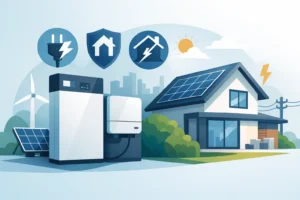
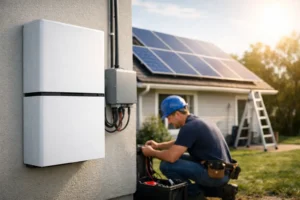
There is a third benefit for some homes: a battery can store spare solar power for use later in the evening. It can also suit homes on time-of-use tariffs, where charging at cheaper overnight periods may reduce the cost of electricity used at peak times. A battery is not automatically the right choice for every household, but it can improve how much of your own solar power you use.
For the examples below, we have used an electricity cost of 28p per kWh and an export rate of 15p per kWh. Rates change, so think of these as simple working figures rather than a forecast for every supplier or every year.
Solar savings examples for different households
Example 1: A smaller household with a 3 kWp system
A couple in a two-bedroom home may use around 2,500 kWh of electricity a year. Their roof has space for a 3 kWp solar system, producing an estimated 2,550 kWh a year in a suitable Scottish location. Actual generation will vary with the roof and local conditions.
Without a battery, a home that is empty for much of the day may use around 35% of that solar generation directly. That is about 893 kWh used in the home, saving roughly £250 on electricity bought from the grid. The remaining 1,657 kWh could be exported. At 15p per kWh, that could bring in around £249 over the year.
That gives an illustrative annual benefit of approximately £499. The household will still have an electricity bill, particularly for evening use, winter demand and standing charges. Solar reduces the amount bought from the grid; it does not make electricity bills disappear altogether.
This type of home may benefit most from using appliances such as the washing machine, dishwasher or slow cooker during daylight hours. Small changes to routine can increase the amount of free solar electricity used at home, without adding the cost of a battery.
Example 2: A family home with a 4 kWp system
Consider a family of four using around 4,200 kWh of electricity each year. A 4 kWp solar system on a largely unshaded roof might produce around 3,400 kWh annually.
If the family is regularly at home during the day, perhaps with home working, school hours, cooking and washing loads spread through the day, they may use about 40% of their generation directly. That works out at around 1,360 kWh. At 28p per kWh, the reduction in imported electricity is about £381.
The other 2,040 kWh is exported. At the example export rate, that is around £306. Together, the estimated annual value is approximately £687.
A household like this can often improve its result without changing the panel system itself. Running a dishwasher after the morning sun has had time to build, charging devices during the day and putting electric heating or hot-water controls on sensible timers can all help. The aim is not to plan every minute around the weather. It is simply to move flexible use into the daytime where practical.
Example 3: Higher electricity use with solar and battery storage
Now take a larger household that uses 6,000 kWh a year. This could be a busy family home with more people, regular home working, an electric vehicle, or higher use from electric heating equipment. A 6 kWp solar system may generate around 5,100 kWh a year, depending on the roof.
With a battery, the household may be able to use around 70% of its solar generation itself. That means roughly 3,570 kWh is used in the property, reducing grid purchases by about £1,000 at 28p per kWh. The remaining 1,530 kWh exported at 15p per kWh could add around £230.
The combined illustrative value is around £1,230 a year. This is a useful example of why higher electricity use can make solar more attractive. There is more demand available to match with the power your panels produce.
However, a battery has an upfront cost and does not create extra sunshine. Its value depends on how much spare solar you would otherwise export, your electricity tariff, your evening use and how long you expect to stay in the property. For some homes, putting the budget into more panel capacity may make better sense than adding a battery straight away. For others, especially homes with strong evening demand, the battery can be a worthwhile part of the package.
Why two similar homes can save very different amounts
It is tempting to compare panel numbers alone, but the household behind the panels matters just as much. Two homes with the same 4 kWp system can see different results because one is using electricity while the sun is out and the other is using most of it after work.
Roof direction and shading matter too. A south-facing roof often generates more over a full year, but east- and west-facing arrays can still work very well. In fact, splitting panels across east and west roof faces can spread generation across the morning and afternoon, which may suit a household’s normal electricity use better.
Scotland also has shorter winter days, when solar generation is naturally lower, alongside long summer days that can produce plenty of power. A good assessment looks at the full year, rather than assuming July generation will be repeated in December.
Your export tariff can change the picture as well. A better export rate improves the value of surplus generation, while a higher grid electricity price increases the value of using power yourself. This is why a simple payback figure should always be treated with care. It is based on assumptions that can change over time.
Ways to get more from the panels you have
The most affordable way to improve solar savings is often to use more electricity during daylight hours. Set timed appliances to run when practical, charge phones and cordless tools in the day, and use smart controls for compatible appliances. If you have an electric vehicle, daytime charging can make a meaningful difference when your routine allows it.
It is also worth checking performance after installation. Seasonal differences are normal, but a sudden unexplained drop in generation may point to an issue worth investigating. Keeping panels clear of heavy debris where safe to do so, and arranging professional support when needed, helps protect long-term performance.
For homes considering a larger upgrade, look beyond solar panels in isolation. Battery storage, an electric vehicle charger, hot-water controls and an air source heat pump can change your electricity pattern. The right combination depends on your budget, property and daily routine, not on adding every available technology.
Getting a realistic figure for your home
The best estimate starts with your own electricity use. A recent annual bill or smart-meter data gives a clearer picture than a national average. From there, an installer can assess your roof, likely generation, likely self-use and whether storage would genuinely add value.
Newtech Renewables can help homeowners make sense of these choices without burying them in technical jargon. A clear proposal should show the assumptions behind the figures, explain what is included and leave room for sensible questions before you decide.
The most useful solar saving is not the biggest headline number. It is a system sized around your home, your budget and the way you actually live, so lower bills feel achievable year after year.