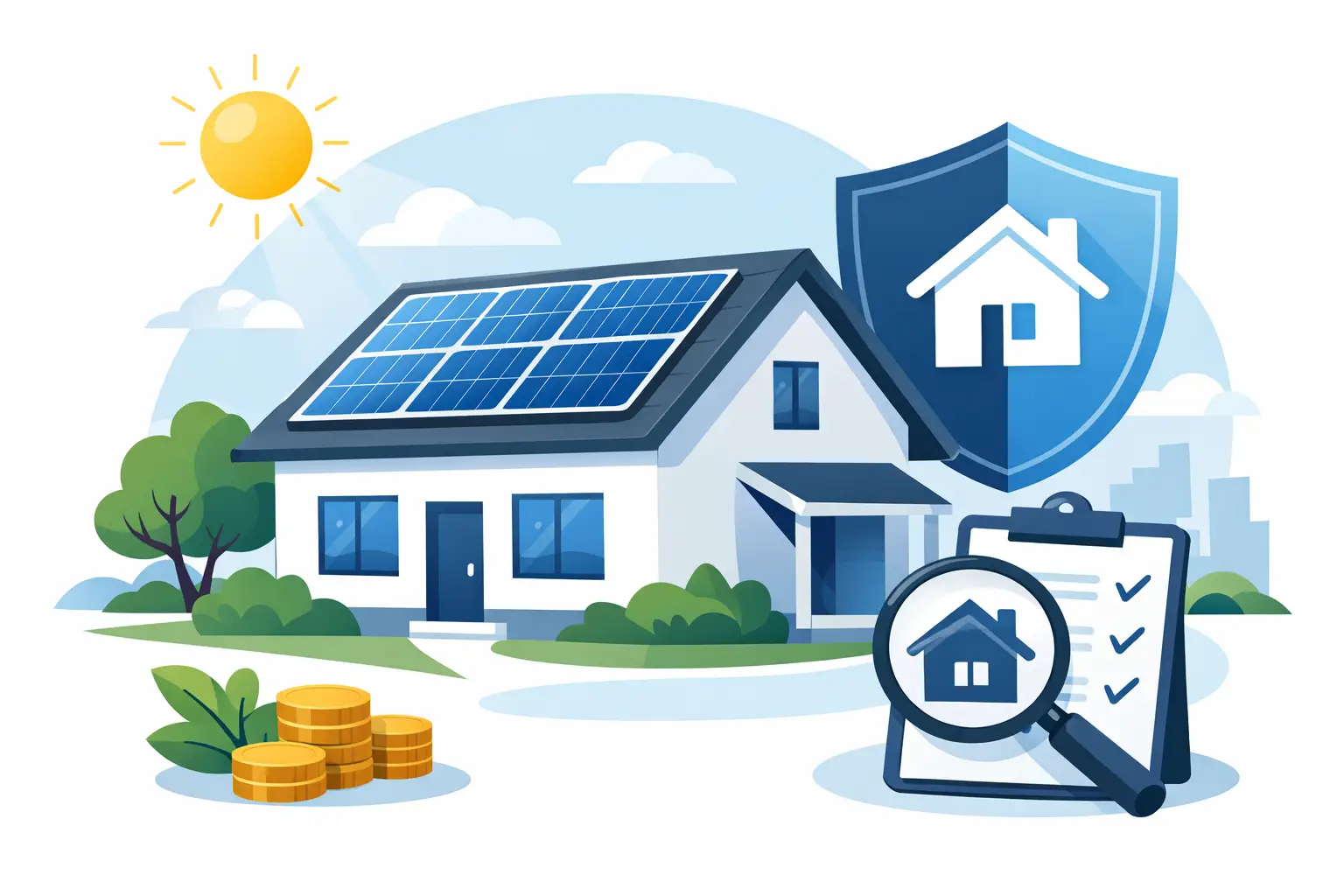
A storm damages your roof, and suddenly the question gets very real: does homeowners’ insurance cover solar panels, or are you left sorting the repair bill yourself? The short answer is often yes, but not always in the way people expect. A lot depends on how the panels are installed, what caused the damage, and what your insurer classes as part of the home.
For most UK homeowners, solar panels fixed to the roof are usually treated as part of the building. That means they may be covered under your buildings insurance rather than needing a separate policy. But there are grey areas, and those grey areas matter when you are dealing with a claim.
Does homeowners’ insurance cover solar panels?
If your solar panels are permanently attached to your property, many insurers will include them within standard buildings cover. In simple terms, if the panels are considered part of the structure, they are often insured in the same way as the roof, walls or windows.
That said, cover is never automatic just because the panels are on your house. Policies differ, and insurers may have specific rules for renewable energy systems. Some want to be told when panels are installed. Others may ask for the system value to be reflected in your rebuild cost. If you have not updated your insurer, you could run into problems later.
Ground-mounted panels can be a bit less straightforward. Some insurers still cover them under buildings or outbuildings, while others may treat them differently because they are not attached directly to the house. If your system includes battery storage, that can also bring extra questions, especially around where the battery is installed and whether the insurer has been told.
What solar panel damage is usually covered?
Home insurance is generally there for sudden, unexpected events. So if your panels are damaged by a storm, fire, flood, falling tree branches, vandalism or theft, there is a fair chance the policy may help, assuming those risks are included in your cover.
Storm damage is one of the most common examples people think about. If high winds lift tiles and damage the solar array at the same time, the claim may cover both the roof and the panels. Fire is another obvious one. If there is a house fire and the solar system is affected, insurers will often treat the panels as part of the insured building.
Theft can be more mixed. Roof-mounted panels are less likely to be stolen than portable equipment, but it does happen. If cabling, inverters or external components are taken, your insurer may look closely at how secure the system was and whether the damaged item falls under buildings or contents.
Accidental damage is a separate point. Standard policies do not always include it. So if someone damages a panel during roofing work or a ladder slips and cracks a module, cover may depend on whether accidental damage has been added.
What is often not covered?
This is where many homeowners get caught out. Insurance is not a maintenance plan. If your solar panels gradually lose performance, develop wear and tear, or stop working because of age, that is usually not something standard home insurance will pay for.
Insurers also tend to exclude poor workmanship, faulty installation and manufacturing defects. So if the issue goes back to how the system was fitted, or a component fails because it was defective, the claim may be rejected. In that case, the installer warranty, product warranty or workmanship guarantee is usually the first place to look.
Cosmetic damage can be another sticking point. If a panel still works but has minor surface damage that does not affect output, the insurer may argue there is nothing to replace. Likewise, if your inverter fails through normal use after a few years, that often falls outside home insurance.
There may also be exclusions around acts of negligence. If the system was installed without proper approval, not maintained when required, or not declared to the insurer when the policy asked for changes, cover can become harder to rely on.
Buildings insurance, contents insurance and solar panels
For most homeowners, solar panels sit under buildings insurance because they are fixed to the property. Contents insurance is usually for things you would take with you if you moved home, like furniture, TVs and personal belongings.
That distinction matters because some people assume all home insurance works the same way. It does not. If your insurer has listed the solar system as a permanent fixture, it will normally fall under the buildings section of the policy. If you have portable solar equipment, separate battery units not fixed in place, or accessories kept in a garage, those may be treated differently.
It is worth checking how your insurer describes fixtures, fittings and external installations. A quick call now is easier than a difficult conversation after damage has happened.
Why telling your insurer matters
Even if your policy would normally cover roof-mounted panels, you should still tell your insurer when they are installed. This is one of the simplest ways to avoid claim disputes later.
Adding solar panels can increase the rebuild cost of your home. If your buildings sum insured is too low, any claim payout may fall short. Some insurers are happy to note the system without changing the premium much, while others may adjust the terms or ask for more information.
They may want to know when the system was fitted, who installed it, whether it meets current standards, and whether battery storage is included. None of that is unusual. It is just part of making sure the policy reflects the property properly.
If you are planning a new system, this is worth doing before installation rather than after. A stress-free setup is not just about fitting the panels – it is also about making sure the paperwork around your home is right.
Does homeowners’ insurance cover solar panels if the installer made a mistake?
Usually not. If a leak appears because flashing was fitted badly around the roof brackets, or the wiring was not installed correctly, home insurance may say the damage came from defective workmanship rather than an insured event.
That does not always mean you have no protection. Reputable installers should provide workmanship guarantees, and the equipment itself may come with manufacturer warranties. The practical point is this: insurance and warranties do different jobs. Insurance helps with sudden external events. Warranties help when the product or installation itself is at fault.
This is one reason many homeowners prefer a fully managed installation with clear paperwork, straightforward support and no hidden costs. When the job is done properly from the start, there is less chance of arguments later.
How to check if your solar panels are insured
You do not need to wade through pages of policy wording on your own, though it helps to know what to ask. Start by checking whether your policy is buildings only or combined buildings and contents. Then look for any references to fixed outdoor equipment, renewable energy systems, roof-mounted installations or exclusions for electrical systems.
If it is not clear, call the insurer and ask directly whether your solar panels, inverter and battery are covered, what events are insured, and whether accidental damage is included. Ask if they need the installation to be declared in writing and whether the rebuild value should be updated.
It is also sensible to keep copies of installation certificates, invoices and warranty documents. If you ever need to make a claim, having those details to hand can save time.
A few real-world examples
If a storm cracks several roof-mounted panels and damages the mounting frame, buildings insurance may cover the repair, less any excess. If the inverter stops working after years of normal use, that is more likely to fall outside insurance and into warranty or replacement cost.
If a fire in the loft damages the solar system, the claim would often be handled as part of the wider building damage. But if the panels were installed incorrectly and that poor installation caused the problem, the insurer may investigate before agreeing to pay.
If thieves remove external cabling and damage part of the system, some policies will cover it, but only if theft is included and security conditions have been met.
For many households, the answer to ‘does homeowners’ insurance cover solar panels’ is yes in principle, but only when the policy is up to date and the cause of damage fits the cover.
Solar can be a smart way to cut bills, but it still needs the same common-sense protection as the rest of your home. If you already have panels, or you are thinking about adding them, a quick check with your insurer now can save a lot of hassle later – and help you enjoy the savings with more peace of mind.