Most homeowners start in the same place – opening an energy bill and wondering how much longer they can keep paying it. If you are looking into solar panel house installation cost, the real question is usually not just “what will it cost?” but “will it actually save me money without turning into a hassle?”
The good news is that solar has become far more straightforward than many people expect. Prices are more competitive than they used to be, systems can be tailored to different budgets, and a well-chosen setup can make a noticeable difference to your electricity bills. The key is understanding what you are paying for, what affects the final price, and where the real value sits.
What is the average solar panel house installation cost?
In the UK, a typical solar panel system for a house often costs somewhere between £5,000 and £9,000, depending on the size of the system, the type of panels, and the complexity of the installation. If you add battery storage, that can take the total to around £8,000 to £13,000 or more.
That is a wide range, and there is a reason for it. A smaller home with lower daytime electricity use may only need a modest system. A larger family home with higher usage, or a household that wants a battery to store extra electricity for the evening, will naturally sit at the higher end.
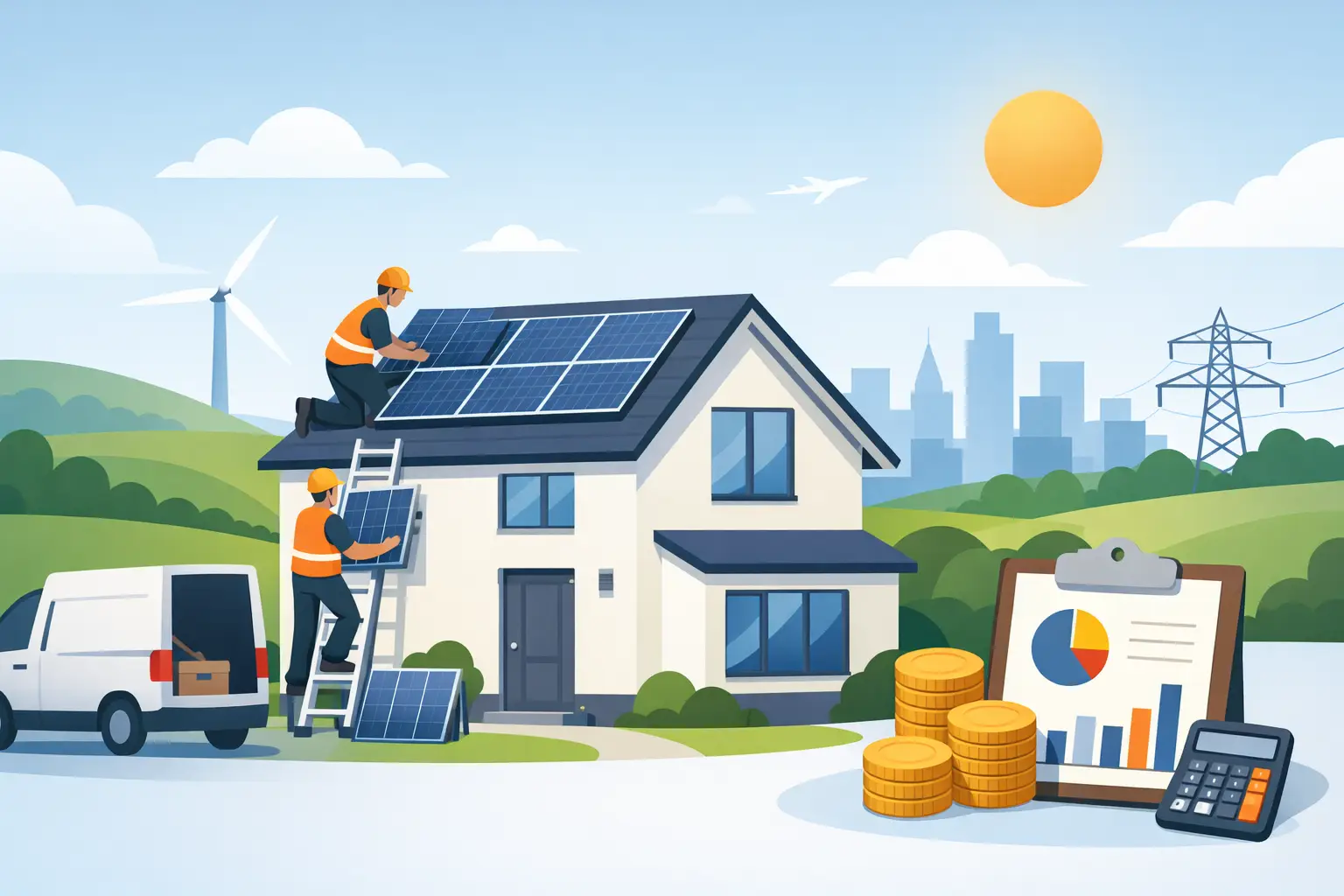
For many homeowners, the best way to think about cost is in terms of the overall package rather than the panel price alone. You are paying for design, equipment, scaffolding, fitting, electrical work, testing, and making sure the system suits your home properly. Cheap-looking quotes can sometimes leave out important parts, which is why clear pricing matters.
What affects solar panel house installation cost?
The biggest factor is system size. More panels usually mean a higher upfront cost, but they can also produce more electricity and increase your savings. There is a balance to strike. Installing the biggest system possible is not always the smartest move if your home does not use enough electricity to benefit from it.
Your roof also plays a part. A simple, accessible roof with good sun exposure is usually easier and cheaper to work on than one with awkward angles, multiple sections, shading from trees, or limited access. If scaffolding is more involved or extra labour is needed, the cost can rise.
Panel type matters too. Some homeowners choose standard panels because they offer solid value for money. Others prefer premium panels with higher efficiency, especially if roof space is limited. Higher-efficiency panels can make sense, but they do come with a higher price.
Then there is the inverter, which converts the electricity your panels generate into usable power for your home. The right inverter depends on the layout of your roof and system design. Some homes benefit from more advanced equipment, but not every property needs the most expensive option.
Battery storage is another major cost factor. A battery lets you store unused solar electricity and use it later, often in the evening when many families use the most power. It can improve your savings, but it does add to the upfront spend. For some households it is a great fit. For others, solar panels alone are the more sensible starting point.
How much can you save?
Savings depend on how much electricity your system generates and, just as importantly, how much of that electricity you use in your home. If you are out all day and use most of your electricity in the evening, your savings may be lower unless you have a battery. If somebody is at home during the day, or you can run appliances when the sun is out, you are likely to benefit more.
A typical household could save hundreds of pounds a year on electricity bills with a properly sized system. Some homes save more, especially when electricity prices are high. You may also be able to receive payments for surplus electricity exported back to the grid, depending on your tariff.
The payback period varies. Some homeowners recover their costs in under ten years, while others take longer. That can sound like a long time, but solar panels are a long-term home improvement. You are not just buying lower bills for one year – you are reducing your reliance on expensive grid electricity for many years ahead.
Is the cheapest quote the best option?
Usually not. A low quote can be appealing, especially when you are trying to keep costs under control, but it only represents good value if the system is suitable, reliable, and installed properly.
A good installer should explain what size system they are recommending and why. They should be clear about what is included, whether a battery is worth considering, and what you can realistically expect in terms of savings. If the pricing feels vague, or if the system seems too good to be true for the money, it is worth asking more questions.
Affordability matters, but so does getting the right setup for your home. A stress-free process, proper assessment, and no hidden costs often save more trouble than chasing the lowest possible figure.
Should you add a battery?
This is one of the biggest decisions affecting solar panel house installation cost. Batteries are useful, but they are not automatically the right choice for everyone.
If your household uses a lot of electricity in the evening, a battery can help you keep more of the solar power you generate instead of sending it back to the grid. That can improve the value you get from your system. It can also give you more control over when you use your electricity.
On the other hand, if your budget is tight, starting with solar panels only may be the better route. Some homeowners prefer to install panels first, reduce bills straight away, and think about battery storage later. That can be a practical way to spread the cost.
Can grants or support reduce the cost?
In some cases, yes. While not every homeowner will qualify for funded support, schemes such as ECO 4 can help eligible households with energy-saving home improvements. Whether solar is included depends on your circumstances and the wider property assessment.
That is why it helps to speak to a company that understands both private-pay installations and funded-upgrade routes. If support is available, it can make a real difference. If it is not, you still want clear package pricing so you know exactly where you stand.
What should be included in the price?
A proper quote should cover more than the panels themselves. It should include survey work, system design, mounting equipment, inverter, installation labour, electrical connection, testing, and any necessary certification. If scaffolding is needed, that should be made clear too.
You should also know whether aftercare or workmanship guarantees are part of the package. Solar is generally low maintenance, but you still want reassurance that the job has been done properly and that support is there if needed.
This is where a straightforward installer can make the whole process feel much easier. Companies such as Newtech Renewables focus on keeping things simple for homeowners, with practical advice and a clearer route from first enquiry to completed installation.
How to keep the cost manageable
The best way to keep costs under control is not to cut corners. It is to match the system to your home and your budget. A right-sized system often gives better value than overpaying for capacity you do not need.
It also helps to think about your bigger household goals. If your priority is lowering bills as soon as possible, a simple panel-only package may be enough. If you want greater energy independence, battery storage may be worth the extra spend. If your roof has limited space, paying more for higher-efficiency panels might make sense.
A good installer will talk you through these trade-offs in plain English. You should come away knowing what you are getting, what it costs, and why it suits your property.
Is solar worth it for most homes?
For many UK homeowners, yes – but not in exactly the same way for every household. The value depends on roof suitability, energy use, budget, and whether you plan to stay in the property long enough to enjoy the full savings.
If you want a quick fix with no upfront spend, solar may not be the answer. But if you are looking for a practical way to reduce electricity bills, improve your home, and protect yourself a bit more from rising energy prices, it is worth serious consideration.
The main thing is not to let the price put you off before you have looked at the full picture. Solar panel house installation cost can be more manageable than people expect, especially when the system is designed properly and explained clearly. A good quote should leave you feeling informed, not pressured – and that is usually the best sign you are heading in the right direction.