
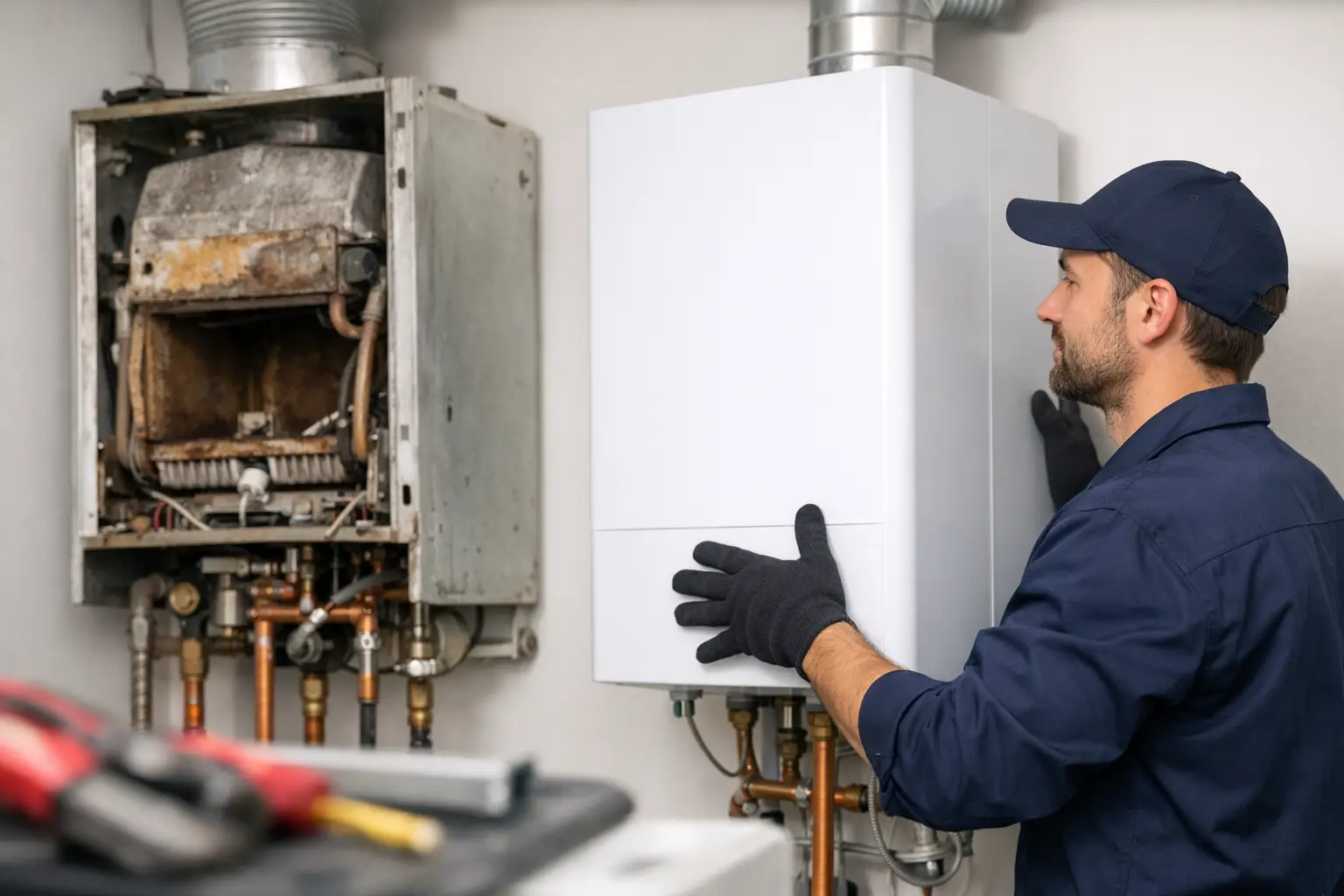
If your boiler has started making odd noises, losing pressure, or struggling to keep the house warm, putting off a decision can end up costing more. This guide to replacing old boiler systems is here to make the process clearer, so you can work out when to replace, what your options are, and how to avoid paying for the wrong setup.
For most homeowners, the real issue is not just whether the boiler still works. It is whether it is working efficiently enough to justify the repair bills, higher running costs, and day-to-day hassle. An old boiler can limp on for years, but that does not always mean it is the sensible choice.
When replacing an old boiler makes sense
A boiler does not need to break down completely before replacement becomes the better option. In many homes, the tipping point is a pattern rather than one major fault. You may notice your heating takes longer to kick in, hot water feels less reliable, or your energy bills keep climbing without a clear reason.
Age matters too. If your boiler is around 10 to 15 years old or more, efficiency is likely to be well below that of a modern model. Older systems can also be harder to repair because parts become less available. If you are calling out an engineer more than once a year, that is often a sign you are spending money to delay an upgrade rather than solving the problem.
There is also comfort to think about. A newer boiler can mean faster heat, better temperature control, and less worry during colder months. That matters a lot in the UK, where a heating problem in winter quickly becomes more than a minor inconvenience.
A guide to replacing old boiler systems without overpaying
The best replacement is not always the most powerful or the most expensive. It is the one that suits your home, your hot water use, and your budget. This is where many people get caught out. They assume bigger means better, or they focus only on the upfront price and not the running costs over time.
Start with how your household actually uses heating and hot water. A smaller home with one bathroom may suit a combi boiler perfectly, especially if you want to save space and avoid a hot water cylinder. A larger family home with higher demand may be better suited to a system or regular boiler, depending on the existing setup.
Your current pipework, radiators, water pressure, and insulation levels all affect what will work well. That is why a proper home assessment matters. A good installer should explain what is suitable in plain English, not push a one-size-fits-all answer.
Choosing the right type of boiler
Combi boilers are popular because they heat water directly from the mains and do not need a separate tank. They are usually a good fit for smaller to medium-sized homes and can help free up cupboard or loft space. The trade-off is that they can struggle if several people want hot water at once.
System boilers store hot water in a cylinder, which makes them better for homes with more than one bathroom or busier family routines. They can cope better with higher demand, but they do need space for the cylinder.
Regular boilers, sometimes called conventional boilers, are more common in older properties with traditional heating systems. If your home already has a cold water tank and hot water cylinder, keeping a similar arrangement can sometimes be the simplest route. That said, it is not always the most efficient or space-saving choice.
For some households, replacing an old boiler may also be the point where it makes sense to look at alternatives such as an air source heat pump. That depends on the property, insulation, budget, and whether you are focused on a straight swap or a broader upgrade. It is not the right answer for every home, but it is worth asking about if lower long-term running costs are a priority.
What replacement costs really depend on
Boiler replacement costs vary because the boiler itself is only part of the job. Labour, controls, system flushing, flue changes, and any pipework upgrades can all affect the final price. If you are changing from one boiler type to another, the cost can rise because the installation is more involved.
The cheapest quote is not always the best value. If a quote looks unusually low, check what is included. Sometimes key parts of the job are left out and appear later as extras. Clear pricing matters because it helps you compare like for like and avoid surprises.
It is also worth thinking beyond installation day. A more efficient boiler may reduce monthly heating costs, especially if your old one has been running poorly for years. Better controls, such as a smart thermostat or zoned heating, can add to those savings if they are used properly.
Repair or replace – how to make the call
There is no single rule, but a simple way to look at it is this. If the repair is minor, the boiler is still fairly modern, and it has been reliable up to now, a repair may be sensible. If the boiler is old, inefficient, and developing repeated faults, replacement often gives better value.
A lot depends on timing. A breakdown in the middle of winter puts pressure on the decision, which is why many homeowners end up paying for emergency fixes on systems that were already near the end of their life. Replacing before total failure gives you more time to compare options and budget properly.
If you are unsure, ask for an honest assessment of the likely lifespan left in the boiler and the probable cost of future repairs. A trustworthy installer should be clear about whether a repair is genuinely worthwhile.
Grants, funding and support schemes
For some households, the biggest concern is affordability. That is understandable. The good news is that there may be funded-upgrade pathways or support schemes available, depending on your circumstances and the property.
In the UK, eligibility can depend on income, benefits, property efficiency, and the type of heating system already installed. Schemes change over time, so it is worth checking what support may apply rather than assuming you will need to cover the full cost yourself.
This can make a real difference for homes that are expensive to heat or where an ageing boiler is contributing to high bills. If support is available, it may open the door to a warmer, more efficient home much sooner than expected.
What to expect during installation
Replacing a boiler is usually more straightforward than people fear. In a like-for-like swap, the job may be completed quite quickly. More complex changes, such as moving the boiler or changing boiler type, can take longer.
You should expect some disruption, but it should be manageable with good planning. A clear installer will explain how long the heating or hot water may be off, what access is needed, and whether any follow-up visits are likely.
This is also the time to ask about warranty cover, servicing requirements, and controls. A modern boiler works best when it is set up properly and used correctly. Even a very efficient model will not deliver the same savings if the controls are confusing or never adjusted.
Common mistakes to avoid
One of the biggest mistakes is replacing like for like without checking whether your needs have changed. A boiler that suited the house fifteen years ago may not be the best fit now, especially if the family size, bathroom use, or insulation levels are different.
Another mistake is focusing only on the boiler and ignoring the heating system around it. Sludge in radiators, poor controls, or weak insulation can all limit the benefit of a new install. Sometimes a few sensible upgrades alongside the boiler make a much bigger difference to comfort and bills.
It is also easy to get distracted by brand names alone. What matters most is correct sizing, proper installation, and clear aftercare. Even a strong product can disappoint if it is not matched well to the property.
The best time to replace an old boiler
The best time is usually before you are forced into it. If your boiler is showing signs of age, summer or early autumn can be a practical window to act. Installers are often less stretched than they are during cold snaps, and you are less likely to be making the decision while the house is freezing.
That said, if your current system is costing you money every month through poor efficiency, waiting may not save anything at all. Delaying replacement only makes sense if the boiler is still reliable and economical to run.
For homeowners across Scotland and England, the right replacement should feel simpler than expected. A good installer will talk you through the options clearly, explain the costs properly, and help you choose a system that suits your home rather than selling you more than you need. Newtech Renewables takes that same practical approach because lower bills and a warmer home should not come with added stress.