
If your petrol bill has been climbing and your home still never feels quite warm enough, it is fair to ask: is a heat pump worth it? For many UK homeowners, the answer is yes – but not for every house, every budget, or every situation. A heat pump can cut running costs, improve comfort, and lower your reliance on fossil fuels, but the real value depends on how well your home is set up for it.
The good news is that heat pumps are no longer just for self-builds or eco enthusiasts. They are becoming a practical option for ordinary households that want lower bills and a heating system that feels more future-ready. The key is looking past the sales talk and understanding where the savings really come from.
Is a heat pump worth it in the UK?
In simple terms, a heat pump is often worth it if your current heating is expensive to run, your home is reasonably well insulated, and the system is designed properly from the start. It is especially attractive if you are replacing old electric heating, oil, LPG, or an ageing boiler that is costing more and more to keep going.
Where people get caught out is assuming every home will see the same result. A heat pump does not work like a quick boiler swap where you fit a box on the wall and carry on exactly the same as before. It works best as part of a whole-home approach, looking at insulation, radiators, hot water demand, and how the property holds heat.
That does not mean it has to be complicated. It just means the value comes from getting the basics right.
What makes a heat pump feel worth the money?
For most households, it comes down to three things: monthly costs, comfort, and confidence that the system will last.
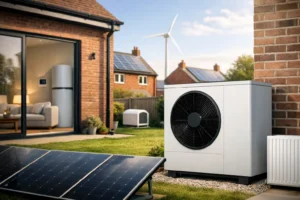
A well-installed air source heat pump can be very efficient because it moves heat rather than creating it in the same way as a traditional boiler. That means it can deliver more heat energy than the electricity it uses. In the right property, this can lead to lower running costs, especially when compared with direct electric heating, oil, or LPG.
There is also the comfort factor. Heat pumps tend to run for longer at lower temperatures, which often gives a steadier, more even warmth through the day. Instead of rooms swinging from cold to very hot and back again, the temperature can feel more consistent. Many homeowners prefer that once they get used to it.
Then there is the longer-term picture. Petrol prices remain unpredictable, older boilers become more expensive to repair, and many people want a heating system that will not feel outdated a few years from now. A heat pump can make sense if you are planning ahead rather than just patching up an old system.
When a heat pump may not be worth it
There are cases where the answer is no, not yet.
If your home is draughty, poorly insulated, and loses heat quickly, a heat pump may struggle to give you the comfort and savings you expect unless insulation improvements are done first. In that situation, the smarter first step may be loft insulation, cavity wall insulation, or other energy-efficiency upgrades.
It may also be less worthwhile if your current petrol boiler is relatively new, efficient, and cheap to run, and you are mainly changing systems to chase short-term savings. The upfront cost of a heat pump is still higher than replacing a boiler, so the numbers need to stack up over time.
Another issue is poor system design. If an installer sizes the unit badly, keeps undersized radiators, or skips key checks, the system can underperform. That is where some of the negative stories come from. Usually, the problem is not the technology itself. It is that the property was not assessed properly.
Upfront cost versus long-term value
This is often the sticking point. Heat pumps usually cost more to install than a like-for-like boiler replacement, so the question is not just what you pay on day one. It is what you get back over the years.
If your running costs fall, maintenance stays manageable, and the system gives reliable heating for the long term, the value can be strong. If grants or funded schemes help cover part of the installation, the case becomes even more attractive.
For some households, especially those eligible for support such as ECO 4, a heat pump can move from feeling out of reach to becoming a realistic home improvement. That matters because the technology is much easier to justify when the upfront barrier is reduced.
Private-pay customers still need clear figures. The best way to think about it is not as buying a trendy product, but as replacing one of the most important systems in your home with something more efficient and potentially cheaper to run.
Is a heat pump worth it with radiators?
Yes, often it is – but the radiators need to be considered properly.
A common myth is that heat pumps only work with underfloor heating. In reality, many UK homes run heat pumps successfully with radiators. The difference is that some properties need larger radiators or small upgrades so enough heat can be delivered at lower flow temperatures.
That sounds more dramatic than it is. Sometimes only a few radiators need changing. Sometimes the existing ones are already suitable. The point is to check, not guess.
This is why proper home assessment matters so much. A heat pump should be matched to the property, not squeezed into a one-size-fits-all plan.
The homes where heat pumps tend to work best
Heat pumps are usually a strong option in homes that are reasonably well insulated, have enough space for the outdoor unit, and need a heating system designed around steady efficiency rather than quick blasts of high heat.
Detached and semi-detached houses often suit them well, but that does not mean other homes are ruled out. Many terraces, bungalows, and newer properties can also be suitable. What matters more is heat loss, insulation levels, and the condition of the current system.
If your home already feels fairly warm and your heating setup is due for an upgrade, you may be in a good position. If your home is hard to keep warm now, it does not automatically mean a heat pump is a bad idea – but it may mean energy-efficiency work should come first.
What savings can you realistically expect?
This is where honesty matters. Not every homeowner will see dramatic savings straight away.
If you are moving from old electric storage heaters, oil, or LPG, the savings can be noticeable. If you are moving from mains petrol, the picture can be more mixed and depends heavily on insulation, electricity tariffs, hot water use, and how efficient your old boiler was.
There is also a behavioural side. Heat pumps work best when used consistently, not switched on and off in the same way some people use boilers. Once the system is set up properly, it is usually more about maintaining comfort than chasing sudden bursts of heat.
That can feel different at first, but it is often part of what makes the system efficient.
Beyond bills: why people still choose them
Even when the savings are not huge on paper, many homeowners still feel a heat pump is worth it for other reasons.
One is comfort. Another is reducing dependence on petrol or delivered fuels. There is also the appeal of having a cleaner, more modern system that fits with other upgrades such as solar panels or battery storage. When these technologies work together, the value can improve further.
There is also peace of mind in knowing your home is moving towards a lower-carbon setup without making life harder day to day. For most people, that only matters if the system is simple to live with and does not come with hidden surprises.
That is why the best heat pump projects are the ones handled in a straightforward, stress-free way, with clear pricing and honest advice about whether the property is suitable in the first place.
So, is a heat pump worth it for your home?
If your aim is lower running costs, better comfort, and a heating system that is built for the future, a heat pump can absolutely be worth it. But it is worth it when the home is assessed properly, the numbers are explained clearly, and the installation is designed around your property rather than a generic promise.
For some homes, the right first move is a heat pump. For others, it is insulation or a funded upgrade route that makes the change affordable. Either way, the smartest decision is the one based on your home, your bills, and your budget – not on hype.
A good heating system should make home life easier, warmer, and less expensive to run. If a heat pump can do that in your property, it is not just worth considering. It is worth getting checked properly.