
A boiler rarely chooses a convenient moment to fail. It is usually a cold morning, a busy week, or just as another household cost lands. Getting boiler replacement timing right means you can make a calm, informed choice instead of accepting the first available fix when you have no heating or hot water.
For many Scottish households, the best time to replace a boiler is before it becomes an emergency. That does not mean changing a system simply because it is getting older. A well-maintained boiler can continue to work reliably for years. The real question is whether it is still safe, dependable and affordable to run – and whether repairing it still makes financial sense.
Boiler replacement timing: the signs to watch for
Age is a useful starting point. Many boilers last around 10 to 15 years, although the result depends on the model, installation quality, water quality and regular servicing. Once a boiler is beyond a decade old, it is sensible to pay closer attention to its performance and keep some budget aside for a future replacement.
Frequent breakdowns are often the clearest warning sign. One isolated repair does not automatically mean you need a new boiler. Parts can fail on even relatively new systems. But if you are calling an engineer repeatedly, waiting for hard-to-find parts, or paying for several repairs within a couple of years, the balance can shift quickly.
Your energy bills can also tell a story. Gas prices and household usage change, so a higher bill is not proof that the boiler is failing. Still, an older, less efficient unit may use more fuel to produce the same level of heat. If rooms take longer to warm up, hot water is inconsistent, or the boiler seems to run constantly, it is worth having the whole heating system checked.
Other signs deserve prompt attention: unusual banging or whistling noises, visible leaks, pressure that regularly drops, yellow rather than blue flames, or a carbon monoxide alarm sounding. In these cases, turn the boiler off if it is safe to do so and seek advice from a qualified Gas Safe engineer. Safety comes before cost comparisons.
Repair or replace? Look beyond the immediate bill
The temptation to repair is understandable. A repair is usually cheaper today than a full boiler replacement, particularly when the fault is straightforward and the appliance is not very old. If your boiler is under warranty, has been serviced regularly and has otherwise performed well, repair may be the sensible option.
Replacement becomes more attractive when repairs are recurring, the unit is old, or parts are becoming difficult to source. A useful rule of thumb is to compare the repair cost with the likely remaining life of the boiler. Spending a significant amount on an ageing boiler can feel frustrating if another major part fails a few months later.
It also helps to consider what is included in the price. A proper replacement may involve updating controls, checking the flue, cleaning the system and making sure the boiler is correctly sized for the property. The cheapest quote is not always the best value if it leaves old issues untouched or does not explain the work clearly.
Ask for plain answers to practical questions. What is causing the problem? Is this likely to happen again? How long should the repaired boiler reasonably last? What would a replacement cost, including labour and any necessary upgrades? A trustworthy installer should help you understand the options without pressuring you into a decision.
Do not wait for winter if you can avoid it
Spring and summer are often easier times to plan a boiler replacement. You are less reliant on central heating, appointments may be easier to arrange, and there is time to compare options properly. Replacing a boiler outside the heating season can also reduce the stress of being without warmth for a short period while work is carried out.
That said, a winter replacement is sometimes unavoidable. If your boiler has failed, a good installer will focus on restoring heating and hot water as quickly as possible. The key is not to delay a replacement that is clearly needed simply because it is not the ideal season.
Planning ahead gives you more control. You can budget, arrange an assessment, ask about energy-efficient controls and choose a solution that suits how your household actually uses heat and hot water. It is far better than making a rushed decision with the house getting colder by the hour.
A new boiler can improve comfort as well as efficiency
Modern condensing boilers are designed to recover more heat from the fuel they use than older models. In the right property, this can help lower gas use, especially when paired with suitable controls and sensible settings. However, savings vary. A new boiler will not solve draughty windows, poor insulation or radiators that are undersized or full of sludge.
Controls make a real difference to day-to-day comfort. A programmable thermostat lets you heat the home when you need it, while thermostatic radiator valves can help prevent unused rooms being overheated. Smart controls may suit some households, but simple, easy-to-use controls are often just as effective when they are set up properly.
The boiler must also be the right size. Bigger is not automatically better. An oversized boiler can cost more than necessary and may not run as efficiently as it should. A proper home assessment looks at the size of the property, number of bathrooms, hot-water demand, insulation and the existing heating system before recommending a model.
Consider the wider heating picture
Boiler replacement timing can be a good moment to think beyond the appliance itself. If your home is well insulated and you are looking for a lower-carbon way to heat it, an air source heat pump may be worth discussing. It is not the right answer for every property or every budget, and it needs a proper suitability assessment, but it can offer a long-term alternative to gas heating.
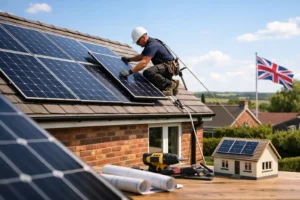
For some homes, replacing an old boiler now while improving insulation and controls is the most practical route. For others, it may make sense to plan for a heat pump, solar panels or battery storage as part of a wider home energy upgrade. There is no one-size-fits-all answer. The right choice depends on your property, current system, future plans and available budget.
Households in Scotland may also be able to access funded upgrade routes depending on their circumstances and the work required. Eligibility rules can change, so it is worth asking for clear guidance rather than assuming support will apply. A good installer should explain both private-pay and funding options in straightforward language.
Questions to ask before agreeing to a replacement
Before booking work, make sure you understand the proposed system rather than just the boiler brand. Ask whether the quote includes installation, system cleaning, filters, controls, warranty registration and removal of the old appliance. You should also know how long the work is expected to take and whether you will be without heating or hot water during installation.
Check who will carry out the work and whether they are appropriately qualified. For gas boilers, installation must be completed by a Gas Safe registered engineer. Keep your paperwork after the job, including the warranty details and service instructions. Annual servicing can help protect the warranty and spot smaller issues before they become expensive ones.
At Newtech Renewables, the aim is to make these decisions feel less complicated. A clear assessment and an honest conversation about your home can help you choose the option that delivers reliable warmth without unnecessary extras or hidden costs.
If your boiler is becoming unreliable, do not wait for a complete breakdown to start asking questions. A quick check now can give you time to weigh up repair, replacement and cleaner heating options at your own pace – with a warmer, more comfortable home in mind.