
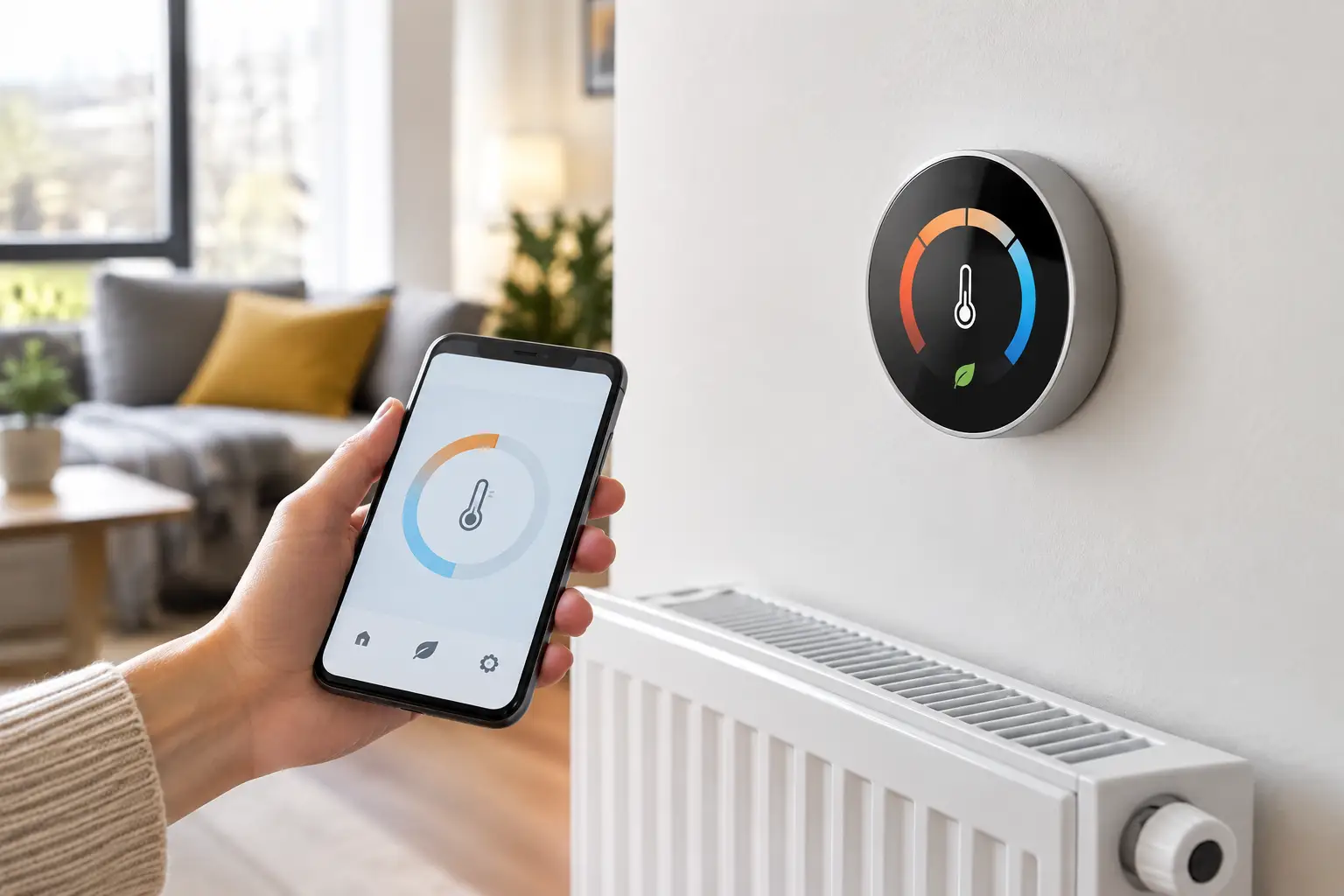
If your heating comes on while the house is empty, warms rooms nobody uses, or leaves you adjusting the thermostat every day, the best smart heating controls can make a real difference. The right setup gives you more control over comfort and can reduce wasted energy, without turning your heating into another complicated household job.
For most homes, the best option is not simply the control with the biggest app or the most settings. It is the one that works properly with your boiler or heat pump, suits how your household lives, and is simple enough to use every day.
What smart heating controls actually do
A traditional programmer follows the same timetable whether you are home, away, warm or cold. Smart controls use a thermostat, app and, in some cases, extra room sensors to make heating more responsive. You can change the temperature from your mobile phone, set different schedules for weekdays and weekends, and often see how your heating is being used.
Many systems can also pause heating when you are away, start warming the house before you return, or adjust to changing outdoor temperatures. That does not mean every home needs every feature. A busy family may benefit most from a simple schedule and easy app control, while a larger property with unused bedrooms may gain more from room-by-room heating.
The aim is straightforward: heat the spaces you need, at the times you need them, without paying to overheat the rest of the house.
The best smart heating controls for different homes
There is no single best smart control for every property. Your existing heating system, the number of rooms you use, your insulation and your daily routine all matter.
A smart thermostat for most boiler homes
A smart thermostat is usually the best starting point for a home with a gas boiler and one main heating zone. It replaces, or works alongside, the existing thermostat and lets you control your heating through a clear screen or mobile app.
Look for simple scheduling, holiday mode and the ability to override the programme easily. Geofencing, which uses your phone location to recognise when you have left or are heading home, can be useful for households with less predictable routines. It is less helpful if somebody is usually at home, so it should be treated as an optional extra rather than a must-have.
If your boiler supports modulation, choose a compatible control that can communicate with it. Rather than constantly switching the boiler fully on and off, it can ask for just enough heat to maintain the chosen temperature. This can improve comfort and reduce unnecessary cycling.
Smart radiator valves for room-by-room comfort
Smart radiator valves are fitted to individual radiators. They are a good choice if you regularly use some rooms more than others, such as a home office during the day or bedrooms only in the evening.
They can allow cooler settings in spare rooms while keeping the living room comfortable. This is often more practical than heating the whole property to the same temperature. However, they work best when the heating system is balanced and the main thermostat is positioned sensibly. A radiator valve cannot fix a cold room caused by poor insulation, undersized radiators or a draughty window.
For a smaller home where every room is used much of the day, the added cost and battery changes may not be worthwhile. A well-set smart thermostat may deliver nearly all the benefit with less to manage.
Zoned controls for larger or split-level properties
Zoning divides a heating system into separate areas, such as upstairs and downstairs, each with its own thermostat and schedule. This is especially useful in larger homes, extensions or properties where different parts of the house warm up very differently.
Zoning usually needs changes to pipework, valves and controls, so it is more involved than fitting a thermostat. It can be a sensible upgrade when replacing a boiler or carrying out wider heating improvements, rather than something to add purely for the sake of an app.
Weather compensation for steady, efficient heat
Weather compensation helps a boiler or heat pump respond to the temperature outside. On a mild day, it reduces the temperature of the water sent around your radiators. On a colder day, it increases it. The result can be steadier warmth, better efficiency and fewer sharp temperature swings.
This feature is particularly valuable with air source heat pumps. Heat pumps generally work best when they maintain a stable indoor temperature using lower-temperature heat over longer periods. Constantly turning them up and down like an older boiler system can work against that approach.
If you are considering a heat pump, the control strategy should be part of the system design from the beginning. A compatible thermostat and correctly set weather compensation curve matter more than flashy app features.
How to choose the right system before you buy
Start with compatibility. Check the make and model of your boiler or heat pump, whether you have a hot water cylinder, and whether your current thermostat is wired or wireless. Some controls are designed for straightforward replacement, while others need a receiver, extra wiring or professional installation.
Next, think about the rooms that cause the most frustration. If the whole house is too warm or too cold at the same times, a smart thermostat may be enough. If one person works from home while other rooms sit empty, smart radiator valves could make more sense. If upstairs is always warmer than downstairs, zoning or better system balancing may be worth investigating.
Do not overlook your hot water. Homes with a cylinder should choose controls that can manage heating and hot water separately. This lets you set a practical hot water schedule rather than heating a full tank at times when nobody needs it.
Finally, be honest about how you like to use technology. The best smart heating controls should still work from a wall thermostat if your mobile phone battery is flat or the internet drops out. Choose a system with clear manual controls and an app you will actually use.
Features worth paying for, and features you may not need
A clear weekly schedule, accurate temperature sensing and reliable boiler compatibility are more valuable than a long feature list. Open-window detection can help in some rooms, while energy reports may show patterns that encourage better habits. Voice control is convenient for some households, but it rarely saves energy by itself.
Multiple room sensors are worth considering if your thermostat is in a hallway, near a kitchen or in another area that does not reflect the temperature where you spend most of your time. They can help the system make decisions based on the living room or bedroom instead.
Be cautious with claims of guaranteed savings. Smart controls can cut waste, but the result depends on your previous habits, the condition of your heating system and how well the home holds heat. In a poorly insulated house, improving draught-proofing or insulation may deliver a bigger improvement than changing the controls alone.
Getting the settings right after installation
The first week is a chance to fine-tune your schedule, not a test you need to pass on day one. Set comfortable temperatures for occupied rooms, then reduce unused rooms slightly rather than turning everything down to extremes. Small, steady adjustments are usually easier to live with and can prevent the boiler from working harder to recover later.
For many households, around 18-21°C in living areas will feel comfortable, though personal preference, age and health needs always come first. Bedrooms are often kept a little cooler. If you have a heat pump, ask your installer for advice before making large changes to temperatures or setback periods.
Keep radiator valves open in the room where the main thermostat is located unless your installer advises otherwise. Restricting that radiator can confuse the system and stop other rooms reaching the temperature you expect. It is also worth checking batteries in wireless devices before winter, rather than waiting for an alert on a cold evening.
A control upgrade works best as part of the bigger picture
Smart heating controls are a practical way to take more control of your bills and comfort, but they are not a magic fix. A poorly maintained boiler, cold radiators, heat loss and unsuitable settings can all limit the benefit.
For homeowners in Glasgow and across Scotland, a friendly assessment can help make the choice less stressful. Newtech Renewables can look at the heating system you already have, explain suitable upgrade options in plain English, and help you avoid paying for features your home does not need.
The right control should fade into the background: a warmer home when you need it, less heat wasted when you do not, and one less thing to worry about when the weather turns cold.



Pingback: Setting Boiler Heating Controls to Cut Bills – Newtech Renewables
Pingback: Best Boiler Controls for Homes: Cut Heating Costs – Newtech Renewables
Pingback: Boiler Replacement Timing for UK Homeowners – Newtech Renewables