
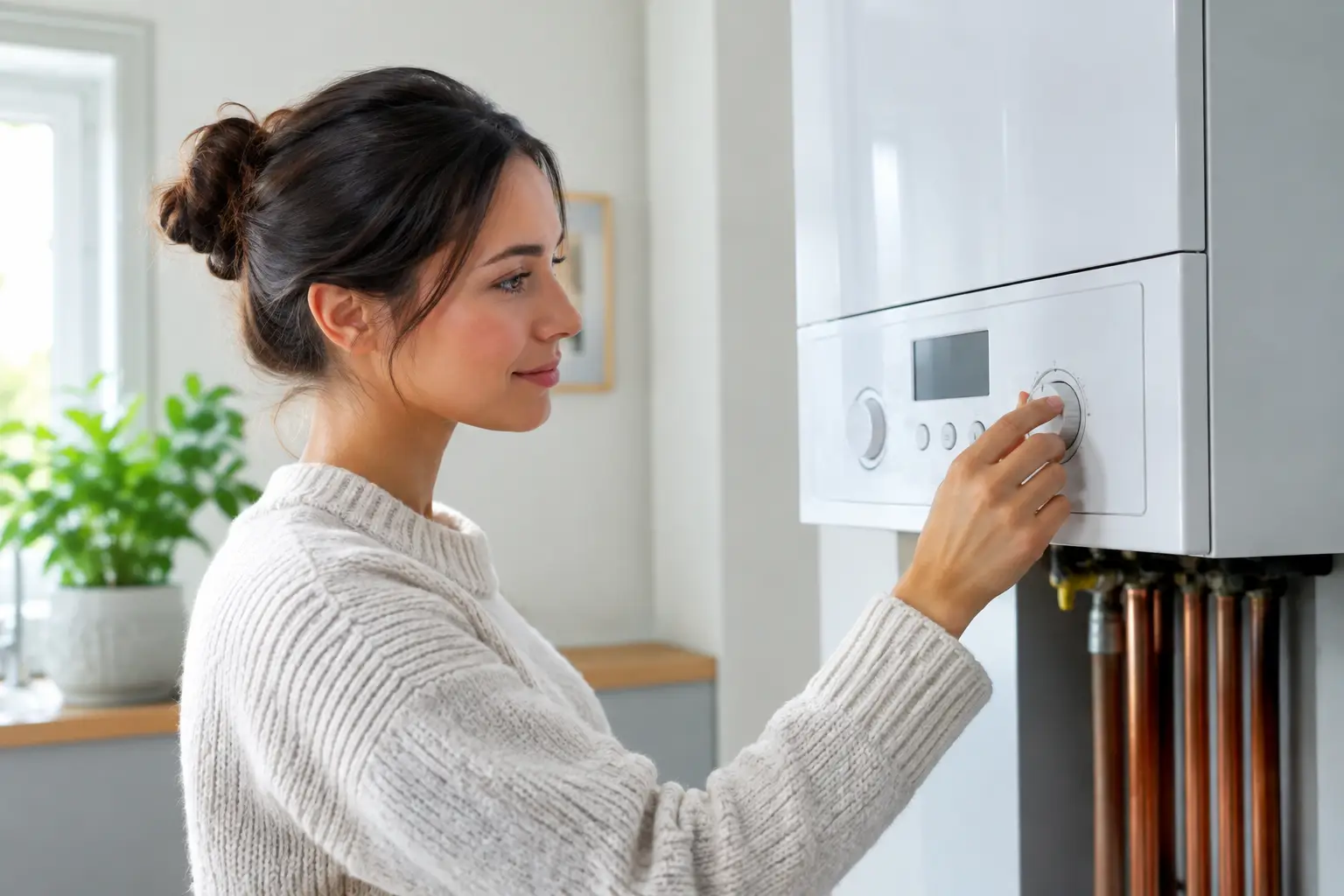
A boiler can be working perfectly and still cost more than it needs to. Often, the issue is not the boiler itself but setting boiler heating controls around the times your household is actually at home, awake and needing warmth. A few sensible adjustments can make a noticeable difference to comfort and gas use, without coming back to a cold house.
Start with the controls you already have
Most homes have a thermostat, a timer or programmer, and radiator valves. Some also have a separate hot water control. These parts work together, so changing one setting without considering the others can lead to uneven temperatures or unnecessary heating.
Your main thermostat sets the temperature for the home. When the room reaches that temperature, it tells the boiler to stop heating. The programmer decides when the heating should be allowed to come on. Thermostatic radiator valves, often called TRVs, control the warmth in individual rooms.
If your controls look confusing, do not worry. You do not need to understand every symbol at once. Start with the main thermostat and your heating schedule, then fine-tune room by room.
Choose a realistic room temperature
For many households, a thermostat setting of around 18-21°C is comfortable. The right figure depends on your home, your routine and who lives there. Young children, older people and anyone with health conditions may need a warmer living space.
Rather than turning the thermostat up high to heat rooms faster, set it to the temperature you actually want. A higher setting does not make the boiler heat the house more quickly. It simply means the heating will stay on for longer, which can add to your bills.
Try lowering the temperature by one degree for a week if your home feels overly warm. Small changes are easier to live with and can help you find a setting that is comfortable without wasting energy. Keep the thermostat away from draughts, direct sunlight, fireplaces and radiators, as these can give it a false reading.
Keep less-used rooms cooler
There is no need to heat every room to the same level. Bedrooms are often more comfortable at a slightly lower temperature than a living room, while a spare room may only need gentle background heat.
Use radiator valves to set these differences. A higher number means more heat, but the numbers are not precise temperature settings. Start with living areas at a medium-to-high setting and bedrooms a little lower, then adjust gradually over several days. Avoid turning every radiator off completely during winter, particularly in rooms at risk of damp or frozen pipes.
Set heating times around your daily routine
A timer is one of the simplest ways to prevent your boiler heating an empty home. Think about when you need the house warm, not just when you get up or arrive home. Most properties take time to warm through, especially older Scottish homes with solid walls or limited insulation.
For example, you may want the heating to come on 30-60 minutes before the first person gets up, and switch off shortly before everyone leaves. In the evening, set it to warm the house before people return, then go off before bed if the house holds its heat well.
There is no single schedule that suits every property. A well-insulated home may stay comfortable with shorter heating periods, while a draughtier home may need a different approach. Make one change at a time and live with it for a few days before changing it again.
If your programmer has a seven-day setting, use it. Weekends often look different from weekdays, and a separate schedule stops you paying to heat the house at the wrong times. If your household is unpredictable, a smart thermostat can be useful, but it is not essential for better control.
Use your boiler efficiently, not constantly
Many modern boilers are condensing boilers. They work most efficiently when the water returning to the boiler is cooler, allowing them to recover heat that would otherwise be lost through the flue. This is why the boiler flow temperature matters.
For a typical radiator system, reducing the central heating flow temperature can improve efficiency, as long as your rooms still reach the temperature you need. On many boilers, this is shown by a radiator symbol rather than the hot water symbol. It is different from your room thermostat setting.
There is a trade-off. Set the flow temperature too low and your home may take much longer to warm up or struggle to reach a comfortable temperature on colder days. A sensible starting point for many radiator homes is around 60°C, then adjust based on how the property performs. Older homes, larger radiators and poorly insulated rooms may need more.
Do not reduce the domestic hot water temperature below safe levels on a stored hot water cylinder without professional advice. If you are unsure which control is which, ask an engineer during your next boiler service rather than guessing.
Do not use radiator valves as an on-off switch for the whole house
A common mistake is shutting down nearly all radiators while leaving the main thermostat in a cold hallway. The boiler may keep running because the thermostat never reaches its target, while the rooms you use become stuffy.
Leave the radiator in the same room as the main thermostat fully open and avoid fitting a TRV there, unless your heating system has been designed differently. This allows the thermostat to sense the room properly and control the boiler as intended.
If one room is always cold while another overheats, the problem may not be your settings. Radiators may need bleeding, balancing or upgrading, and the boiler may need checking. Controls help, but they cannot fix a system that is not distributing heat properly.
Make seasonal changes instead of leaving one setting all year
Your winter schedule should not necessarily be your spring or autumn schedule. When outside temperatures rise, reduce heating hours before increasing the thermostat temperature. On mild days, you may only need a short morning and evening boost.
When going away in winter, do not simply switch everything off if frost is possible. Use a low background temperature or a holiday setting if your controls have one. This helps protect pipes and prevents the home becoming excessively cold and damp.
For homes in Glasgow and across Scotland, weather can change quickly. A programmable thermostat that adjusts by day, or a smart control that you can change from your phone, can be handy. But the best system is the one your household can use confidently.
When an upgrade is worth considering
Old mechanical timers and basic thermostats can still work, but modern controls offer better flexibility. Programmable room thermostats, smart thermostats and zoning controls can help where routines vary, rooms are used differently or heating is regularly left on by mistake.
They are not a magic fix. If a home has poor insulation, an ageing boiler or undersized radiators, controls alone will have limited impact. The biggest savings usually come from getting the basics right first: a sound heating system, sensible temperatures, timed schedules and heat kept inside the home.
A professional can also check whether your controls are compatible with a new energy-efficient boiler or a future air source heat pump. Heat pumps generally work best with lower water temperatures and well-balanced heating systems, so good controls become even more valuable.
If your heating still feels hard to manage, keep a simple note for a week: when rooms feel cold, when they feel too warm, and when the boiler runs without anyone benefiting. That gives you a clear starting point for an adjustment or a conversation with a trusted heating professional. The aim is not a complicated setup – just a warmer home that costs less to run.