
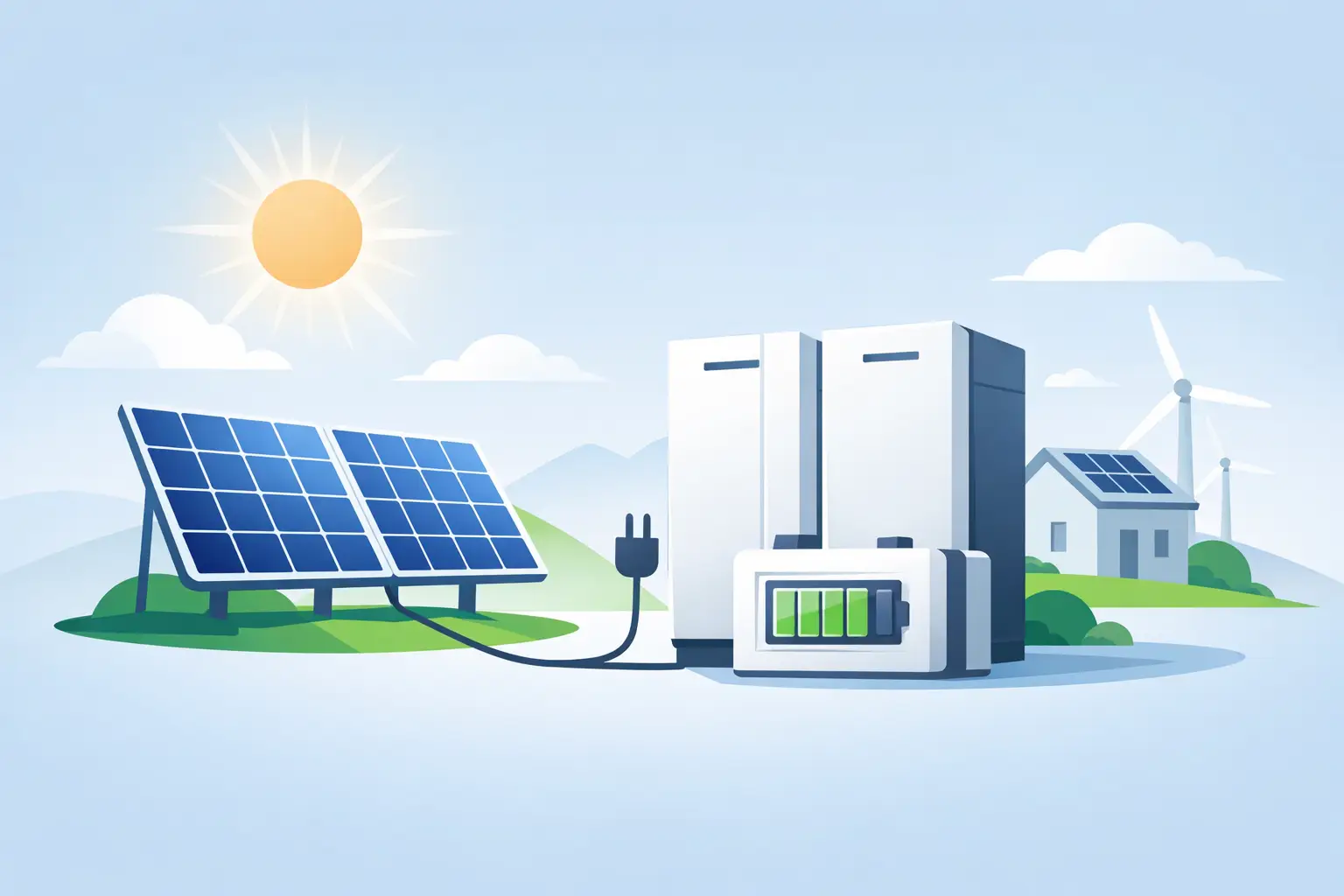
Most homes use the most electricity in the morning and evening, not at lunchtime when solar panels are usually generating at their best. That is exactly why battery storage for solar panels has become such a popular upgrade for UK homeowners. Instead of sending spare solar power back to the grid and buying electricity later at a higher rate, you can store more of what you generate and use it when your home actually needs it.
For many households, that is the difference between having solar panels that help a bit and having a system that works much harder for your bills. It is not about making your home complicated. It is about getting more value from the energy you are already producing.
What battery storage for solar panels actually does
A solar battery stores unused electricity generated by your panels during the day. Rather than letting all that extra power leave your home, the battery keeps it ready for later use. That might be when the sun goes down, when the school run is over and everyone is home, or when appliances are running in the evening.
In simple terms, your panels generate electricity first. Your home uses what it needs at that moment. If there is anything left over, the battery charges up. Once the battery is full, any extra can still be exported to the grid, depending on your system and tariff.
That means you are less dependent on buying electricity from your supplier at peak times. With energy prices still a big concern for many households, that extra control can make a real difference.
Why more homeowners are adding a battery
Solar panels on their own can lower bills, but a lot of homes still end up importing electricity in the evening. A battery helps bridge that gap. You are using more of your own lower-cost electricity instead of buying as much from the grid.
There is also the practical side. Many homeowners like the idea of making better use of what their system produces rather than exporting large amounts during the day and not seeing the full benefit at home. It feels more efficient because it is.
For some people, the appeal is budgeting. Energy costs become a little more predictable when you are relying less on imported power. For others, it is about futureproofing the home, especially if they are already thinking about an electric vehicle, electric heating, or simply rising household demand.
Is battery storage right for every home?
Not always, and that is worth saying clearly.
If you are out of the house most of the day and use very little electricity in the evening, the savings may be smaller than for a busy family home. If your energy use is already spread nicely across daylight hours, solar panels alone may already be doing a good share of the work.
On the other hand, if your home is busiest after work, if people are home in the evenings, or if you want to run appliances after sunset without relying so heavily on the grid, a battery often makes much more sense. Homes with higher electricity use usually see the strongest benefit, but the right answer depends on your usage, your roof, your current bills and your budget.
That is why a proper home assessment matters. A good installer should keep it simple, explain the likely return in plain English and help you avoid paying for more storage than you actually need.
How much battery storage do you need?
This is one of the most common questions, and bigger is not always better.
The right battery size depends on how much solar your system generates and when your household uses electricity. A smaller battery may be enough if your daytime generation is modest or if you only want to cover evening basics like lighting, televisions, refrigeration and device charging. A larger battery can store more excess generation, but if it rarely fills or empties properly, you may not be getting the best value.
A sensible system is one that suits the way you live. There is little point paying for capacity you do not use. Equally, going too small may mean spare solar is still being exported while you buy electricity later.
This is where practical advice makes a difference. The best setups are planned around real household habits, not guesswork.
Battery storage for solar panels and your savings
A battery can help improve the financial return from solar because it increases self-consumption. In plain terms, that means you use more of your own electricity instead of buying it. Since imported grid electricity is usually worth more to your household than exported electricity, storing solar power often improves the value of each unit your panels generate.
That said, savings vary from home to home. Your results will depend on your tariff, your electricity use, the size of your solar system and the battery capacity. If your usage is low, payback may take longer. If your home has high evening demand, the numbers often look more attractive.
There is also the upfront cost to consider. Adding a battery means a bigger investment than solar panels alone, so the question is not just whether you will save money, but how quickly. For many homeowners, the answer is still yes, but it needs to be based on realistic figures rather than sales talk.
Can you add a battery to existing solar panels?
Yes, in many cases you can.
If you already have solar panels installed, battery storage can often be added later as an upgrade. This is a common choice for homeowners who started with panels and now want to improve savings or make better use of the electricity they generate.
Compatibility matters, though. The type of inverter you have, the age of the system and the layout of your current setup can all affect what is possible. Some homes need a straightforward add-on. Others may need extra equipment or a change to part of the system.
The important thing is not to assume it will be one-size-fits-all. A proper check can confirm what works best without turning it into a technical headache.
What to look for in a battery system
Price matters, but it should not be the only thing you compare.
Battery capacity is important, but so is usable capacity, which is the amount you can actually draw on day to day. Lifespan matters too, along with warranty length and how the battery performs over time. Some systems also offer smarter charging features, which can be useful if you are on a time-of-use tariff and want to charge at cheaper times.
You will also want to think about where the battery will be fitted, whether it suits your available space and how neatly the full system can be installed. For most homeowners, the best option is not the flashiest one. It is the one that is reliable, sensibly priced and properly matched to the home.
That is where a company like Newtech Renewables can make the process feel far more straightforward. Clear advice, suitable package options and no hidden costs matter just as much as the technology itself.
Common concerns homeowners have
A lot of people worry that battery storage sounds expensive or overly technical. That is understandable, especially if you are comparing quotes and struggling to tell what is genuinely useful and what is just padded out.
The good news is that a well-designed system should make life simpler, not harder. Once installed, battery storage largely works in the background. You do not need to be an energy expert to benefit from it.
Another common concern is whether batteries will keep the house running during a power cut. Sometimes they can provide backup power, but not all systems do this as standard. If backup is important to you, ask specifically about it rather than assuming it is included.
People also ask about maintenance. In most cases, battery systems are low maintenance, but they should still be installed correctly and supported by a company that can help if anything needs checking later on.
Should you get solar panels and battery storage together?
If you are starting from scratch, fitting both together is often the simplest route. It gives you a system designed to work as one from the start and can reduce the need for future changes.
If budget is tight, some households prefer to install solar panels first and add a battery later. That can still be a good option, particularly if it helps you begin saving sooner. The right approach depends on your finances and how quickly you want to maximise the benefits.
What matters most is choosing a setup you feel comfortable with. The goal is not to buy the biggest system available. It is to get a practical solution that lowers bills, suits your home and feels manageable from day one.
If you are looking at battery storage for solar panels, keep it simple. Ask how much of your own electricity you are likely to use, what savings are realistic for your home and whether the system is sized around your life rather than a sales target. That is usually where the smartest decision starts.

Pingback: Guide to Home Energy Assessments for UK Homes – Newtech Renewables
Pingback: Choosing Home Battery Capacity for Your Home – Newtech Renewables
Pingback: Example Monthly Savings After Solar in the UK – Newtech Renewables