
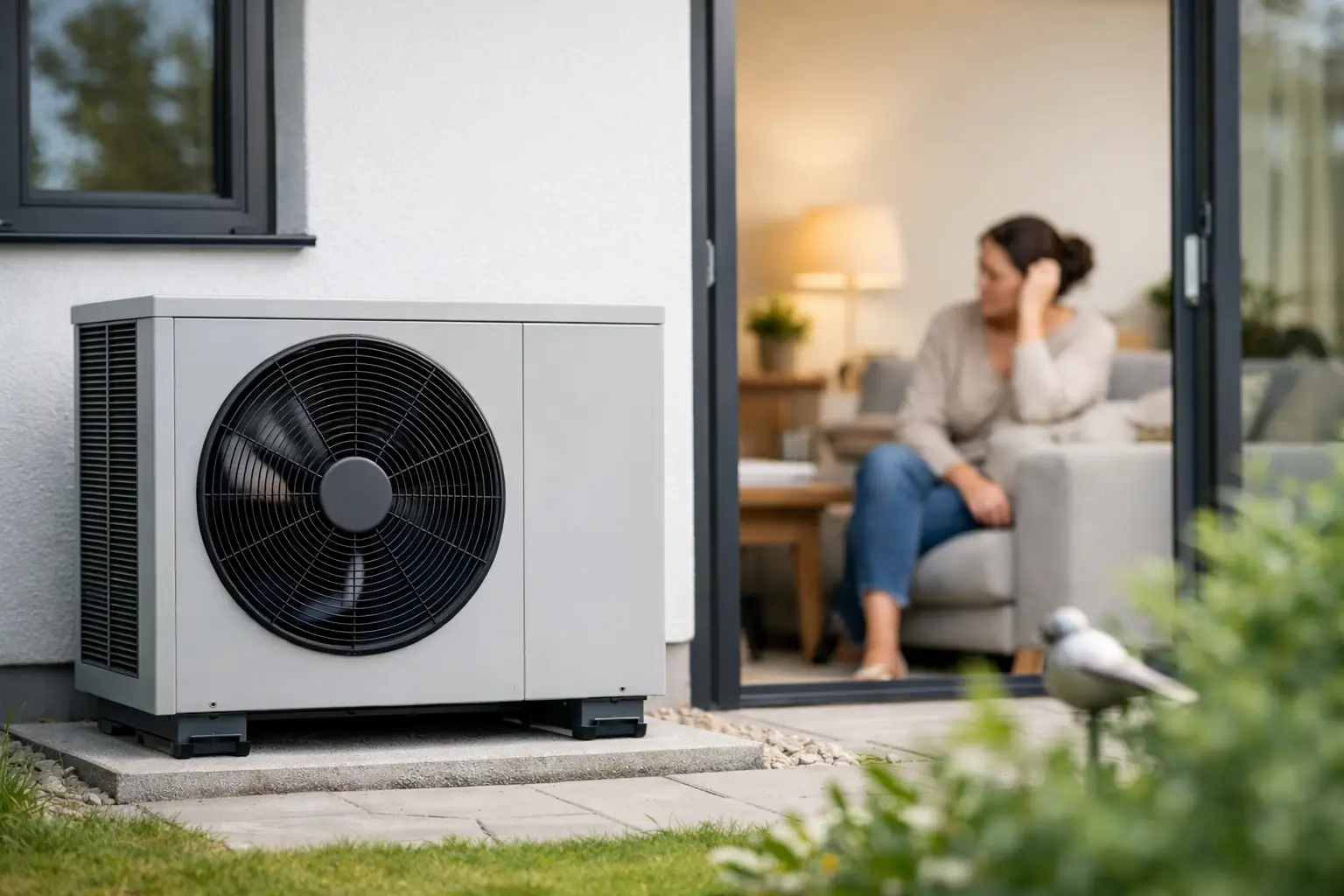
A heat pump should not turn your garden into the noisiest part of the house. Still, it is sensible to ask, are air source heat pumps noisy, before choosing one. The outdoor unit contains a fan and compressor, so it does make a sound. The reassuring part is that a correctly specified and carefully installed modern system is usually heard as a low background hum, not a constant roar.
For most homes, the difference comes down to the quality of the unit, where it is positioned and whether the installer has designed the system around the property. That is why a proper home assessment matters just as much as the heat pump itself.
Are air source heat pumps noisy in everyday use?
Most modern air source heat pumps produce around 40 to 60 decibels when measured close to the outdoor unit. For context, that can be similar to light rainfall, a modern fridge or a quiet conversation, depending on the model and its operating level.
Figures can sound more alarming on paper than they are in real life. A heat pump does not usually run at full power all day. It adjusts its output to match the temperature outside and the warmth your home needs. On a mild day, it may operate very quietly. During a cold Scottish spell, it will work harder and may be more noticeable, but a well-designed system should still be comfortable to live with.
The sound is generally different from a gas boiler firing up. A boiler often works in short, more powerful bursts. A heat pump tends to run for longer at a lower level, maintaining an even temperature rather than repeatedly heating and cooling the house.
You may hear the fan moving air through the unit and a gentle compressor hum. Indoors, the system is usually very quiet. There is no outdoor fan in the living room, and properly fitted pipework should not create rattling or vibration through walls.
What makes a heat pump seem louder?
The same heat pump can be barely noticeable at one property and frustrating at another. Positioning is often the deciding factor.
An outdoor unit placed beside a bedroom window, close to a patio seating area or in a narrow passage can sound louder because the noise has nowhere to go. Hard surfaces such as walls and fences can reflect sound back towards the house or a neighbour’s property. An open, well-ventilated position with sensible clearance around the unit is normally a better choice.
Vibration can also be mistaken for noise from the heat pump itself. If the unit is mounted poorly, fitted to a lightweight wall without suitable brackets, or installed on an uneven base, vibration may travel into the building. A stable ground base, appropriate anti-vibration fittings and secure pipework make a real difference.
Weather plays a part too. On particularly cold or damp days, the unit may be easier to hear as it works harder. During a defrost cycle, you might notice a temporary change in sound. This is normal. The system briefly removes frost from the outdoor coil so it can continue heating your home efficiently. It should not be a long or disruptive event.
A new, unusual noise is different. Persistent banging, grinding, excessive rattling or a dramatic increase in volume should be checked. These can point to loose components, an obstruction around the fan or a maintenance issue that is best dealt with early.
Why the right location matters so much
There is no single perfect place for every outdoor unit. It needs a clear supply of air, easy access for servicing and a position that works for your household and neighbours.
At a typical home, this may mean placing it to the side or rear of the property rather than directly beneath a bedroom window. It should not be squeezed into a tiny enclosed corner just to keep it out of sight. Restricting airflow can reduce efficiency and may make the sound more noticeable.
A good installer will consider the direction the fan faces, nearby boundaries, windows, garden areas and neighbouring homes. This is particularly relevant for terraces, semis and properties with compact gardens. In many cases, small changes in position can improve both noise levels and system performance.
Heat pump installations also need to meet applicable planning and noise requirements. An MCS-qualified installer uses recognised sound assessment methods to check that a proposed system is suitable for the location. That gives homeowners more confidence that the unit is not simply being fitted in the first available space.
Can you make an air source heat pump quieter?
Yes, although the best solution is to get the design right from the beginning. Trying to hide a noisy or poorly positioned unit after installation is rarely as effective as careful planning before it goes in.
Choosing a quieter model is one option, especially where homes are close together. Manufacturers provide sound data for their units, but it needs to be interpreted properly. The quoted figure may be measured at a particular distance and operating setting, so comparing numbers alone does not tell the whole story.
Simple installation details help as well. A firm base limits movement, anti-vibration mounts reduce transmitted noise and correctly clipped pipework prevents buzzing against walls. Keeping leaves, garden furniture and stored items away from the unit allows air to move freely and avoids unwanted rattles.
Acoustic screening can sometimes be useful, but it must be designed carefully. A solid fence placed too close to the heat pump can block airflow, make the unit work harder and create its own sound problems. Any screen needs enough space and a suitable layout, rather than acting like a box around the unit.
Regular servicing also protects quiet operation. The outdoor unit is exposed to rain, wind and debris throughout the year. A maintenance visit can identify loose fixings, worn parts or build-up around the fan before they affect comfort or efficiency.
What should you ask before agreeing to an installation?
You do not need to become a heating expert, but a few straightforward questions can help you feel confident. Ask where the outdoor unit is planned, why that location has been chosen and whether it is close to bedrooms, neighbouring windows or your usual outdoor seating area.
It is also worth asking how the installer will manage vibration and whether a sound assessment forms part of the design. If you have a specific concern, such as a neighbour’s boundary close to the proposed location, raise it during the survey rather than after installation. A good installer will talk through practical alternatives in plain English.
Be cautious of anyone who promises that a heat pump will be completely silent. It will not be. Like any outdoor appliance with a fan, it makes some sound. The realistic goal is a unit that delivers reliable, efficient warmth without becoming an annoyance to you or the people around you.
Is noise a reason not to get a heat pump?
For most homeowners, no. Noise is a design consideration, not a reason to rule out an air source heat pump altogether. A properly sized, professionally installed system can provide steady heating and hot water while keeping disruption low.
There are situations where more thought is needed. If your property has very limited outdoor space, walls close to neighbours or a bedroom directly beside the only possible installation area, the survey should be especially thorough. In some cases, a different location, a quieter unit or another heating option may be more appropriate. Being honest about that is part of choosing the right solution, not the quickest sale.
For homes across Glasgow and the Central Belt, where gardens and property layouts vary widely, a site-specific recommendation is far more useful than a one-size-fits-all answer. The aim is simple: lower running costs, dependable warmth and an installation that fits comfortably into everyday life.
If you are considering a heat pump, listen for clear advice rather than big promises. A thoughtful assessment of your home, your heating needs and the proposed unit location will do more to keep things quiet than any after-the-fact fix.


Pingback: Heat Pump Installer Review: What to Check – Newtech Renewables