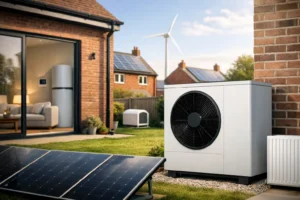
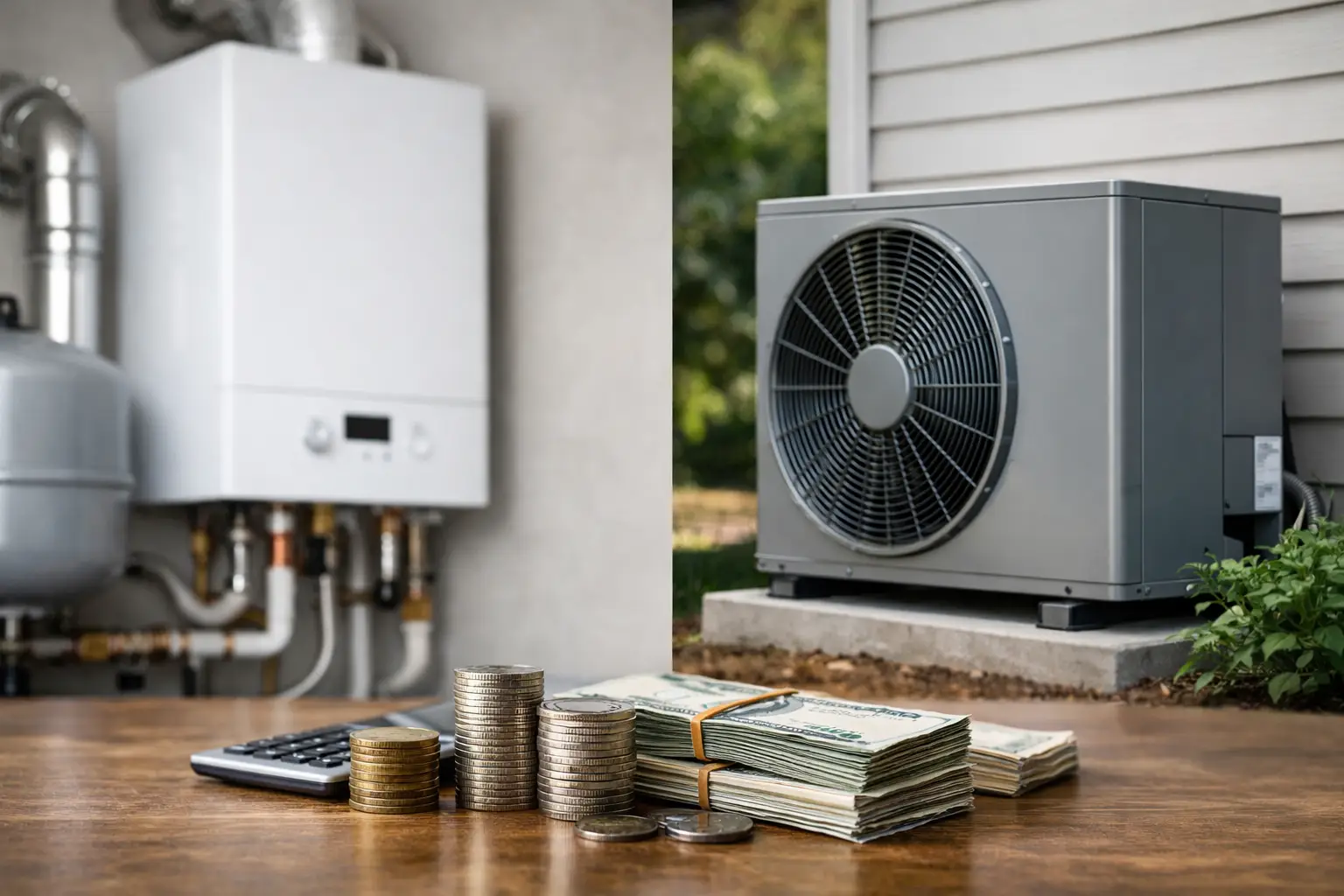
If your boiler is ageing, breaking down more often, or pushing your gas bills up, you are probably comparing boiler vs heat pump costs with one main question in mind – which option will actually save money without turning your home upside down?
The honest answer is that it depends on your property, your current heating system, and how long you plan to stay in the home. A boiler is usually cheaper to buy and fit. A heat pump often costs more upfront, but it can cut running costs in the right home and may qualify for funding or grants that change the picture completely.
That is why it helps to look beyond the headline price. The cheapest quote today is not always the lowest-cost option over the next ten or fifteen years.
Boiler vs heat pump costs at a glance
For most UK households, a new gas boiler will usually cost far less upfront than an air source heat pump. A straightforward boiler replacement can often come in at a few thousand pounds, depending on the model, controls, and whether any pipework or radiator changes are needed.
A heat pump installation is normally a bigger investment. That is because the system itself costs more, and some homes need upgrades such as larger radiators, hot water cylinder changes, or insulation improvements to get the best results.
That said, upfront price is only one part of the story. Boilers rely on gas, and gas prices can be unpredictable. Heat pumps use electricity, but they work efficiently by moving heat rather than generating it in the same way a boiler does. In a suitable home, that can mean lower day-to-day heating costs and a better long-term return.
Upfront installation costs
A modern boiler is usually the more affordable option if you need a like-for-like replacement. If your home already has gas central heating and the installation is simple, the overall cost is often manageable. This makes boilers attractive for households working to a tight budget or needing a quick replacement before winter.
Heat pumps tend to involve more planning. The unit must be sized properly, the property needs to be assessed, and the installer may recommend system changes to help the heat pump run efficiently. That can make the first quote look high compared with a boiler.
However, funding support matters here. Some homeowners can access grants or support schemes that reduce the upfront cost of a heat pump significantly. Others may qualify for funded efficiency improvements that make a low-carbon heating upgrade more realistic than they first thought. For many people, the real comparison is not the full list price of a heat pump against a boiler, but the after-grant cost against the after-installation savings.
Running costs: where the gap can narrow
This is where boiler vs heat pump costs becomes more interesting.
A gas boiler may be cheaper to install, but it still needs fuel every day it runs. If you are replacing an old, inefficient boiler, a newer one will often improve your bills. But it is still tied to gas prices and will only ever be as efficient as a combustion system can be.
A heat pump can be cheaper to run when the home is reasonably well insulated and the system is designed properly. It works best by providing steady, lower-temperature heat over longer periods, rather than blasting very hot water through radiators for short bursts. In homes that suit this style of heating, comfort can improve at the same time as running costs come down.
But there are trade-offs. If a home is draughty, poorly insulated, or fitted with a heat pump that has not been designed properly, savings may disappoint. That is why the right survey matters. A heat pump is not a magic fix for every property, and any installer who suggests otherwise is oversimplifying it.
Maintenance and repair costs
Boilers and heat pumps both need looking after, but the costs tend to show up in different ways.
A boiler should be serviced annually, and over time there is a good chance parts will need replacing. If the unit is older, repair bills can start to add up, especially during colder months when demand for engineers is high. Because boilers have combustion components, flues and gas safety checks also remain part of ownership.
A heat pump also benefits from regular servicing, but it has fewer combustion-related parts. That can mean fewer of the repair issues people associate with ageing gas boilers. Still, it is not maintenance-free. Fans, controls, pumps and system checks all matter, and a poor installation can create expensive problems later.
So if you are comparing the two, the better question is not which one has zero maintenance costs, because neither does. It is which system is likely to give you more predictable long-term ownership costs in your type of property.
How insulation changes the numbers
One of the biggest factors in heat pump value is insulation.
If your home holds heat well, a heat pump usually has a better chance of delivering strong running-cost savings. If your loft insulation is poor, your walls lose heat quickly, or your windows are letting cold air in, the system has to work harder. That does not always mean a heat pump is wrong for the property, but it does mean the wider home setup matters.
This is also true for boilers, of course. Any heating system becomes more expensive to run in a home that leaks warmth. But with heat pumps, the effect is usually more noticeable because they perform best when the house keeps a steady temperature.
That is why many homeowners benefit from looking at heating and energy efficiency together, rather than treating them as separate decisions.
Which option offers better long-term value?
If you only look at year-one costs, a boiler often wins. Lower purchase price, simpler installation, familiar system. For many households, that is enough to make the decision.
If you look at ten to fifteen years, the answer can change. A heat pump may offer better value through lower running costs, reduced exposure to gas price rises, and possible funding support at the point of install. It can also future-proof the home as heating standards and buyer expectations continue to shift.
Still, long-term value depends on how long you stay in the property. If you expect to move soon, you may prefer the lower upfront cost of a boiler. If this is your long-term home and you want lower bills over time, a heat pump may make more sense.
Boiler vs heat pump costs for different households
For a household needing the lowest possible upfront spend, a boiler is often the practical answer, especially if the existing system can be swapped out with minimal work. It is familiar, fast to install, and easier to budget for.
For a homeowner planning ahead, especially one interested in lower energy use and better long-term savings, a heat pump can be a stronger option. This is particularly true if the property is well insulated or can be improved through a funded scheme.
For homes off the gas grid, the balance may shift even more towards heat pumps. If you currently rely on oil, LPG or direct electric heating, the running-cost comparison can look very different from a standard mains-gas home.
The hidden cost of choosing the wrong system
The most expensive outcome is often not choosing a boiler or a heat pump. It is choosing the wrong one for the house.
A cheap boiler quote can become less appealing if the system is badly sized, fitted with poor controls, or installed without sorting obvious efficiency issues. The same goes for heat pumps. A rushed installation without proper heat-loss checks or radiator assessment can leave you with a system that costs more to run and feels disappointing.
Good advice should feel clear and practical, not pushy. You should be told what works for your home, what the likely costs are, what savings are realistic, and where the trade-offs sit. If someone promises dramatic bill cuts without asking much about your property, treat that as a warning sign.
So which is cheaper?
In simple terms, boilers are usually cheaper to buy and fit. Heat pumps can be cheaper to run and may offer better value over time.
That does not mean everyone should rush into a heat pump, or that a new boiler is always the budget choice in the long run. The right answer sits somewhere between the upfront price, your energy bills, the condition of your home, and whether support funding is available.
For many households, the smartest next step is a proper home assessment rather than guessing from online averages. A clear quote, honest advice, and a realistic view of your home will tell you more than any headline figure ever could. Companies like Newtech Renewables focus on making that process simple, so you can compare your options without the stress.
A warmer home and lower bills should feel achievable, not confusing – and the best heating choice is the one that works for your budget as well as your property.