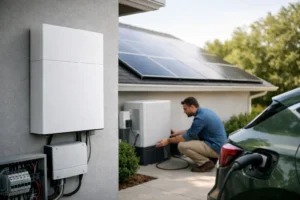
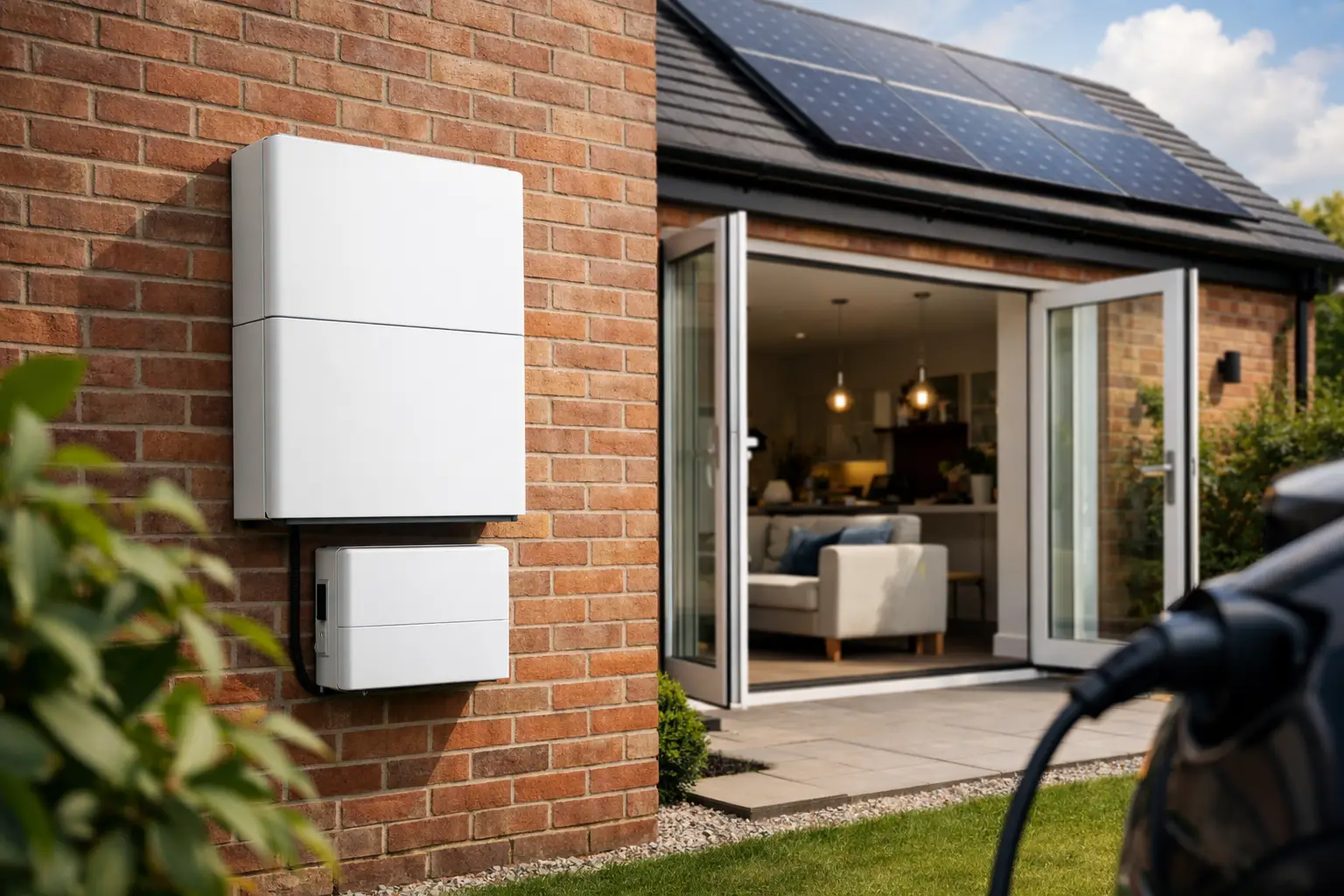
A home battery can make the electricity from your solar panels work harder for you. Rather than sending spare power back to the grid in the middle of the day, you can save it for the evening, when the kettle is on, dinner is cooking and demand is highest. This battery storage buyers’ guide explains what to look for before you commit, without the confusing jargon.
The right battery is not always the largest one. It should suit your household’s electricity use, your solar generation, your budget and the way you want to use energy. A clear assessment is worth far more than a one-size-fits-all quote.
What does a home battery actually do?
Battery storage holds electricity for later use. Most households pair it with solar panels, charging the battery from unused solar generation during daylight hours. When your home needs power later, the battery discharges first, reducing the electricity you need to buy from your supplier.
Some systems can also charge from the grid when electricity is cheaper, then supply your home during more expensive periods. This can work well with a suitable time-of-use tariff, but the savings depend on the tariff rates and how much electricity you use at different times.
A battery is not automatically a full backup system during a power cut. Many standard installations switch off for safety when the grid goes down. If keeping selected appliances running during an outage matters to you, ask about backup capability from the start. It usually needs extra equipment and should be designed around what you genuinely need to keep on.
Start with your household, not the battery
Before comparing brands or prices, look at your electricity bills. Your annual usage gives a useful starting point, but daily habits matter just as much. A couple who are out all day will use energy differently from a busy family working from home, cooking in the evening and charging an electric car overnight.
If you already have solar, review how much you export and when. High daytime exports can show there is an opportunity to store more of your own generation. If you are planning solar at the same time, the panel and battery sizes should be considered together rather than chosen separately.
It also helps to think ahead. An air source heat pump, electric vehicle or a growing family can change your electricity demand. Buying a system that can be expanded later may cost a little more initially, but it can avoid replacing equipment before its time. On the other hand, there is no benefit in paying for capacity you are unlikely to use.
Choosing the right battery size
Battery capacity is measured in kilowatt-hours, or kWh. This tells you how much electricity the battery can store. For many homes, a battery in the region of 5 kWh to 10 kWh is a sensible starting point, although the right answer depends on your usage and solar system.
A smaller battery may fill quickly from your panels and cover a useful part of the evening demand. It can be a practical, lower-cost choice for a modest household. A larger battery can store more solar electricity and may better suit a home with higher consumption, but it will not always fill fully, particularly through darker Scottish winters.
That seasonal difference matters. Solar production is strongest in spring and summer, while household demand is often highest in winter. Battery storage can still help year-round, especially if used with the right tariff, but it does not turn winter solar into a summer-level supply. An honest proposal should set realistic expectations about savings.
Capacity is only one part of the picture
Also ask about usable capacity. Batteries are usually not designed to be completely emptied, helping to protect their lifespan. The headline figure and the amount of electricity available for everyday use can therefore differ.
Power output matters too. Measured in kilowatts, this shows how quickly a battery can supply electricity. A battery may have plenty stored but be unable to cover every high-demand appliance at once. For example, an oven, kettle and electric shower running together can create a bigger demand than some systems can deliver alone. This is normal, but it is worth understanding how your chosen battery will perform in a real household.
Costs, savings and paying back your investment
The installed price of battery storage varies with capacity, brand, inverter requirements, access for installation and whether it is being fitted alongside solar panels. As a guide, a home battery system can be a significant investment, so it is sensible to focus on value rather than a single headline price.
Savings come mainly from using more of your own solar electricity and, where appropriate, buying cheaper electricity to use later. The result depends on your export payments, import tariff, household habits and the amount of energy that would otherwise be exported or bought at peak times.
Be cautious of any quote that promises a fixed saving without asking how you use electricity. A useful installer will explain the assumptions behind their estimate. They should also make clear whether the figures include future tariff changes, likely battery losses and any expected increase in electricity use.
There may be funding or finance options available for certain wider home energy improvements, depending on your circumstances. Eligibility rules can change, so treat any support as something to check rather than something to assume. The important point is to choose a system that remains affordable and worthwhile for your household.
Your battery storage buyers’ guide to tariffs
A battery can be more valuable when your electricity tariff rewards flexible use. Time-of-use tariffs offer different rates at different times of day, often with cheaper overnight periods. Your battery can charge when prices are low and reduce the amount you buy when rates rise.
This is not automatically the best option for everyone. Some tariffs have expensive daytime rates, and savings rely on setting the battery controls correctly. If you have solar panels, your system should be programmed to prioritise free solar power where that makes sense, rather than regularly filling from the grid at a price.
Ask whether the battery’s app gives you clear control over charging schedules and whether the installer will help set it up. Technology should make life simpler, not leave you checking settings every night.
What to check in an installation quote
A good quote should be clear about what is included. You should know the battery capacity, usable capacity, power output, warranty length and whether an inverter is included or needs upgrading. If you already have solar, compatibility with your existing system is essential.
The installer should also explain where the battery will be fitted. Common locations include a utility area, garage or suitable internal space, but the final position needs to meet manufacturer guidance and safety requirements. Access, ventilation and cable routes all affect what is possible.
Ask who will handle notifications, testing and handover. You should receive the information needed to use the system, understand its monitoring app and register any relevant warranty. If you may add more battery capacity later, get confirmation that the proposed model supports this and what the future work is likely to involve.
For peace of mind, choose a properly qualified installer with relevant renewable energy experience. In Scotland, a local survey can be particularly helpful because homes vary widely, from newer estates to traditional properties with different electrical setups and access requirements.
Battery questions worth asking before you say yes
You do not need to become an energy expert, but a few direct questions can prevent expensive surprises. Ask how the recommended size was calculated, how much of your solar electricity you are likely to use yourself, and what assumptions sit behind the savings estimate.
Ask whether the system has backup power, whether it can be expanded, and what happens if your broadband goes down or the app is unavailable. Find out how the warranty works, including whether it is based on years, energy throughput or both. Finally, confirm the total installed price and whether there are any extra costs for electrical upgrades, scaffolding or future monitoring fees.
Make the choice that feels right for your home
The best battery is the one that fits your home and makes a noticeable difference to your bills without stretching your budget. It should be sized around real usage, installed safely and explained in plain English. A friendly, detailed survey gives you the space to ask questions and compare options without pressure.
At Newtech Renewables, the aim is to make that decision stress free: practical advice, clear costs and a system designed around how your household actually uses energy. A battery should leave you feeling more in control of your electricity, not more confused by it.