
Rising electricity bills tend to focus the mind quickly. For many homeowners, the idea of solar sounds sensible until the process starts to feel vague, expensive or full of jargon. A step by step solar installation approach makes it much easier to see what actually happens, what decisions matter, and where a good installer saves you time, stress and money.
If you are thinking about panels for your home, the main thing to know is this: the best solar jobs are not rushed. A proper installation follows a clear order, starting with whether your property is suitable and ending with a system that is tested, signed off and ready to help lower your bills.
Step by step solar installation: what happens first
The first stage is a suitability check. This is where an installer looks at the basics of your home and your energy use before talking about panel numbers or prices. Roof direction, roof size, shading from trees or neighbouring buildings, and the condition of the roof all matter. South-facing roofs are often ideal, but east and west can still work well depending on your usage and budget.
Your electricity habits matter just as much. A household that uses more power during the day may get better immediate value from solar than one that is empty from morning to evening. That does not mean solar is wrong for the second home – it may simply mean battery storage is worth considering as part of the package.
This early stage is also where honest advice matters. Not every roof is perfect, and not every household needs a large system. A straightforward installer should explain what is likely to work well, what the limitations are, and whether the likely savings justify the upfront cost.
The home survey and system design
Once the property looks suitable, the next step is a proper survey. This is more detailed than an initial check. The installer will confirm measurements, inspect the roof more closely, look at the consumer unit, and review where the inverter and any battery could go.
Placement matters because solar equipment needs to work safely and efficiently, but it also needs to fit into normal home life. Some homeowners want everything tucked away neatly in a loft or utility area. Others prefer easier access for maintenance. There is often more than one workable option, and the best choice depends on space, ventilation and convenience.
At this point, you should be given a proposed system design. This usually covers how many panels are recommended, the estimated generation, likely annual savings, and whether battery storage would improve the return. A larger system can generate more power, but that does not always mean it is the best-value system for your home. If your roof space is limited or your budget is tight, a smaller, well-matched setup may be the smarter choice.
Understanding permissions and paperwork
A lot of homeowners worry that solar installation means a mountain of paperwork. In reality, much of this should be handled for you. Most domestic solar panel systems fall under permitted development, so formal planning permission is often not needed. Still, there are exceptions, particularly for listed buildings or homes in certain protected areas.
There may also be network paperwork to deal with, especially depending on the size of the system and whether battery storage is included. This is one of those areas where a stress-free service really counts. You should not have to chase technical approvals yourself or guess what forms are needed.
For households in Scotland and England looking at funded or supported upgrade routes, the wider eligibility process can also affect timing. If you are combining solar with other improvements, it is worth checking what order the works need to happen in.
Choosing the right equipment
This is where many people assume they need to become solar experts overnight. You do not. What you do need is a clear explanation in plain English.
Most domestic systems include solar panels, mounting rails, an inverter, isolators and the wiring needed to connect everything safely. Some also include battery storage so unused daytime electricity can be stored for later. That is especially useful if you are out during working hours and use more electricity in the evening.
There are trade-offs. Better-performing panels may produce more from limited roof space, but they can cost more. A battery can improve how much of your own solar energy you use, but it adds to the initial spend. For some households, the priority is the lowest starting price. For others, it is cutting reliance on the grid as much as possible. Neither approach is wrong – it depends on your goals, your property and how long you plan to stay in the home.
A good quote should feel clear, not padded with extras you do not need. This is where package-based pricing can help because it makes comparison simpler and reduces the chance of hidden costs appearing later.
Installation day: what to expect
The actual fitting is usually quicker than people expect. Once the survey, design and paperwork are sorted, installation itself may take a day or two for a standard domestic setup, though larger or more complex systems can take longer.
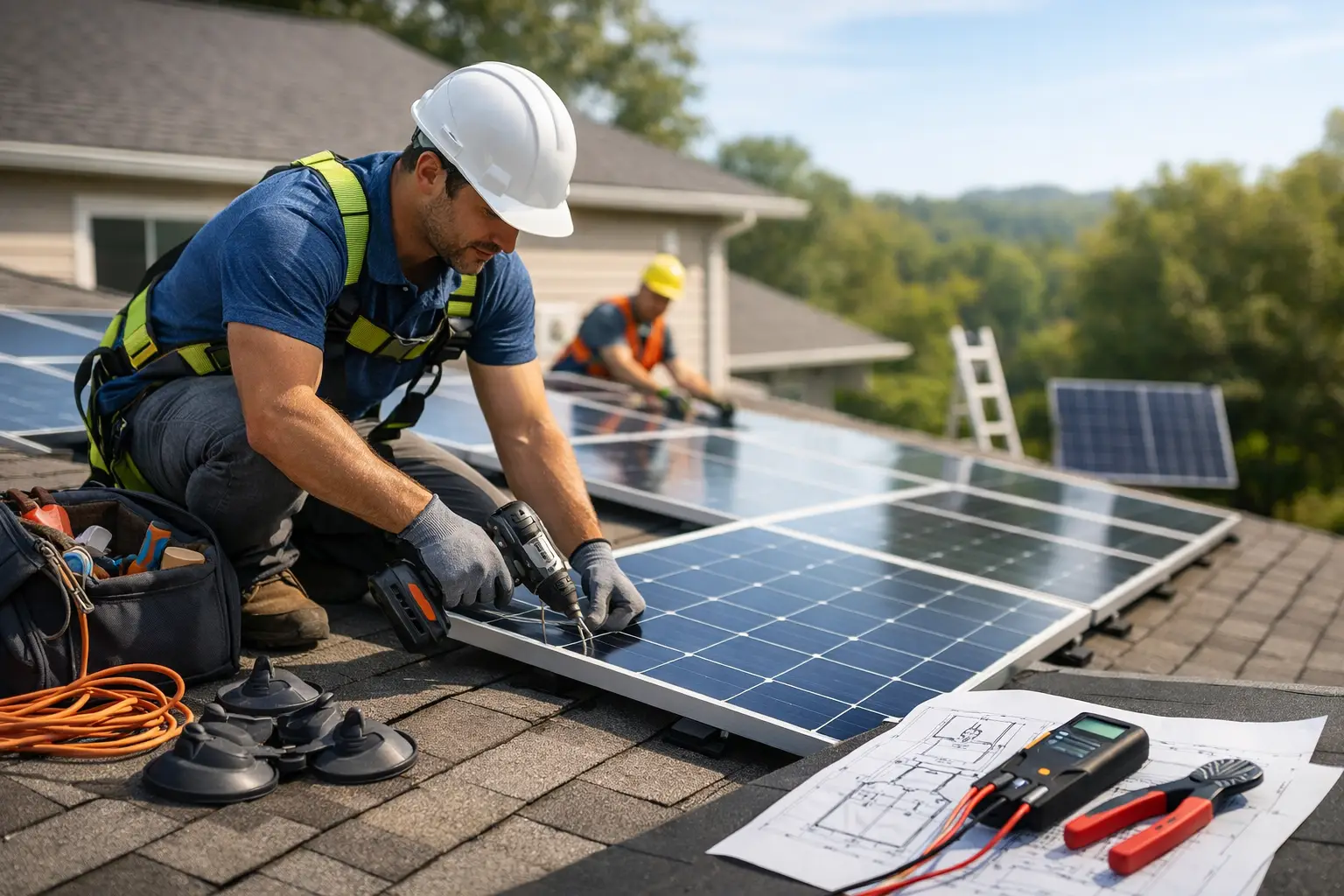
The roof team will fit the mounting system first, then secure the panels in place. At the same time or shortly after, electrical work is carried out inside the property. This includes fitting the inverter and connecting the system into your home’s electrical setup. If you are having a battery installed, that will usually be done as part of the same visit.
There may be some scaffolding, some drilling and a bit of disruption, but it should be managed professionally and kept as tidy as possible. You do not need to expect major upheaval across the whole house. Most homeowners are pleasantly surprised by how straightforward the visit is when it has been planned properly.
Testing, commissioning and handover
Fitting the equipment is not the end of the job. The system needs to be tested and commissioned to make sure everything is working safely and generating as it should.
This stage includes electrical checks, confirmation that the inverter is operating correctly, and a walkthrough of the monitoring system if one is included. Many systems now let you see generation figures through an app, which helps you understand when your home is producing the most power and how your usage lines up with it.
The handover matters more than people think. You should come away knowing how the system works in everyday terms, what the warning lights mean if there are any, and who to contact if you have a question later. The goal is confidence, not confusion.
How long does the full process take?
When people ask about step by step solar installation, they usually mean more than the day the panels go on the roof. From first enquiry to switch-on, the full timeline can vary depending on survey availability, paperwork, equipment supply and the complexity of the job.
For a straightforward home installation, the process may move along fairly quickly. If planning checks, network permissions or combined upgrade works are involved, it can take longer. That is normal. Faster is not always better if it means corners are cut at the survey or design stage.
What matters is knowing where you are in the process and what happens next. Clear communication makes a big difference here. Homeowners do not usually mind waiting a bit if they know the reason and the expected next step.
What can affect the final cost?
Solar pricing is shaped by the size of the system, the type of equipment, roof access and whether battery storage is included. A simple roof with easy access is generally more straightforward than a higher, awkward or more complex roof shape.
Older properties can sometimes need a bit more attention too, especially if the roof condition is uncertain or the electrics need upgrading before the system is connected. That does not mean solar is off the table. It simply means the quote should reflect the real work involved.
The cheapest quote is not always the best buy. If a price looks unusually low, it is worth checking what has been left out, what support is included after installation, and whether the system has actually been designed around your home rather than copied from a standard template.
Why the installer matters as much as the panels
Most homeowners are not looking for a lecture in electrical engineering. They want lower bills, a tidy installation and the confidence that someone competent is handling the whole job. That is why the installer matters so much.
A good installer keeps the process simple, explains things clearly, and flags any issues before they become problems. If a roof is not ideal, they should say so. If a battery is optional rather than essential, they should say that too. Honest advice tends to save money in the long run because it helps you avoid buying the wrong system.
For many households, the biggest value is not just in the panels. It is in having the full process managed properly, from first survey through to final sign-off. That is where companies like Newtech Renewables Ltd can make the move to solar feel far more straightforward.
Solar works best when it is matched to the home, the budget and the people living there. If the process feels clear from the start, you are far more likely to end up with a system that feels worthwhile every time the next electricity bill lands.