When the boiler starts making unfamiliar noises or another high energy bill lands on the doormat, heating suddenly becomes a priority. The future of home heating is not about filling your house with complicated technology. For most households, it is about choosing practical upgrades that make rooms warmer, give you more control over energy use and reduce the cost of running your home over time.
For homeowners across Scotland and England, that future is already taking shape. Heat pumps, solar panels, batteries, better insulation and modern boilers can work together in different ways. The right answer depends on your home, your current heating system, your budget and how quickly you need to see savings.
Why home heating is changing
For decades, the typical UK home relied on a gas boiler and a thermostat, with little thought given to how efficiently the property held onto heat. That arrangement is changing because householders want lower bills, greater comfort and less exposure to unpredictable fuel costs.
Heating is also becoming more connected. Instead of relying on one fuel source, homes can generate some of their own electricity with solar panels, store spare power in a battery and use that energy more carefully throughout the day. This does not mean every home needs every technology. It means there are more sensible options than simply replacing like for like when an old boiler fails.
The biggest shift is towards using less energy in the first place. A well-insulated home with sensible heating controls will feel more comfortable whether it has a heat pump, a boiler or a mixture of both. The cheapest unit of energy is the one you do not need to buy.
The future of home heating starts with the fabric of your home
Before choosing a new heating system, look at how well your home keeps heat in. Loft insulation, cavity wall insulation where suitable, draught-proofing and improved glazing can all reduce heat loss. They also make any heating system work more effectively.
This matters particularly for air source heat pumps. A heat pump works differently from a gas boiler: rather than creating heat by burning fuel, it moves heat from the outside air into your home. It runs at lower temperatures than a traditional boiler and tends to perform best when the home is not losing warmth through poorly insulated walls, roofs or gaps around doors and windows.
That does not mean an older property cannot have a heat pump. Many can. It simply means a proper home assessment is essential. Some homes may need radiator upgrades, insulation improvements or changes to heating controls first. Honest advice should explain these costs clearly, rather than treating every property as identical.
Heat pumps will become a familiar choice
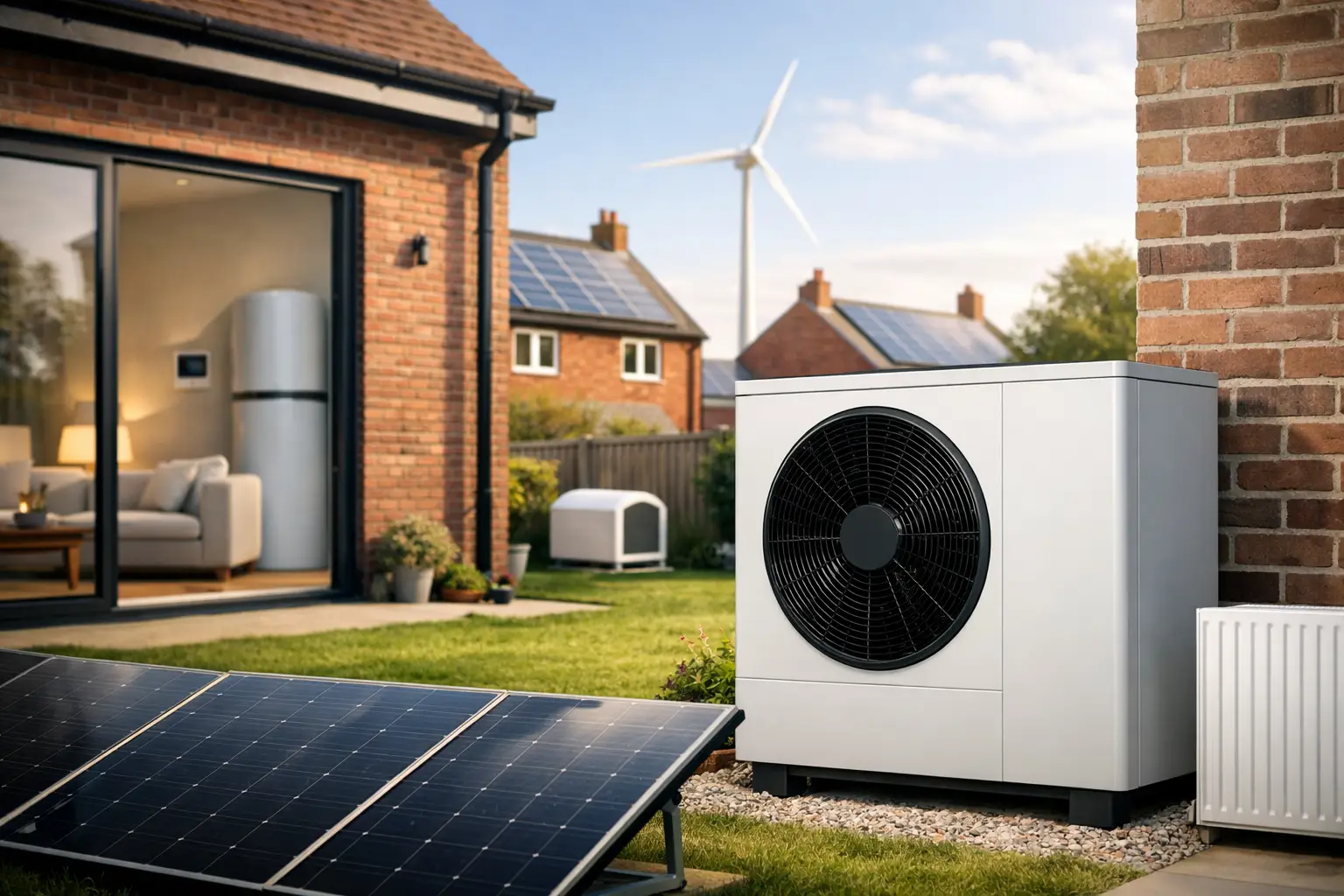
Air source heat pumps are likely to play a major role in the future of home heating, especially as more households move away from older, inefficient systems. They can provide both heating and hot water, work throughout the year and can be a strong long-term option for homes that are suitable.
Their appeal is simple: they can lower carbon emissions and, with the right tariff and setup, may reduce running costs compared with less efficient heating. They are especially attractive when paired with solar panels, because some of the electricity used to run the heat pump can be generated at home.
There are trade-offs. Heat pumps require outdoor space for the unit, and installation is more involved than swapping one boiler for another. They deliver steady, gentle warmth rather than the quick blast of heat some people expect from a boiler. For a household that wants to make a fast, low-cost replacement with minimal changes, a modern efficient boiler may still be the better fit.
The key is not to choose a heat pump because it is fashionable. Choose it because it suits your home and gives you a realistic route to lower bills and reliable comfort.
Solar and batteries will change how homes use energy
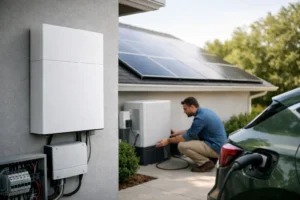
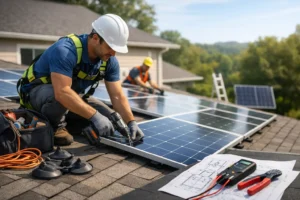
The future of heating is closely tied to how homes use electricity. Solar panels can generate power during daylight hours, helping to run household appliances and reducing the amount of electricity bought from the grid. When combined with battery storage, surplus solar energy can be saved for later rather than used only when the sun is out.
For homes with electric heating or a heat pump, this can be particularly useful. A battery will not run a whole heating system indefinitely through winter, and it should not be sold as a magic answer to high bills. However, it can help a household use more of the electricity it generates, especially during spring, summer and brighter parts of the year.
Smart controls add another useful layer. They can schedule heating around your routine, make better use of off-peak electricity prices where available and avoid heating empty rooms unnecessarily. The benefit is not complicated technology for its own sake. It is giving your home the right amount of energy at the right time.
Modern boilers still have a place
Gas boilers are not disappearing from every home overnight. For many households, particularly those with an existing gas supply and limited budget for wider improvements, replacing an ageing boiler with a modern energy-efficient model remains a sensible step.
A new boiler can offer better controls, more reliable hot water and less wasted energy than an old, poorly performing system. It may also provide time to plan larger changes properly, rather than making a rushed decision when heating fails in the middle of winter.
The practical question is whether a boiler replacement is the final answer or part of a longer-term plan. If you expect to improve insulation, add solar panels or consider a heat pump in the coming years, tell your installer. Heating controls, radiator sizing and hot water arrangements can be considered with that plan in mind.
Funding can make upgrades more achievable
Upfront cost is often the main reason homeowners put off energy improvements. Yet some households may be eligible for funded upgrades through schemes designed to improve energy efficiency and reduce fuel poverty, including ECO4 pathways.
Eligibility depends on your circumstances, property and the measures available, so it should always be checked rather than assumed. A clear provider will explain what is covered, what is not covered and whether any contribution is required before work begins. There should be no pressure and no hidden costs.
Even when funding is not available, it can help to think in stages. Start with the measures that solve the biggest problem in your home. If heat escapes through the loft, insulation may deliver more value than replacing working equipment. If your boiler is unreliable and expensive to run, that may need attention first. A staged approach can keep the process affordable and less stressful.
How to make a sensible plan for your home
Start with your actual energy use, not a sales promise. Look at your bills, note which rooms feel cold, consider the age of your boiler and think about when your household uses the most hot water and electricity. These details shape what will work best.
Next, arrange a proper suitability check. A good assessment should consider insulation, radiators, available roof space for solar, electrical capacity and the layout of the property. It should also give you clear costs and explain likely savings without pretending that every home will get the same result.
Ask how the system will be supported after installation. Heating and energy equipment should be maintained properly, and you should know who to contact if you need help with controls or performance. Newtech Renewables takes an end-to-end approach because clear advice and aftercare matter just as much as the equipment itself.
The best next step is usually the one that makes your home more comfortable now while keeping your options open for later. Whether that means insulation, a more efficient boiler, solar panels, battery storage or a heat pump, a clear assessment can turn a confusing decision into a manageable plan.