If you have ever looked at your electricity bill and thought, “Why am I paying peak prices when my home could use cheaper power later on?”, you are already close to understanding how home battery storage works. A battery system stores electricity for use when you need it most, instead of forcing you to buy all your power from the grid at the most expensive times.
For many households, that is the real appeal. It is not about turning your home into a science project. It is about having more control over when you use electricity, making better use of solar power, and cutting waste. Once you see it that way, battery storage becomes much easier to understand.
How home battery storage works in simple terms
A home battery stores electrical energy so your property can use it later. Think of it like a tank rather than a generator. It does not create electricity on its own. Instead, it holds electricity from another source, usually solar panels or the grid, and releases it when your home needs power.
During the day, if your solar panels produce more electricity than your home is using, that spare energy can charge the battery. Later on, when the sun goes down or your electricity use rises in the evening, the battery can discharge that stored energy back into the home.
Some systems can also charge from the grid when electricity is cheaper, such as overnight on certain tariffs. That means the battery is not only useful for solar households. In the right setup, it can help you shift electricity use away from costly peak periods.
Behind the scenes, the system is doing a few basic jobs. It monitors how much power your home is using, checks whether your solar panels are producing electricity, decides whether the battery should charge or discharge, and manages power safely through an inverter. Most of this happens automatically.
The main parts of a battery storage system
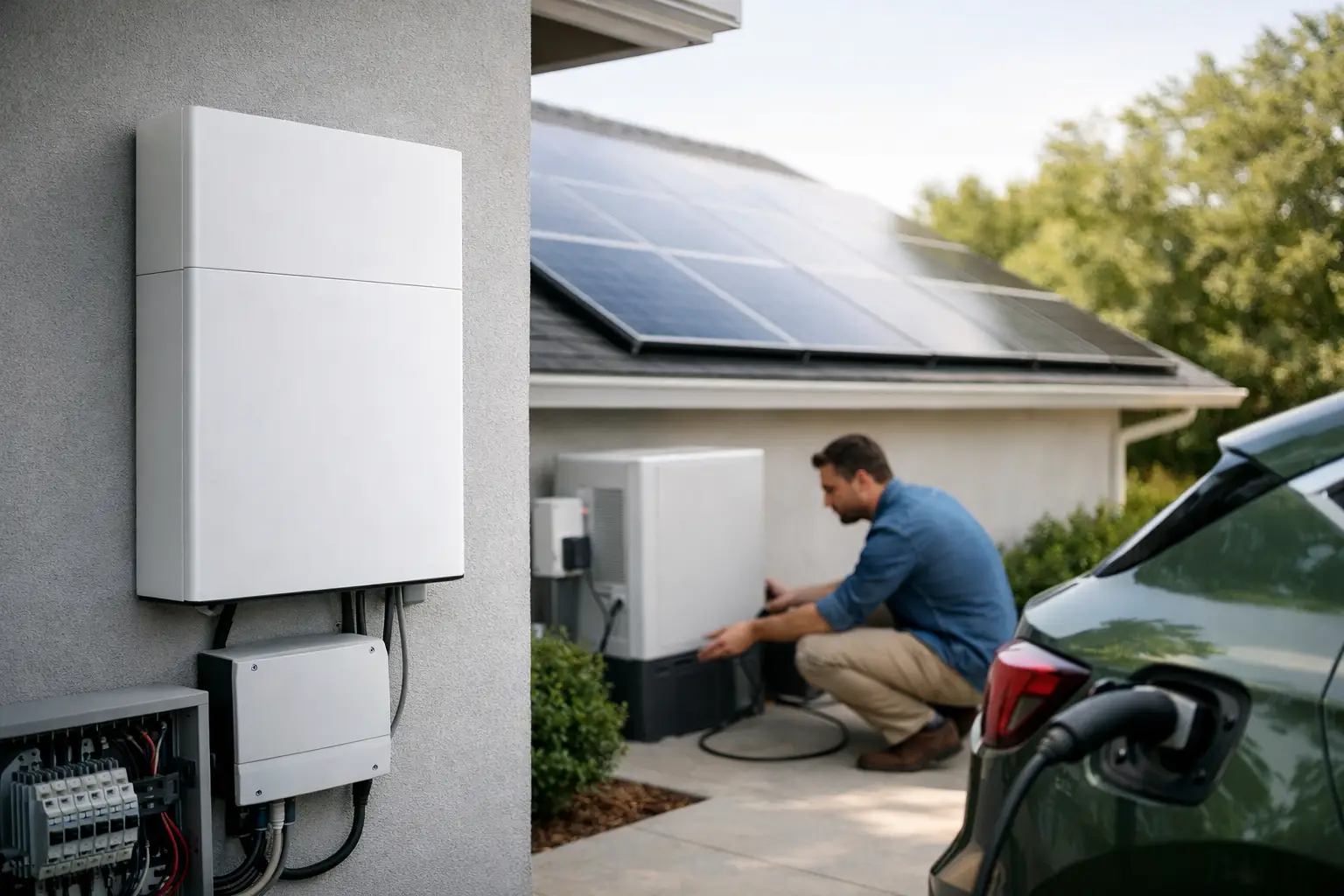
The battery itself gets most of the attention, but it is only one part of the setup. A working home system usually includes the battery, an inverter, a battery management system, and monitoring software.
The battery is where the electricity is stored. Most modern home systems use lithium-ion batteries because they are compact, efficient, and better suited to repeated daily charging and discharging than older battery types.
The inverter is what makes the electricity usable in your home. Batteries store electricity in direct current, but most homes run on alternating current. The inverter converts the power so your appliances can use it.
The battery management system is the safety and control layer. It helps protect the battery from overcharging, overheating, and running outside safe operating limits. That matters because a well-managed battery will usually last longer and perform more reliably.
The monitoring app or portal is the part homeowners tend to notice day to day. It shows when the battery is charging, how much energy is stored, and how much power is coming from solar, the battery, or the grid. It takes a system that could feel technical and makes it practical.
What happens during a normal day
In a typical solar-plus-battery home, the day starts with electricity being drawn from the grid until the sun is strong enough for the panels to take over. Once solar generation rises, that power first runs your home. If there is any extra, it charges the battery.
By midday, if your battery is full and your home still is not using all the solar being produced, the extra electricity may be exported to the grid. Then, later in the day when solar production drops and your household demand increases, the battery can step in.
That evening period is where many homes see the value. It is often the time when people are cooking, washing clothes, charging devices, and putting the heating on, all while solar output is low or gone. Instead of buying all that electricity from the grid at standard or peak rates, the battery can supply some of it.
How long it lasts depends on battery size and how much electricity your household is using. A smaller battery may cover a few key hours. A larger one may carry more of the evening load. There is no one-size-fits-all answer, which is why good system design matters.
How home battery storage works with solar panels
Solar and battery storage work well together because they solve different parts of the same problem. Solar panels generate electricity during daylight hours. A battery helps you keep more of that electricity for later.
Without a battery, homes often use only part of the electricity their panels produce at the moment it is generated. The rest is usually sent back to the grid. Exporting power is not necessarily a bad thing, but the payment you receive for exported electricity is often lower than the price you pay to buy electricity back later.
That is where a battery can improve the numbers. By storing more of your own solar electricity and using it in the evening, you can reduce how much power you need to import. In simple terms, you are using more of what you generated yourself.
That said, more storage is not always better. If your solar system is small, or your home uses most of its electricity during the day anyway, a very large battery may not offer the best value. The right setup depends on your usage, your tariff, and how much solar surplus you actually have.
Can a battery work without solar?
Yes, and this surprises a lot of people. A home battery can still be useful without solar panels if you are on a tariff with cheaper off-peak electricity.
In that setup, the battery charges when electricity is cheaper and discharges when prices are higher. The aim is still the same – buy less expensive electricity and use it later when power costs more.
Whether this works well depends on the gap between cheap and expensive rates, the battery size, and system efficiency. Because some energy is always lost in charging and discharging, the savings need to be large enough to make the shift worthwhile.
For some households, especially those with high evening use, this can make sense. For others, the strongest case for battery storage still comes when it is paired with solar.
What affects savings and performance?
This is the part many installers should explain clearly, because battery storage does not save the same amount in every home. Your results depend on how and when you use electricity.
If your household is empty most of the day and busy in the evening, battery storage can be especially useful because it moves daytime solar into the hours when you actually need it. If you are at home through the day and already use most of your solar power as it is generated, the battery may offer less extra benefit.
Battery size matters too. A system that is too small may empty quickly and not cover your evening demand. One that is too large may sit partly unused for much of the year. Bigger is not automatically better if you are paying for capacity you rarely need.
Your tariff also plays a big role. Homes on time-of-use tariffs may benefit more because the battery can avoid expensive periods. Export payments, seasonal changes, and even habits like charging an electric car can shift the numbers.
Then there is efficiency. No battery is perfect. A small percentage of energy is lost when charging and discharging. That does not make batteries poor value, but it is one of the reasons honest advice matters. The best system is not the biggest or most expensive one. It is the one that fits your home properly.
Will a home battery keep the power on in a cut?
Sometimes, but not always. This is one of the biggest misunderstandings around battery storage.
Many home battery systems are designed mainly to store and release electricity for savings, not to power the house during a grid outage. If backup power is important to you, your system needs to be designed specifically for that purpose.
Even then, backup may cover only selected circuits rather than the whole house. You might keep essentials running, such as lighting, Wi-Fi, refrigeration, or a few sockets, instead of every appliance at once. It depends on the battery size, inverter capability, and how the system is configured.
So yes, backup can be possible, but it should never be assumed.
Is home battery storage worth it?
For many households, it can be. The strongest benefits are usually lower electricity bills, better use of solar energy, and less reliance on buying power at the wrong time of day.
But it is still an investment, so the answer depends on your property and your budget. If your electricity use is low, your tariff is flat, or your home does not have much spare solar generation, the payback may be slower. If you have rising energy use in the evening, a good solar setup, or access to cheaper off-peak electricity, the case is often stronger.
That is why a straightforward assessment matters more than sales talk. A good installer should explain what a battery is likely to do in your home, not in some ideal example on paper.
For most people, the real value is simple. Battery storage helps you keep more of the energy you have paid to generate, buy less at expensive times, and feel a bit less exposed to unpredictable bills. If that sounds useful, it is worth looking at a system built around your actual home rather than a generic package.
The smartest energy upgrades are usually the ones that make day-to-day life feel easier, and home battery storage fits best when it does exactly that.