
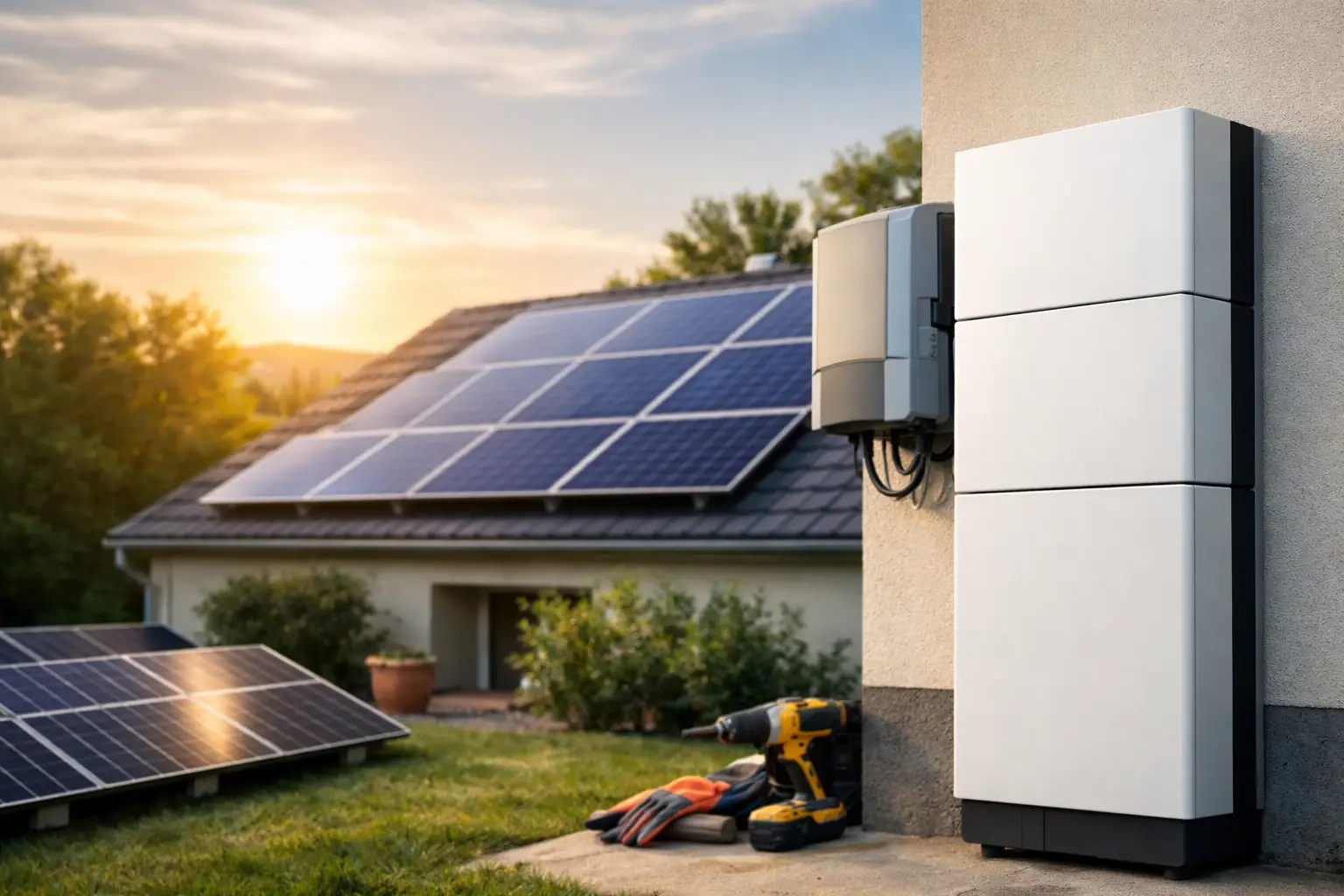
Your solar panels may be generating plenty of electricity on a bright afternoon, but if nobody is at home to use it, much of that power is exported to the grid. A battery upgrade for existing solar gives you a place to keep more of that electricity for later, when the kettle is on, dinner is cooking and energy from the grid is at its most expensive.
For many households, adding a battery is the next sensible step after solar. It can help you rely less on bought-in electricity, make better use of the panels already on your roof and give you more control over your energy bills. But it is not automatically the right answer for every property. The best option depends on your current system, your electricity use and what you want the battery to achieve.
What a battery adds to an existing solar system
Solar panels produce most of their electricity during daylight hours. That is useful if you work from home, run appliances during the day or have an electric vehicle charging while the sun is out. For many families, though, demand rises in the morning and evening, when solar output is lower.
A home battery stores surplus solar electricity rather than sending all of it away. You can then use that stored power later in the day or overnight. Depending on the system and tariff, a battery may also charge from the grid at cheaper off-peak times, ready to support the home when prices are higher.
This does not mean you will stop buying electricity altogether. In a Scottish winter, shorter days and lower sunlight mean there may not be enough solar generation to fill a battery regularly. The value comes from using more of your own lower-cost energy across the year, rather than expecting complete energy independence.
Is a battery upgrade for existing solar suitable for you?
A battery often makes most sense where a household exports a noticeable amount of solar power and still buys plenty of electricity in the evening. If your generation is regularly going unused during the day, storage can reduce that waste.
Your smart meter data can offer useful clues. Look at when you use electricity and when your solar system exports it. A home with a busy daytime routine may get less benefit from a large battery than a household that is empty all day and uses most power after 5pm.
It can also be a good fit if you are changing your energy tariff, buying an electric vehicle, or planning to install a heat pump. These changes can increase electricity use, so being able to store solar generation or charge at lower-cost times becomes more valuable. The battery should be sized around the way your household actually uses power, not simply around the biggest unit available.
First, check what you already have
Older solar installations were not always designed with battery storage in mind. That does not usually prevent an upgrade, but it affects the equipment needed and the overall cost.
The first question is your inverter. This is the box that converts electricity from your panels into electricity your home can use. If it is an older solar-only inverter, a battery can often be added using an AC-coupled system. Put simply, the battery has its own connection and can work alongside the existing solar inverter. This is a common option for retrofits and avoids replacing equipment that is still performing well.
In some cases, replacing the inverter with a hybrid inverter may be worth considering. A hybrid inverter manages solar panels and a battery together. It can be a tidy solution, particularly if your current inverter is nearing the end of its expected life. However, it is not always the cheapest route, so it should be based on a clear comparison rather than assumed to be necessary.
An installer should also check the age and condition of your panels, inverter output, consumer unit, available wall space and cable routes. These are normal practical checks, not reasons to make the process complicated. They simply make sure the proposed battery will work safely and reliably with the rest of your home.
Choosing the right battery size
Battery capacity is measured in kilowatt-hours, or kWh. A larger number means the battery can store more electricity, but bigger is not always better. If a battery rarely fills, extra capacity may not deliver enough added value to justify the higher upfront price.
For a typical household, the right size is usually based on evening use, solar generation and budget. A smaller battery can still make a real difference by covering the busiest few hours after sunset. A larger battery may suit a family with higher electricity demand, an electric vehicle, electric heating or plans to use time-of-use tariffs.
It is worth thinking about future needs too. If your household is likely to add an electric car or replace a gas boiler with a heat pump, an expandable battery system could offer more flexibility. On the other hand, there is little point paying now for capacity you may never use. Straightforward advice should help you find the sensible middle ground.
Savings depend on more than sunshine
The savings from a battery come from two main places: using more of your own solar electricity and reducing how much electricity you buy at higher rates. Your export payment, import tariff and daily electricity habits all matter.
If you receive a good export rate, it may sometimes make financial sense to export solar electricity rather than store every spare unit. If your export payment is low and your evening import price is high, keeping more energy at home can be more appealing. There is no one-size-fits-all calculation.
Your electricity tariff is especially important. Some tariffs offer lower prices overnight, allowing a battery to charge more cheaply from the grid. Used carefully, this can help manage costs even in darker months when solar production is limited. It does mean the battery needs the right controls and settings, with a plan that matches your tariff rather than a set-and-forget approach.
What about the Feed-in Tariff?
Many homes with older solar panels receive Feed-in Tariff payments. Adding a battery does not automatically mean losing those payments, but the system must be designed and installed correctly. The details depend on how your generation is metered and the terms of your tariff.
This is one reason not to treat a battery as a simple off-the-shelf purchase. Before work starts, make sure your installer understands your existing solar arrangement and explains any implications clearly. You should know what will be changed, what will stay in place and how your export or generation payments could be affected.
Backup power is a separate question
A common misunderstanding is that every battery keeps the house running in a power cut. Most standard battery installations do not automatically provide full-home backup. For safety, solar and battery systems normally shut down during a grid outage unless they have been designed with suitable backup equipment.
Some battery systems can provide backup for selected circuits, such as lighting, a fridge, broadband and charging points. Others can be configured for broader backup, but this may cost more and involve additional electrical work. If keeping essential items powered during an outage matters to you, raise it at the start of the quote process rather than assuming it is included.
A simple installation process matters
A good battery upgrade should feel like a home improvement project, not a technical headache. The process normally starts with a look at your current solar system and electricity use. From there, you should receive a clear recommendation covering the battery size, equipment, expected benefits and total price.
Your installer may need to notify the local electricity network operator, depending on the equipment and system size. This is a standard part of the process and should be handled for you. Installation itself is often completed in a day, although every property is different.
At Newtech Renewables, the focus is on making the decision clear: practical advice, suitable equipment and no hidden costs. A battery should support lower bills without leaving you to work through confusing technical choices alone.
Questions worth asking before you go ahead
Ask how the proposed battery works with your existing inverter, whether the quoted capacity suits your typical usage, and whether it can be expanded later. You should also ask what app or monitoring is included, what the warranty covers and whether backup power is part of the design.
Finally, ask for savings estimates based on your own usage where possible. A realistic estimate that reflects winter generation, tariffs and your household routine is far more useful than a headline figure that sounds impressive but does not match how you live.
A well-planned battery can make the solar panels you already own work harder for your household. Start with your bills, your daily routine and your future plans, then choose a system that makes sense for all three.