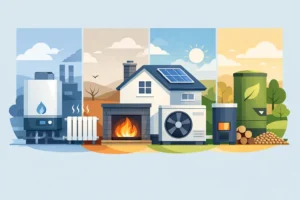

ECO4 was designed to help households with high energy costs make their homes warmer and cheaper to heat. If you have been searching for how to qualify for ECO4, the first thing to know is that the scheme was scheduled to end on 31 March 2026. New applications are therefore generally no longer open. However, understanding the rules is still useful if you began an enquiry before the deadline, have been contacted about an existing application, or want to check which replacement support may suit your home.
ECO4 was not a cash payment and it was not a standard discount available to every household. It was an energy-efficiency scheme funded through larger energy suppliers, usually covering measures such as insulation, heating improvements and, where suitable, renewable heating. Eligibility depended on your household circumstances, your home and the route used to apply.
How to qualify for ECO4: the basic rules
ECO4 focused on low-income and vulnerable households living in homes that were expensive to heat. In many cases, you needed to receive a qualifying benefit, live in a lower-rated property and have an improvement that could make a meaningful difference to the home’s energy performance.
Meeting one condition did not automatically guarantee funding. The energy supplier and installer still had to confirm that the property was suitable, that the proposed work met scheme rules, and that funding was available. That is why a proper home assessment mattered more than a quick yes over the phone.
Benefits that could support an ECO4 application
The main route was through certain means-tested benefits. Depending on the rules in place at the time and the details of your claim, this could include Universal Credit, Pension Credit, Income Support, income-related Employment and Support Allowance, income-based Jobseeker’s Allowance, Housing Benefit, tax credits and Child Benefit for households below the relevant income threshold.
A benefit award notice was often needed as evidence. It was also common for applicants to be asked for photo identification, proof of address and recent energy bills. These checks may feel like extra paperwork, but they help make sure that funding goes to the right household and that the installer can submit the work correctly.
ECO4 Flex for households not on benefits
Some households could previously qualify through ECO4 Flex, often called LA Flex. This route was intended for people who did not receive a qualifying benefit but were on a low income, struggling with energy costs or vulnerable to living in a cold home.
The key difference was that the local authority had to confirm that the household met its own published criteria. For example, a council could consider low income, health conditions made worse by cold, high energy costs or a household at risk of fuel poverty. Each council’s rules could vary, so eligibility in one part of Scotland was not always the same as eligibility elsewhere.
ECO4 Flex was helpful, but it was never an automatic entitlement. A council declaration and a suitable home were both needed before an installer could move ahead.
Your home also had to be suitable
ECO4 was aimed mainly at homes with a lower Energy Performance Certificate rating, typically EPC bands D to G. These are homes where poor insulation, older heating or heat loss can make bills harder to manage. A property with a better EPC rating might still have issues, but it was less likely to meet the scheme’s priority criteria.
The type of property mattered too. An assessor would look at the age of the home, wall construction, loft space, existing insulation, windows, current heating system and how the household uses energy. A detached stone property, for example, may need a different approach from a newer semi-detached house with an old gas boiler.
Homeowners could normally apply directly. Private tenants could also be considered, but they needed their landlord’s written permission before any work took place. Landlords might also have been asked to contribute in some circumstances. Social housing was subject to separate rules and energy-rating requirements.
What ECO4 could pay for
The work was based on what the property needed, not simply on the measure a household preferred. ECO4 placed strong emphasis on a fabric-first approach. In plain English, that meant tackling heat loss before fitting a new heating system wherever possible.
A home with an uninsulated loft and draughty walls may have benefited more from insulation first than from replacing the boiler alone. Once the home held onto heat better, a new heating system could work more efficiently and provide better comfort.
Depending on the assessment, a package could have included loft insulation, cavity wall insulation, internal or external wall insulation, underfloor insulation, heating controls, a replacement boiler, electric heating upgrades or an air source heat pump. Solar panels could be included in some cases, but they were not normally a stand-alone ECO4 giveaway. The measures had to fit the property and the scheme’s improvement targets.
This is worth remembering if someone promises a particular product before inspecting your home. A trustworthy installer explains what is suitable, why it is recommended and what, if anything, you may need to contribute.
What happened during an ECO4 assessment
A proper assessment was the point where an initial eligibility check turned into a real proposal. It should have been straightforward and pressure-free. The assessor would usually confirm your household details, review the property’s EPC where one existed, inspect insulation and heating, and identify practical improvements.
You would then be told whether the work could be funded and what it involved. Before agreeing, ask clear questions about the proposed measures, expected disruption, warranties, timescales and any cost to you. Funding did not always cover every possible upgrade, and some homes needed work that was outside the scheme rules.
For an application already started before ECO4 closed, keep copies of these documents:
- benefit evidence or the local authority eligibility confirmation
- proof that you own the home, or landlord permission if you rent
- recent energy bills and any EPC information you have
- the written survey, quotation and funding explanation
- installation certificates, warranties and aftercare details once work is complete
Good paperwork protects you if there is a delay, a query about funding or a future need for maintenance. It also makes it easier to understand exactly what has been fitted in your home.
Be careful with ‘free boiler’ claims
ECO4 helped many households, but it also attracted misleading adverts and cold callers. A legitimate company should not pressure you to agree on the doorstep or demand money before explaining the work. They should be open about the funding route, the survey process and whether any contribution is required.
Check that the installation business uses the appropriate accredited route for the measures being fitted. For renewable technologies such as heat pumps, this includes using properly qualified installers and receiving the right handover information. Never share benefit details or identification unless you understand who is handling your information and why.
Most importantly, do not assume that an offer made after the scheme end date is valid simply because it uses the ECO4 name. Ask for the funding details in writing and take time to check them.
If you missed ECO4, there may still be help
The end of ECO4 does not mean the end of support for warmer, lower-cost homes. Scottish households may be able to explore other national or local energy-efficiency programmes, particularly where income, health needs, home heating costs or poor insulation are a concern. Available support, eligibility and budgets can change, so an up-to-date check is always better than relying on an old advert.
If grant support is not available, it can still be sensible to improve the home in stages. Start with the changes that reduce heat loss or solve an unreliable heating problem, then consider longer-term options such as solar panels, battery storage or an air source heat pump where they suit your property. A clear survey and fixed explanation of costs can make the decision far less daunting.
The best next step is a simple, honest assessment of your home and your bills. Whether funding is available or not, the right improvements should leave you with a warmer home, clearer costs and less wasted energy.