
A broken boiler can make a heating decision feel urgent. But choosing between an air source heat pump vs combi boiler is about more than replacing what is already there. The right option depends on your home, your hot water needs, your budget and whether you want to reduce your reliance on gas over the years ahead.
For many households, a modern combi boiler remains the simplest and lowest-upfront-cost replacement. For others, an air source heat pump can provide lower-carbon heating, steady comfort and potentially lower running costs when the property is suitable. There is no one-size-fits-all answer, and a good home assessment should make the choice clearer rather than more complicated.
Air source heat pump vs combi boiler: the key difference
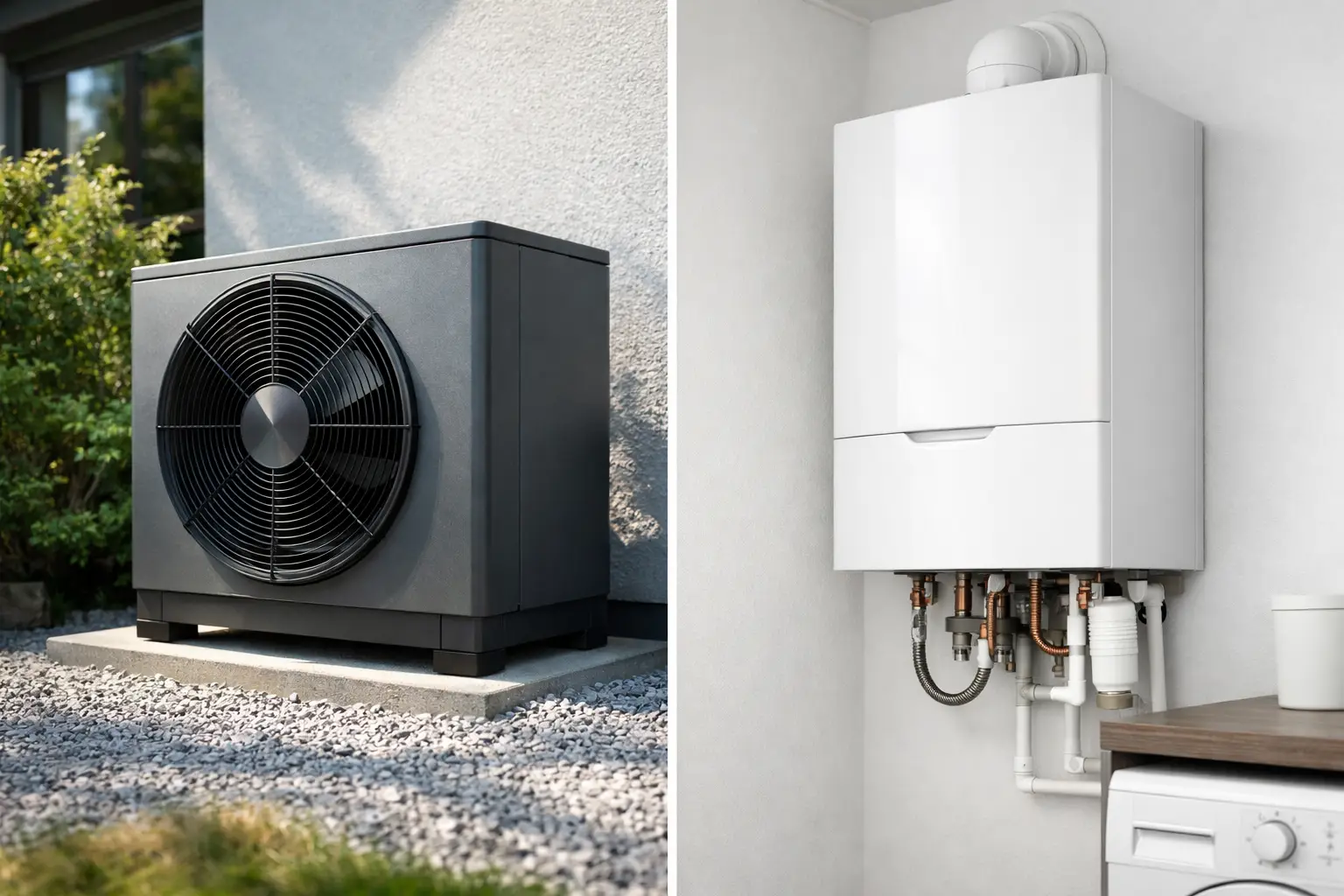
A combi boiler burns gas to heat your radiators and provide hot water on demand. Turn on the shower or hot tap and the boiler heats water as you use it. There is usually no separate hot water cylinder, which makes combi boilers a popular choice in smaller homes with limited cupboard space.
An air source heat pump takes warmth from the outside air and moves it into your home. It runs on electricity and works best by delivering gentle, consistent heat over longer periods. Most systems use a hot water cylinder, so hot water is stored and ready for use rather than heated instantly at the tap.
Both can keep a home warm. The difference is how they do it, what they need from the property and how the costs are spread between installation and day-to-day use.
Upfront cost and support available
A like-for-like combi boiler replacement is usually the more affordable option upfront. If you already have a gas connection, suitable pipework and conventional radiators, installation is often straightforward. It is a familiar solution, particularly when a boiler has failed unexpectedly and you need heating and hot water restored quickly.
An air source heat pump generally costs more to install. The system may need a cylinder, changes to pipework or larger radiators in some rooms. Your installer will also need to check where the outdoor unit can sit, how well the home holds heat and whether the existing heating system is suitable.
That does not automatically make a heat pump unaffordable. Eligible households may be able to access grant-funded or supported energy-efficiency upgrades, depending on their circumstances and the measures available. Funding rules and availability can change, so it is always worth checking your eligibility rather than assuming you will not qualify.
The useful question is not simply, “Which is cheapest?” It is, “What will this cost me now, what will it cost to run, and what improvements does my home need first?” Clear pricing and an honest suitability check matter far more than a headline figure.
Running costs: where the real comparison happens
Gas has traditionally been cheaper per unit than electricity, which is why a combi boiler can still be economical to run. A modern A-rated boiler is far more efficient than an older unit, especially if it is properly sized and controlled with a good thermostat.
A heat pump uses electricity, but it can produce several units of heat for each unit of electricity it uses. This efficiency is the reason it can compete on running costs, even though electricity costs more per unit. Actual savings depend on your tariff, the heat pump design, your insulation and how you use the system.
A poorly insulated home loses heat quickly, whatever heating system you choose. With a heat pump, insulation, draught-proofing and sensible controls become especially valuable because they help the system maintain warmth without working harder than necessary.
Solar panels and battery storage can also make a difference for homes considering a heat pump. They will not power the heating system entirely through a cold winter, but generating and storing some of your own electricity can reduce the amount you need to buy from the grid at certain times.
Comfort, hot water and everyday living
A combi boiler is designed around quick response. It can heat radiators rapidly and provide hot water when you turn on a tap. This suits households that like short heating periods, have limited space or do not have room for a cylinder.
The trade-off is that hot water flow can reduce if more than one shower or tap is being used at the same time. In a busy family home with two bathrooms, this can be frustrating. A system boiler with a cylinder may sometimes be a better gas-based option than a combi, even though it is not the focus of this comparison.
A heat pump provides a different kind of comfort. Instead of blasting heat for an hour, it is usually set to keep the house at a stable, comfortable temperature for longer. Rooms can feel more evenly heated, but the system needs to be planned and controlled differently from a boiler.
Because most heat pumps use a cylinder, they can provide stored hot water for several taps and showers. However, the cylinder has a set capacity. A larger household may need a larger cylinder or a heating schedule that matches its routine. This is why an assessment should include the number of people in the property, bathrooms and typical shower use.
Does your home need to be perfect for a heat pump?
No. Heat pumps can work in many types of UK homes, including older properties. However, a well-insulated home with sensible radiator sizing will usually get the best results.
Heat pumps operate at lower water temperatures than many gas boilers. That means some existing radiators may need to be upgraded to larger models so they can give out enough warmth. It is not always necessary to replace every radiator, but it should be checked room by room rather than guessed.
Space also matters. You need an appropriate location outdoors for the heat pump unit, plus space indoors for a hot water cylinder. Noise, access for installation and the route for pipework should all be considered early. A reputable installer will explain any changes needed before work starts, with no hidden surprises.
For homes in Scotland and northern parts of England, winter temperatures are a sensible concern. Modern heat pumps are designed to operate in cold weather, but correct sizing and installation are essential. Buying a system that is too small to save money at the start can leave you disappointed when temperatures drop.
When a combi boiler may be the better fit
A combi boiler can be the practical choice if your current boiler needs replacing quickly, your budget is tight or your home has no suitable space for a cylinder. It may also suit a smaller household with one bathroom and modest hot water demand.
If your home needs significant insulation work before a heat pump would perform well, replacing the boiler now while improving the property over time can be a sensible route. There is no benefit in being pushed into a system that does not suit your circumstances.
A new boiler can still reduce bills compared with an old, inefficient model. Pairing it with heating controls, thermostatic radiator valves and basic draught-proofing can improve comfort without making the project feel overwhelming.
When an air source heat pump could be worth it
A heat pump is worth serious consideration if you want to move away from gas, plan to stay in your home for several years and have, or can create, the right conditions for efficient heating. It is particularly appealing when your property is reasonably well insulated, you have room for a cylinder and you are happy with steady background warmth rather than rapid bursts of heat.
It can also make strong sense when combined with wider upgrades such as insulation, solar panels or battery storage. These improvements work together to reduce wasted energy and make your home more comfortable in every season.
The best installations are not based on a quick sales call. They start with a proper assessment of heat loss, radiator sizes, hot water use and available space. That is how you avoid paying for upgrades you do not need while making sure the system you choose will genuinely do the job.
Make the decision with your whole home in mind
Think about how your household lives, not just the appliance in the cupboard. A couple in a compact home may value the simplicity of a combi boiler. A family planning long-term improvements may benefit more from a heat pump and cylinder. If you are unsure, ask for both options to be explained in plain English, including the likely work involved, expected running costs and any support you may be eligible for.
The aim is a warmer home, manageable bills and a heating system you understand. A friendly, honest assessment can turn a confusing choice into a practical next step.


Pingback: Which Homes Need Insulation? Signs to Check – Newtech Renewables