
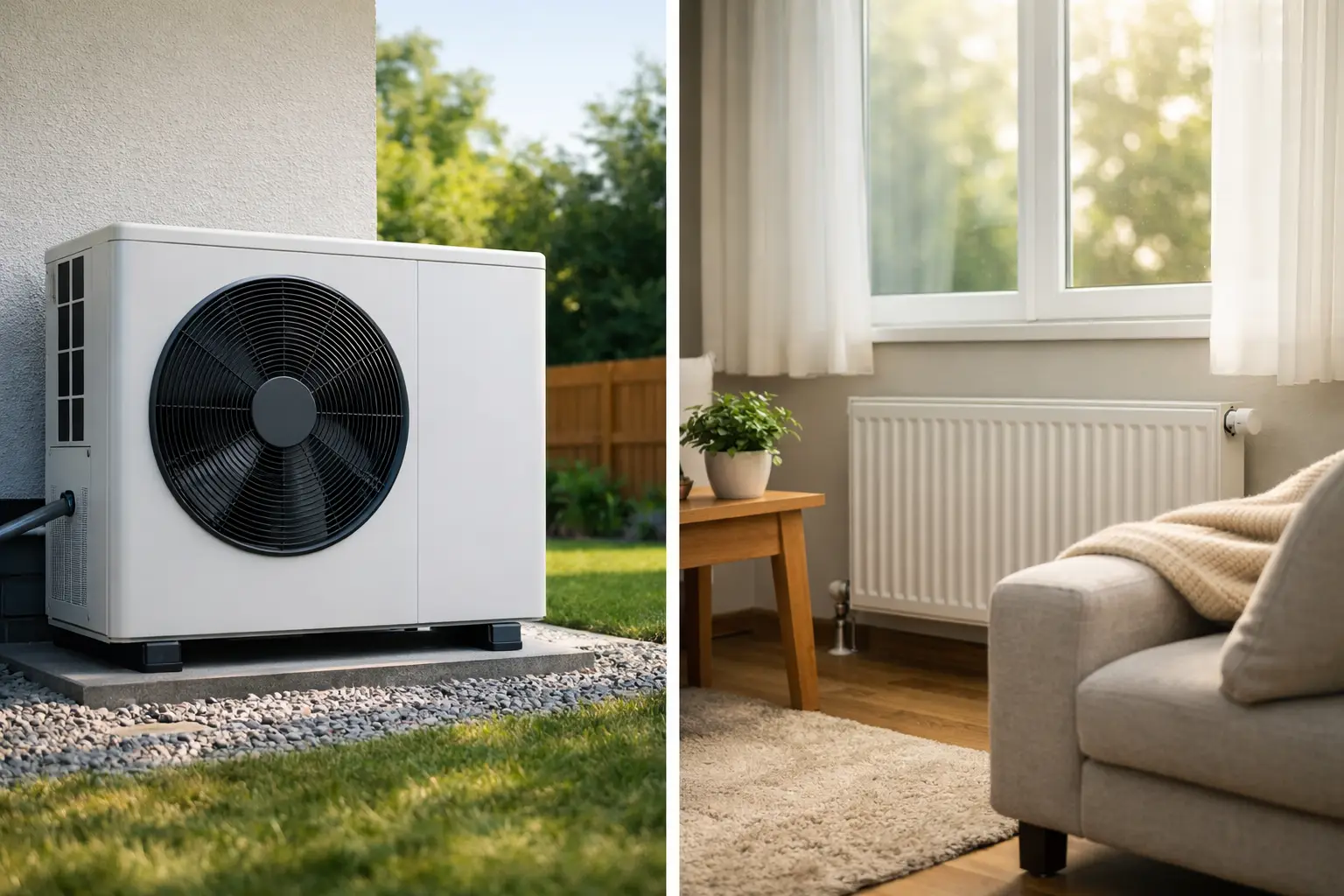
If you are looking at a heat pump and wondering whether your current radiators will have to go, you are asking exactly the right question. Can heat pumps replace radiators? In many homes, yes – but not always in the way people first imagine.
A heat pump does not usually replace radiators completely. More often, it replaces your boiler as the heat source, while your radiators stay in place or get upgraded where needed. That is why this question matters so much. For most homeowners, the real issue is not whether radiators and heat pumps can work together. It is whether your home can be heated comfortably and affordably without a full, disruptive overhaul.
Can heat pumps replace radiators in a typical home?
In a lot of UK homes, a heat pump can work with radiators. The catch is that heat pumps usually run at lower flow temperatures than petrol or oil boilers. A boiler may send very hot water around the system, while a heat pump tends to heat water more gently and steadily.
That lower temperature is not a problem if the system is designed properly. In fact, it is how heat pumps achieve good efficiency. But it does mean the radiators need to be able to give off enough heat to keep rooms warm.
In some houses, the existing radiators are already large enough. In others, a few may need to be replaced with bigger ones. Sometimes the pipework also needs checking, especially in older properties. So the answer is often yes, but with some changes to make sure the system performs well.
What a heat pump actually replaces
A lot of confusion comes from mixing up the heat source with the heat emitters. Your boiler is the heat source. Your radiators are the emitters. A heat pump normally takes over the job of the boiler. It produces the hot water for heating and, in many cases, domestic hot water too.
That means your radiators do not automatically become redundant. They are still a useful part of the system. The question is whether they are suitable for lower-temperature heating.
This is good news for homeowners who are worried about cost. Keeping some or all of your existing radiators can make the move to a heat pump more affordable and far less disruptive than starting from scratch.
Why radiator size matters with heat pumps
With a boiler, rooms can heat up quickly because the water in the radiators is very hot. A heat pump works differently. It runs for longer periods at lower temperatures, keeping the home at a more even, steady warmth.
Because the water is cooler, each radiator may give off less heat than it did before. That is why radiator size becomes important. A larger radiator has more surface area, so it can still warm the room properly even with lower-temperature water.
This is often where people get the wrong idea and assume heat pumps do not work with radiators. The truth is they do, but the radiators have to be matched to the job. If a room has a small old radiator that only worked because the boiler ran very hot, it may struggle on a heat pump unless it is upgraded.
When existing radiators can stay
Many homeowners are pleasantly surprised to find that not every radiator needs changing. If your home is reasonably well insulated and your radiators are generously sized, a heat pump may work with very few alterations.
This is especially true in homes that have already had improvements such as loft insulation, cavity wall insulation or double glazing. The less heat your house loses, the easier it is for a lower-temperature system to keep up.
A proper home assessment should look at each room individually. Some rooms may be fine as they are, while others might need a bigger radiator. Bedrooms often need less heat than living rooms, for example, so there is no one-size-fits-all answer.
When radiators may need upgrading
There are a few common situations where radiator upgrades are more likely. One is older homes with poor insulation. Another is when the existing radiators are quite small or slim. A third is where homeowners are used to heating the house in short bursts and expecting it to warm up very fast.
In these cases, a heat pump can still be the right option, but the system has to be designed around the property. That could mean replacing several radiators with larger models or adding extra insulation first so the heating demand comes down.
This is why a proper survey matters more than guesswork. A good installer should not simply promise that everything will work as it is. They should check room sizes, heat loss, insulation levels and radiator outputs so you know what to expect before any work starts.
Are underfloor heating systems better than radiators?
Underfloor heating and heat pumps are often described as the perfect match. There is truth in that, because underfloor systems work very well at low temperatures. They spread heat across a large area, so they do not need the water to be especially hot.
That said, radiators are not second best by default. Plenty of heat pump systems run very successfully with radiators. Underfloor heating can be a great option during major renovations or extensions, but it is not essential for every home.
For many households, keeping radiators where practical is the simpler and more budget-friendly route. If you can avoid lifting floors throughout the house, that usually makes the whole project easier to manage.
Comfort feels different with a heat pump
One thing worth knowing is that heat pumps warm homes differently from traditional boilers. Some homeowners expect blasting-hot radiators and a quick burst of heat in the morning. A heat pump is more about steady comfort over the day.
That can take a little getting used to, but many people end up preferring it. Rooms feel more consistently warm, and the temperature tends to be more stable. Instead of waiting for the heating to kick in hard, the home stays comfortable with fewer peaks and drops.
This is another reason a well-designed system matters. If the controls, radiator sizing and heat loss calculations are right, the house should feel warm without the system having to work harder than necessary.
The cost question homeowners really care about
For most people, this is not just about whether it is technically possible. It is about whether it will save money and whether the upgrade will be worth it.
If your existing radiators can stay, or only a few need changing, the installation cost is usually lower than many homeowners fear. If lots of radiators need replacing and insulation needs improving too, the upfront cost can rise. But that does not automatically make it poor value. A better-designed system can lower running costs and improve comfort at the same time.
There may also be funding or support options available depending on your circumstances, which can make a big difference. For households looking at funded heating upgrades, the overall suitability of the property becomes even more important.
So, can heat pumps replace radiators or not?
Strictly speaking, no – because a heat pump is not a radiator replacement. It is a boiler replacement. But if what you really mean is, can a heat pump heat your home through radiators instead of needing a completely different setup, then yes, very often it can.
The key point is that radiators and heat pumps can work well together when the home is assessed properly and the system is sized correctly. Some homes will need little or no radiator work. Others will need selective upgrades. A smaller number may be better suited to a wider heating overhaul.
The best next step is not to assume the answer either way. It is to have the property checked by someone who looks at the whole picture – insulation, heat loss, radiator sizes and your budget. That way, you get a system that is practical, affordable and comfortable to live with.
For most homeowners, the good news is simple. Moving to a heat pump does not usually mean ripping out every radiator in the house. It means making sure your heating system is set up to work smarter, so your home stays warm and your bills have a better chance of coming down.