If your electricity bill has made you wince lately, you are not alone. For many homeowners, the question is no longer whether solar sounds like a good idea in theory, but are solar panels worth it UK households can actually rely on for real savings.
The honest answer is yes, often they are – but not in exactly the same way for every home. Solar can cut your daytime electricity costs, reduce your dependence on rising energy prices and make your home feel more future-ready. The part that matters is whether the numbers work for your roof, your usage and your budget.
Are solar panels worth it UK homeowners in 2026?
For a lot of households, solar panels are worth it because electricity is expensive and solar helps you buy less from the grid. If you use a fair amount of power during the day, or you add battery storage to keep more of what you generate, the savings can be meaningful.
That said, solar is not a magic fix. The value depends on how much electricity your system can produce, how much of that power you use at home, what you pay for installation and whether your roof is suitable. A home with a clear south-facing roof and regular daytime usage will usually see better returns than a shaded roof with very low electricity demand.
In simple terms, solar tends to make the most sense when you want lower bills over the long term, not instant profits overnight.
What makes solar panels worth it in the UK?
The biggest reason solar works in the UK is straightforward. Even with our weather, modern panels can still generate a useful amount of electricity across the year. You do not need blazing heat for solar to work – you need daylight, and we get plenty of that.
Savings come from using your own generated power instead of buying every unit from your supplier. When grid prices are high, every unit you use from your roof becomes more valuable. That is why solar has become more attractive in recent years.
There is also the longer-term benefit of predictability. Energy prices move around. A solar system gives you some protection because part of your electricity is coming from your own home rather than the market.
If you export surplus electricity, you may also receive payments through an export tariff. This will not usually be the main reason to buy solar, but it can improve the overall return.
Your roof matters more than most people realise
A good roof does not have to be perfect, but it does need to be workable. South-facing roofs often perform best, though east and west-facing roofs can still be very worthwhile. Heavy shading from trees, chimneys or nearby buildings can reduce output.
Roof size matters too. More usable roof space usually means more panels, and more panels generally means more potential savings. Still, even a smaller system can make sense if your household uses plenty of electricity during the day.
Your daytime usage has a big effect on value
This is one of the most overlooked parts of the decision. Solar is at its most valuable when you use the electricity as it is generated. If someone is at home during the day, or you can run appliances like the washing machine or dishwasher in daylight hours, you usually get better savings.
If your home is empty most weekdays, a battery can help by storing excess electricity for the evening. Without a battery, you may still benefit, but you will often export more and use less of your own generation.
How long does it take for solar panels to pay back?
Payback depends on installation cost, system size, your electricity usage and whether you include battery storage. For many UK homes, payback can fall somewhere around several years rather than a couple of years. After that point, the electricity your system generates feels far more rewarding because the ongoing savings continue.
This is where expectations matter. If you are looking for the cheapest possible short-term fix, solar may feel like a big upfront spend. If you are looking at household costs over 10, 15 or 20 years, the picture usually looks stronger.
Panels also tend to last a long time, and many systems continue performing well well beyond the initial payback period. That longer lifespan is part of what makes the investment attractive.
Are batteries worth adding?
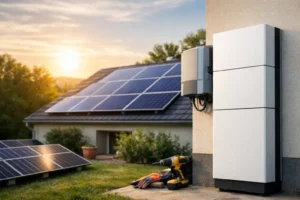
Often, yes – especially if your household uses most of its electricity in the morning and evening. A battery lets you keep more of the power your panels generate instead of sending it back to the grid during the day.
That can make a noticeable difference to bill savings because self-used electricity is usually worth more than exported electricity. It also gives some households more control over when they use power, which can be useful if you are trying to manage costs carefully.
The trade-off is the added upfront cost. A battery can improve the performance of your solar setup from a bill-saving point of view, but it also changes the maths. For some homes, solar alone is the right first step. For others, especially where nobody is home during the day, battery storage makes the whole system far more worthwhile.
When solar panels may not be worth it
There are cases where the answer is no, or at least not yet. If your roof has significant shading for most of the day, if it needs major repair work first, or if your electricity usage is extremely low, the return may be weaker.
It can also be a less obvious choice if you plan to move very soon. Solar can still add appeal for buyers, but if you are selling in the near future, you may not stay long enough to see the full financial benefit yourself.
And if the only package available to you is overpriced or unclear, it is sensible to pause. Solar should feel straightforward. If the figures are vague, the pricing is confusing or the process feels pushy, that is not a good sign.
The real question is not just cost – it is value
People often focus only on installation cost, which is understandable. But value is more than the price on day one. It is about what you get back over time in lower bills, more control and less exposure to future price rises.
That is why clear pricing matters so much. Homeowners should be able to see what system they are paying for, what savings are realistic and whether battery storage changes the outcome enough to justify the extra spend. A stress-free process matters too, because renewable upgrades should not feel harder than they need to be.
For many households, the best solar decision is not the biggest system available. It is the system that matches the home properly and gives a sensible balance between affordability and savings.
So, are solar panels worth it in the UK for your home?
If your roof is suitable, your bills are high enough and you plan to stay in the property for a reasonable number of years, solar panels are very often worth it in the UK. They are especially attractive if you want practical savings rather than a complicated technology project.
They tend to be most worthwhile for households that use a decent amount of electricity, want more predictable energy costs and are open to thinking long term. Add a battery in the right situation, and the case can become even stronger.
But it is still an individual decision. The right answer comes from a proper look at your roof, your usage and your budget – not from a one-size-fits-all sales pitch. That is why many homeowners prefer a company that keeps things simple, explains the numbers clearly and helps them choose a setup they can feel confident about.
For households in England and Scotland, that practical approach makes a real difference. Newtech Renewables Ltd focuses on straightforward advice, clear package pricing and systems designed around genuine household savings rather than jargon.
If you are weighing it up, the most useful next step is not to guess. It is to find out what your home could realistically generate, what you could realistically save and whether the investment feels comfortable for your budget. Solar is worth it for many UK homes – and when it is the right fit, the benefit is not just lower bills, but a home that feels easier and cheaper to run.