
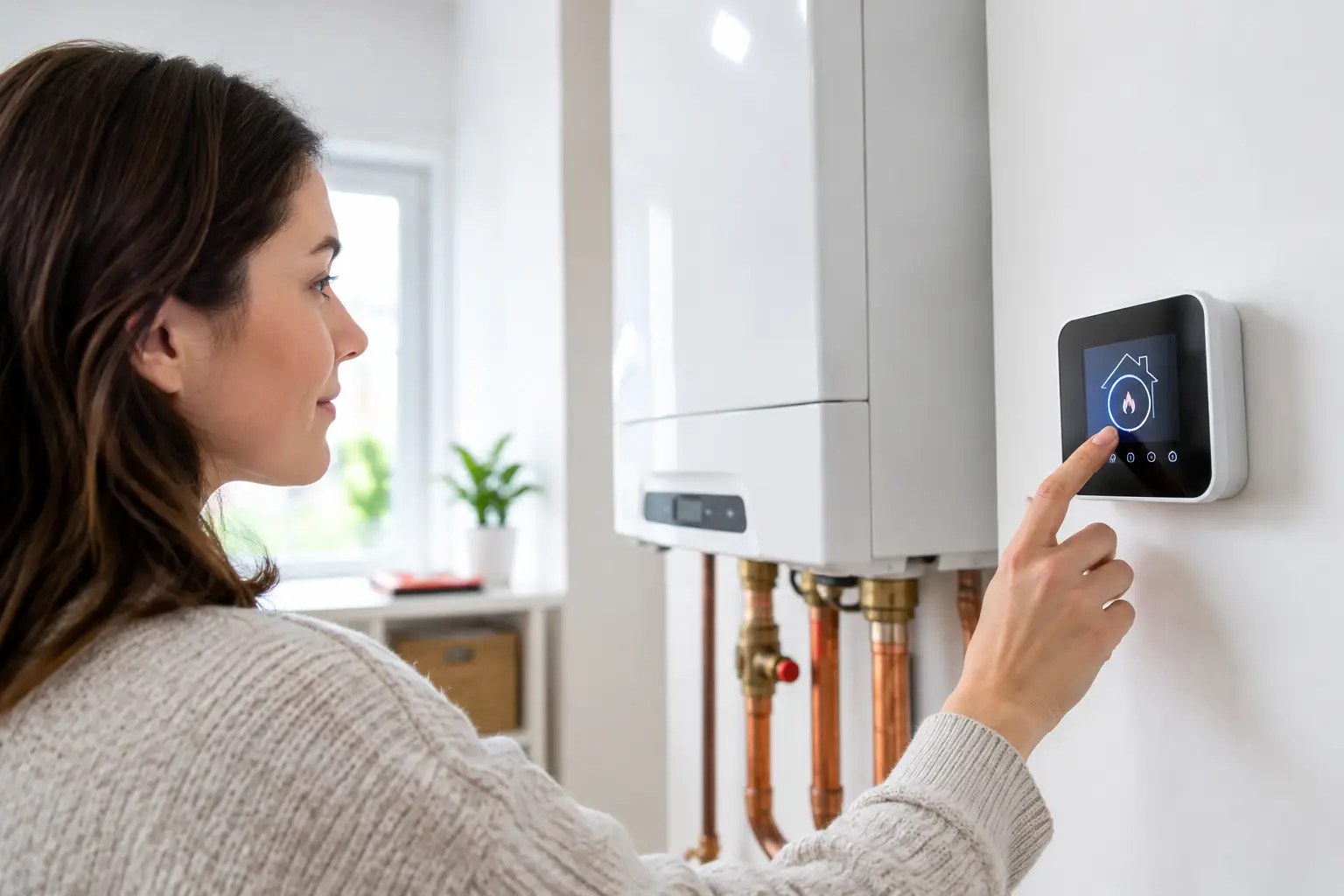
The best boiler controls homes can have are not always the newest or most expensive. The right setup is the one that heats your rooms when you need them, avoids wasting energy when you do not, and feels simple enough for the whole household to use. For many Scottish homes, a few well-chosen controls can make a noticeable difference to comfort and heating costs without replacing a working boiler.
A boiler can only respond to the instructions it receives. If your heating comes on at the same temperature for the same hours every day, regardless of whether anyone is home or how mild it is outside, it may be using more gas than necessary. Modern controls give you more say over that – and they do not need to be complicated.
What are the best boiler controls for homes?
For most households, the best boiler controls combine a programmable room thermostat with thermostatic radiator valves, often called TRVs. This gives you control over both the temperature of the home as a whole and individual rooms.
A smart thermostat can be a worthwhile upgrade if your routine changes regularly, you are often out of the house, or you want to adjust the heating from your phone. However, a simpler programmable thermostat can be just as effective when it is set up properly and used consistently. The best choice depends on your boiler, your heating system, your lifestyle and your budget.
The key is not to buy controls because they sound clever. Choose controls that solve a real problem in your home, such as heating empty rooms, coming back to a cold house, or struggling to keep bedrooms and living areas at comfortable temperatures.
The controls that make the biggest difference
A programmable room thermostat
A room thermostat measures the temperature in the main living area and tells the boiler when to switch on and off. A programmable model lets you set different temperatures at different times of day.
For example, you might want the house warmer before everyone gets up, lower while it is empty during the day, then comfortable again in the evening. This is better than leaving heating on continuously or manually switching it on whenever the house feels chilly.
Avoid placing a thermostat near a radiator, fireplace, draughty door or direct sunlight. It needs to sense a typical room temperature, otherwise it can give the boiler the wrong instruction.
Smart thermostats
Smart thermostats do much the same job, but add more flexibility. You can normally control them through an app, change the schedule remotely and, on some models, allow the heating to respond to patterns such as whether anyone is at home.
They are particularly useful for busy families, shift workers and households that are away for weekends. If you are delayed getting home, you can adjust the heating rather than warming an empty property for hours.
There is a trade-off. Smart controls cost more than basic programmers, and their features only help if you use them. If apps and changing settings are likely to be a nuisance, a straightforward thermostat with a clear weekly programme may be the better value option.
Thermostatic radiator valves
TRVs are the numbered controls fitted to individual radiators. They let you turn down rooms that do not need as much heat, such as spare bedrooms, hallways or little-used dining rooms, while keeping the living room comfortable.
They are not a replacement for a main thermostat. Think of the thermostat as controlling the overall heating demand and TRVs as fine-tuning each room. Keep the TRV in the same room as the main thermostat fully open, unless your installer has advised otherwise. If both are trying to control the same room, your system can become confused.
TRVs are a sensible, affordable upgrade for homes where some rooms are regularly too warm and others are too cool. They can also help if one person prefers a cooler bedroom while another needs a warmer living space.
Load compensation and weather compensation
These names sound technical, but the principle is simple. A compatible control can tell a modern boiler to work more gently when only a small amount of heat is needed, rather than repeatedly firing at full power.
Weather compensation goes one step further by adjusting heating output based on the outdoor temperature. On a milder day, your home does not need the same level of heat as it does during a frosty Glasgow morning.
These controls can be very effective with compatible condensing boilers and are especially worth discussing when installing a new boiler. They are not suitable for every existing setup, so ask a qualified installer to check what your boiler can support before buying anything.
Match controls to the way your household lives
The best control setup is different for a couple who are out all day and a family with someone working from home. Start by looking at when rooms are used, rather than setting one temperature for every room, all day long.
If your home is empty between 9am and 5pm, use a timed programme that reduces the temperature during those hours rather than switching heating off completely in very cold weather. Letting a home become excessively cold can mean it takes longer and costs more to bring it back up to temperature. A lower background setting is often more comfortable and practical.
If you work from home in one room, a TRV can help keep that space warm without overheating the rest of the house. In a larger property, zoning may be worth considering. This allows separate areas, such as upstairs and downstairs, to have different schedules and temperatures. It costs more to install, but can make sense where parts of the home are used very differently.
Check compatibility before choosing a smart control
Not every smart thermostat works equally well with every boiler. Some controls simply switch the boiler on and off, while others communicate with compatible boilers to adjust output more precisely. The second option can offer better efficiency, but only when the boiler and controller are designed to work together.
Before choosing, check the make and model of your boiler, whether your current thermostat is wired or wireless, and whether you have a hot water cylinder. Homes with a cylinder need controls that can manage both heating and hot water schedules.
It is also worth considering your broadband signal and Wi-Fi coverage. A smart thermostat that frequently disconnects will quickly become frustrating. A reliable wired or wireless programmable control may be the simpler answer.
When Newtech Renewables assesses a heating upgrade, the aim is to look at the whole system rather than recommend a one-size-fits-all gadget. Boiler condition, radiator performance, insulation and controls all affect the comfort you feel and the energy you use.
Small setting changes that can reduce waste
Even the best controls need sensible settings. Many homes are heated more than necessary simply because the thermostat is set too high. Try reducing it by one degree and see how the household feels over a week. A comfortable living temperature is personal, but many households find a moderate setting works well with warmer clothing and properly timed heating.
Set the heating to come on early enough for the rooms to warm up before you need them, but do not automatically assume it must run for hours. Most programmers allow several on and off periods each day, which is useful for morning and evening routines.
Keep radiator valves clear of curtains, furniture and radiator covers. If heat cannot circulate into the room, the valve may not sense the temperature properly. Bleeding radiators, balancing the system and servicing the boiler also matter. Controls cannot compensate for a system that is struggling to circulate heat effectively.
When boiler controls are not the whole answer
Controls reduce waste, but they cannot fix major heat loss. If rooms cool down very quickly, you may have draughts, poor insulation, an underperforming boiler or radiators that are too small for the space. In these cases, turning the thermostat up usually increases bills without solving the cause.
A heating review can identify whether a control upgrade is enough or whether maintenance, insulation improvements, a boiler upgrade or a heat pump may be a better long-term option. There may also be funded support routes available for eligible households, depending on the property and circumstances.
The most useful boiler control is the one that fits your home and your routine, then quietly gets on with its job. Start with clear scheduling, a well-placed thermostat and room-by-room control. Once those basics are right, your home should feel easier to manage, warmer when it matters and less wasteful when it does not.



Pingback: Boiler Service Plan Review: Is It Worth It? – Newtech Renewables