Power cuts tend to focus the mind. One minute everything is running as normal, and the next you are checking torches, watching the fridge clock go blank, and wondering how long the heating controls will stay off. That is why a proper battery backup systems review matters. For most homeowners, this is not about owning the most advanced kit on the market. It is about keeping bills down, making better use of solar power, and having a bit more peace of mind when the grid lets you down.
If you have been looking at battery storage, you have probably already noticed one problem. There is a lot of jargon, a lot of bold claims, and not always much plain advice. The truth is that the best battery backup system is not the same for every home. It depends on how much electricity you use, whether you already have solar panels, how much backup power you actually need, and how much you want to spend upfront.
Battery backup systems review: what really matters
Most product comparisons put too much emphasis on headline battery size. Capacity matters, of course, but it is only one part of the picture. A battery may look generous on paper, but if its usable capacity is lower than expected, or if its output is limited, it may not run what you need during a power cut.
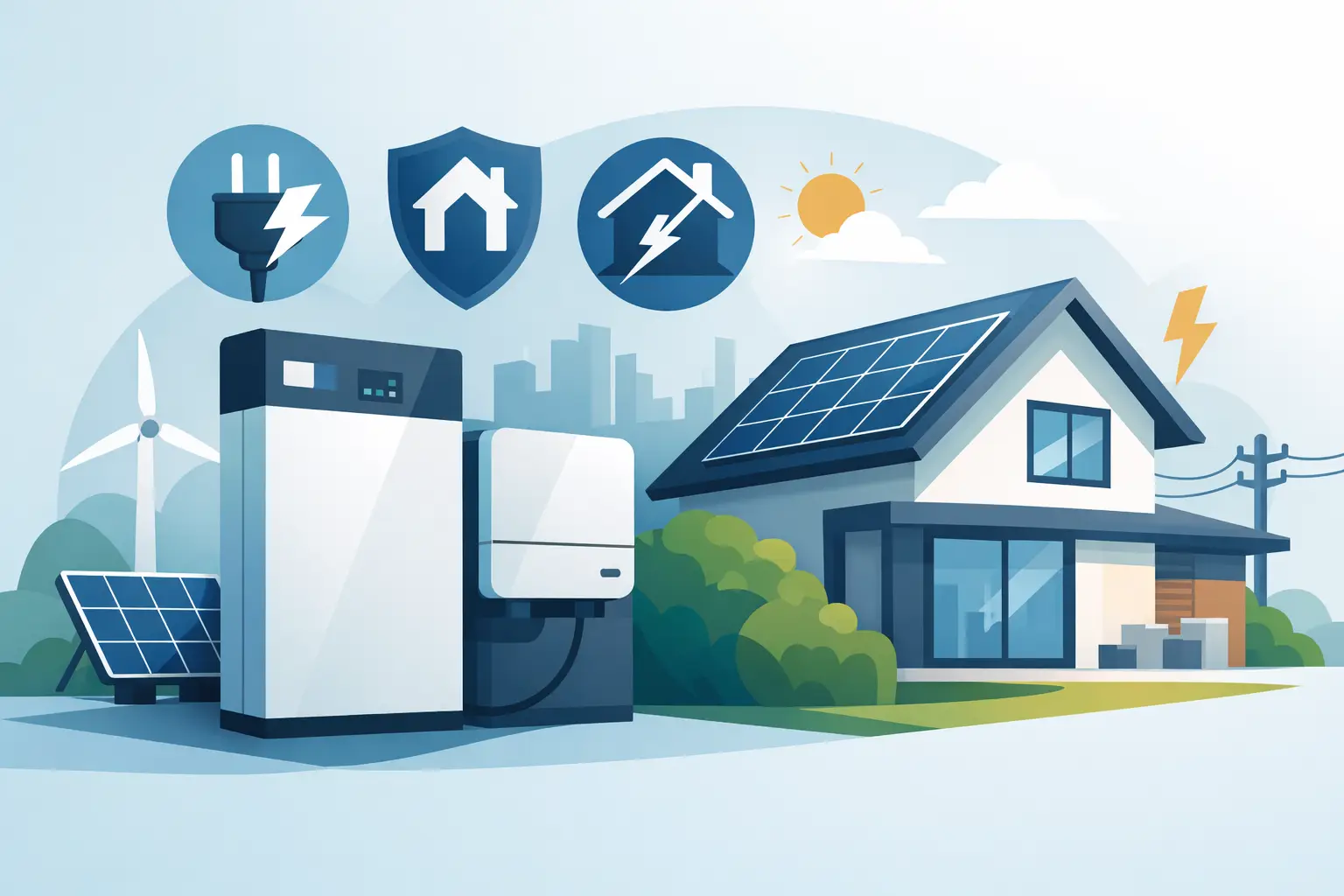
For homeowners, the most useful starting point is this: think about what problem you want the battery to solve. If your main goal is lowering electricity bills, the right system may be one that stores excess solar during the day and releases it in the evening. If your main goal is backup power, then the quality of the backup function matters just as much as storage size.
A good review should look at four practical points. First, how much energy the battery can actually store and deliver. Second, whether it can power essential circuits during an outage. Third, how well it works with solar panels and smart tariffs. Fourth, whether the overall cost makes sense for your household.
Not every battery backup system works the same way
One of the biggest misunderstandings is assuming every home battery gives full backup automatically. Many do not. Some systems are mainly built for storing solar energy and reducing grid use, but they will not necessarily keep your home running when the power goes off unless backup hardware is added.
That extra equipment can affect the final price, and it also changes what the battery can support. In some homes, a backup setup may only cover a few essential items such as lighting, the fridge, broadband and selected sockets. In others, it may support more, but usually not everything at once. Electric showers, ovens and heat pumps can place much heavier demands on the system.
That does not make smaller backup setups poor value. Quite the opposite. For many families, keeping the basics on during a short outage is enough. It is often more affordable and more realistic than trying to make the battery act like a full-house generator.
Capacity, output and usable energy
These three terms are easy to muddle up, but they affect daily performance in different ways. Capacity tells you how much electricity the battery can store. Usable capacity is the amount you can actually use. Output tells you how much power it can supply at one time.
That last point matters more than many people expect. You might have enough stored energy to run appliances for several hours, but if the battery output is too low, it may struggle to run several items together. So if you want the kettle on while the microwave and washing machine are going, the system needs to cope with that demand.
For a typical household, a modest battery can still make a noticeable difference to evening electricity use, especially when paired with solar. Larger batteries can increase savings potential, but only if your home produces or can cheaply charge enough energy to fill them.
Battery chemistry and lifespan
Most modern home batteries use lithium iron phosphate or similar lithium-based chemistry. For homeowners, the main takeaway is not the chemistry name itself but what it means in practice. You want a battery with a decent warranty, a strong cycle life, and a reputation for reliable day-to-day use.
The cheapest option is not always the best value if performance drops quickly or support is poor. At the same time, the most expensive battery is not automatically the smartest buy. If a mid-range system covers your evening usage well and offers dependable backup for essentials, that may be better value than paying extra for capacity you rarely use.
Battery backup systems review: best fit by home type
The right battery setup often becomes clearer when you look at the type of home and the way it uses energy.
For households with solar panels, battery storage usually makes the most sense. Instead of sending all spare daytime generation back to the grid, you can keep more of it for later. That is where batteries often feel easiest to justify, because the benefit is immediate and easy to understand. You are simply using more of your own power.
For homes without solar, battery backup can still work well, but the value depends more on your electricity tariff and your reason for buying. If you are charging overnight on a cheaper rate and using that stored energy later, there may still be worthwhile savings. If you want protection from power cuts, then the backup feature becomes the main selling point.
For larger homes with high usage, a single small battery may feel underwhelming. It can still help, but expectations need to be realistic. In these cases, either a larger system or a battery designed to expand over time may be the better route.
For smaller homes or households with tighter budgets, a simpler setup can be a very sensible place to start. You do not need the biggest system on the market to see lower bills.
What to check before you buy
The best battery reviews do not just compare products. They also look at installation quality and home suitability. A well-matched system installed properly is usually better than a premium battery chosen on specs alone.
Ask how the battery will be used in your home, not just what it can do in theory. Will it store solar? Will it charge from the grid? Will it provide backup? Which circuits will stay live in a power cut? How long is the warranty, and what does it actually cover?
It is also worth asking how future-proof the system is. If you plan to add more solar panels later, or if your energy use is likely to grow, an expandable battery may save money in the long run. On the other hand, if your household needs are steady, there is no reason to overbuy.
Good installers will explain this clearly and keep the process simple. That matters just as much as the hardware itself. For many homeowners, stress-free advice and honest recommendations are part of the value.
Cost versus value
Battery prices still put some people off, and that is understandable. The upfront cost can be significant. The key is to separate price from value.
A battery that lowers your reliance on peak-rate electricity, improves your use of solar power and gives basic backup during outages may offer strong all-round value. But payback times vary. A battery is more likely to make financial sense when it is sized properly, used regularly, and paired with the right tariff or solar setup.
If you are only buying for backup against occasional short cuts, the savings case may be weaker. If you are buying for both backup and day-to-day bill reduction, the numbers often look better.
Common mistakes homeowners make
One common mistake is buying purely on headline capacity. Another is assuming any battery will power the whole home during a cut. A third is choosing a system before checking whether it suits existing solar equipment, inverter requirements and household usage.
There is also the issue of being sold more than you need. Bigger is not always better. A battery that is too large for your usage may spend too much time underused, which is not great for value. A smaller, better-matched system can often perform more effectively in real life.
This is why straightforward advice matters. A company such as Newtech Renewables Ltd focuses on making renewable upgrades easier to understand, which is exactly what most homeowners need when comparing battery storage. Clear pricing, realistic recommendations and a simple installation process usually count for more than flashy product claims.
So which battery backup system is best?
There is no single winner for every household. The best system is the one that matches your budget, your energy habits and your reasons for buying. If your priority is savings, focus on solar compatibility, usable capacity and tariff flexibility. If your priority is resilience, look closely at the backup setup and what it will actually keep running.
A good battery should feel practical, not complicated. It should help you use more of your own energy, rely less on expensive grid electricity, and give you confidence that the basics will keep working if the power goes out. If the numbers stack up and the system fits your home properly, battery storage can be a smart step towards lower bills and a less stressful energy setup.
The best place to start is not with the biggest spec sheet. It is with an honest look at your home, your usage and what would genuinely make daily life easier.