A cold patch by the sofa, radiators working hard but rooms still feeling chilly, and energy bills that seem to rise without warning – these are usually signs that a home is losing heat or using energy inefficiently. The top ways to improve home efficiency are not always the most expensive ones. Start by reducing wasted heat, then look at upgrades that give you more control over how and when you use energy.
For homeowners across Glasgow and the wider Central Belt, the best plan depends on the age, layout and condition of the property. A simple draught-proofing job can make a noticeable difference in one house, while another may benefit far more from insulation, a modern heating system or solar panels. The aim is the same: a warmer, more comfortable home with lower running costs and no unnecessary complication.
Top ways to improve home efficiency: start with heat loss
Before adding new technology, deal with the energy that is escaping from your home. Heating a draughty or poorly insulated property is like trying to fill a bath without putting the plug in. Your boiler or heat pump may be working perfectly, but it has to work longer to maintain a comfortable temperature.
Check loft insulation first
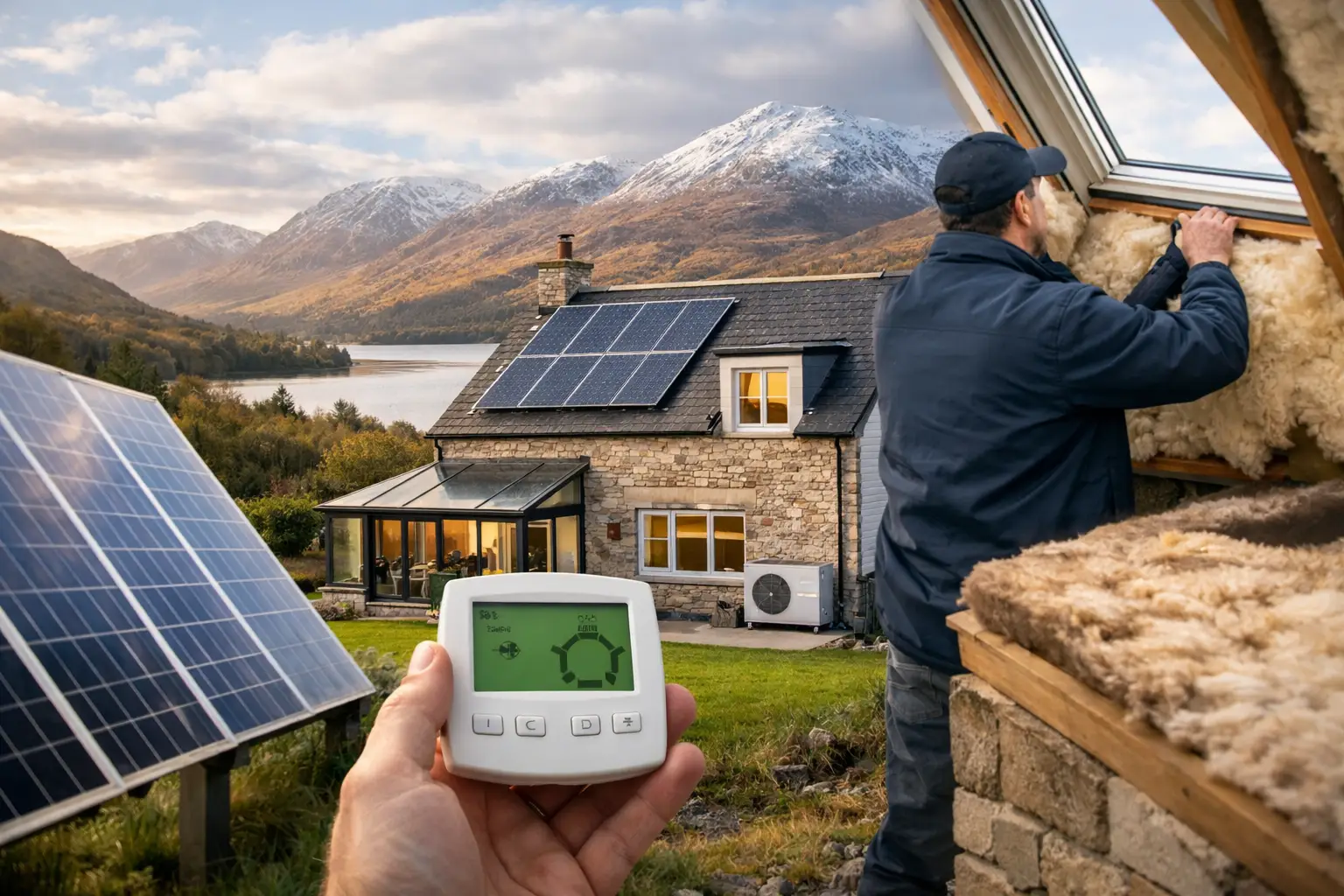
Heat rises, so an under-insulated loft is one of the most common sources of heat loss. Bringing loft insulation up to a suitable depth can be a relatively straightforward improvement and often provides good value for money. It also helps your home retain warmth for longer after the heating switches off.
Do not block loft ventilation when adding insulation. Proper airflow helps prevent condensation and moisture problems, particularly in older Scottish homes. If you use the loft for storage, raised boarding may be needed so the insulation is not compressed.
Stop draughts without stopping ventilation
Gaps around external doors, windows, loft hatches, pipework and floorboards can let cold air in. Sealing obvious gaps and fitting door brushes or draught excluders is a lower-cost job that can make rooms feel more comfortable quickly.
Be sensible around extractor fans, chimneys and air vents. Your home still needs controlled ventilation to manage moisture and maintain good air quality. The goal is to stop unwanted draughts, not to make the property airtight without a ventilation plan.
Improve walls, floors and glazing where it makes sense
Wall insulation can have a major impact, especially in homes with uninsulated cavity walls or solid walls. However, it is not a one-size-fits-all decision. The right approach depends on the construction of your property, its exposure to wind and rain, and whether there are existing damp issues to resolve.
Older windows can also be a source of discomfort. Replacement double or triple glazing can help, but it is a bigger investment than draught-proofing or loft insulation. If new windows are not in your budget yet, correctly fitted curtains, blinds and secondary glazing may still reduce heat loss and cold spots.
Make your heating work smarter, not harder
Once your home holds onto heat more effectively, you can focus on how it is heated. A heating system should keep the rooms you use comfortable without wasting energy in empty spaces or running at higher temperatures than necessary.
Use heating controls properly
A programmable thermostat, room thermostat and thermostatic radiator valves give you more control over your heating. Set a schedule that matches your household routine rather than leaving the heating on all day by habit. Turning down the thermostat by even a small amount may reduce energy use, provided everyone in the household remains comfortable.
Keep radiators clear of large furniture and heavy curtains where possible. If heat is trapped behind a sofa, it is not warming the room effectively. Bleeding radiators when they have cold spots at the top and checking system pressure can also help your heating perform as intended.
Consider a modern boiler or air source heat pump
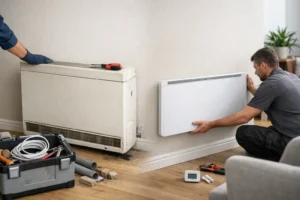
If your boiler is old, unreliable or costly to run, replacing it with a modern energy-efficient boiler could lower fuel use and provide more dependable heating. This may be the sensible choice where gas is available and you need a familiar, lower-upfront-cost option.
For suitable properties, an air source heat pump is another way to improve home efficiency. It takes warmth from the outside air and uses electricity to provide heating and hot water. Heat pumps work best in homes that are reasonably well insulated and use lower flow temperatures than many older boiler systems. That can mean reviewing radiator sizes or considering other changes as part of the installation.
A heat pump is not automatically the right answer for every property, and anyone promising otherwise is oversimplifying the decision. A proper home assessment should look at heat loss, current heating, available space and your likely running costs before you choose.
Generate and store more of your own electricity
Electricity use is becoming a bigger part of household bills, particularly for homes considering heat pumps or electric vehicles. Solar panels and battery storage can give you more control over that spending.
Solar panels can reduce daytime electricity costs
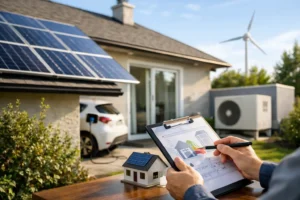
Solar panels generate electricity during daylight hours for use in your home. The strongest savings usually come from using as much of that power as possible while it is being generated. Appliances such as washing machines, dishwashers and slow cookers can be run during the day when practical, rather than automatically being used in the evening.
Your roof direction, shading, roof condition and household electricity use all affect whether solar is a good fit. A south-facing roof is helpful, but east and west-facing roofs can also work well because they spread generation across the morning and afternoon. Clear, package-based pricing and a site assessment make it easier to understand what is realistic before committing.
Battery storage gives you more flexibility
A home battery stores surplus solar electricity for use later, such as in the evening when demand is often higher. It can also be useful for households on time-of-use tariffs, where electricity prices vary through the day. The financial benefit depends on your energy tariff, how much electricity you use, the size of the solar system and your household routine.
Batteries add to the upfront cost, so they are not essential for every solar installation. For a household that is out all day and uses most power after work, storage may be particularly useful. For others, starting with solar panels and adding a battery later can be a more comfortable route.
Cut everyday electricity waste
Small changes will not replace insulation or an efficient heating system, but they can stop money disappearing through everyday habits. Focus on the appliances and routines that use the most energy rather than worrying about every phone charger.
Use full loads in the washing machine and dishwasher, wash clothes at lower temperatures where suitable, and air-dry laundry when the weather allows. If you use a tumble dryer regularly, a heat-pump tumble dryer can use considerably less electricity than older vented models, though drying cycles may take longer.
In the kitchen, use a microwave or air fryer for smaller meals when appropriate, keep fridge and freezer seals clean, and avoid overfilling either appliance so air can circulate. Switching to LED lighting is a simple improvement too, especially in rooms where lights are on for long periods.
Plan improvements in the right order
It is easy to be drawn to the most visible upgrade first, but the order matters. Improving insulation and reducing draughts before changing the heating system helps you choose the right size system and get better performance from it. Then, renewable technologies such as solar panels, batteries and heat pumps can deliver more value.
If upfront cost is a concern, do not assume you have to fund every improvement at once. Some households may be eligible for supported energy-efficiency or heating upgrades, depending on their circumstances and the property. Others may prefer to make changes in stages, beginning with lower-cost work that improves comfort straight away.
A good installer should explain the choices in plain English, set out costs clearly and avoid pushing a system that does not suit your home. Newtech Renewables helps homeowners assess practical options, from solar and battery storage to efficient heating upgrades, with the aim of keeping the process straightforward.
The most useful next step is to look at your home honestly: where does it feel cold, when do you use the most energy, and which improvement fits your budget now? Start there, and each sensible upgrade can make the next one work even better.