
If your heating bills feel high but paying for a full upgrade outright is not realistic, the best funded home energy improvements are usually the ones that cut waste first. That means focusing on measures that make your home warmer, cheaper to run and easier to heat before you think about anything more ambitious. For many households, the smartest route is not chasing the newest technology. It is getting the basics sorted with support that can reduce or even cover the upfront cost.
For homeowners, that matters because the right funded upgrade can make a noticeable difference quite quickly. A draughty home with poor insulation will keep losing heat no matter how often the boiler fires up. A better heating system can help, but it works much better in a home that holds onto warmth properly. That is why some improvements offer better value than others, especially when grants or funded schemes are involved.
What makes the best funded home energy improvements worth doing?
The best upgrades tend to share three things. They lower heat loss, reduce running costs and improve comfort in everyday life. It is not just about shaving money off a bill. It is about rooms warming up faster, fewer cold spots and less need to keep turning the heating higher.
Funding also changes the maths. An improvement that feels too expensive as a private purchase can suddenly become one of the best-value changes you can make if part or all of the cost is covered. That is why eligibility matters so much. The best option on paper is not always the best option for your household if another measure is available with stronger support.
There is also a practical point here. Some homes need a staged approach. If your insulation is poor, that may come before a heating upgrade. If your boiler is old and unreliable, replacing that may be the priority. Good advice should keep things simple and look at what will make the biggest difference for your property, not just what sounds impressive.
1. Loft insulation
Loft insulation is often one of the strongest places to start because heat rises. If your loft is under-insulated, you are paying to warm air that disappears through the roof. A funded insulation upgrade can be one of the quickest ways to improve comfort without changing how you live in the home.
It is especially worthwhile in older properties where insulation levels are patchy or outdated. The difference can show up in winter quite quickly, with bedrooms and upstairs spaces feeling less chilly. It is not glamorous, but it is often one of the most sensible funded measures available.
The trade-off is that loft insulation alone will not solve every heating problem. If the walls are poor or the heating system is struggling, it is part of the answer rather than the whole answer. Still, as a foundation for lower bills, it is hard to ignore.
2. Cavity wall insulation
If your home has unfilled cavity walls, insulating them can make a major difference. Walls account for a large share of heat loss, so this is one of the best funded home energy improvements when the property is suitable.
For many households, the appeal is simple. Once it is done, the home keeps heat in better every day. You are not changing your routine or learning new controls. You are just losing less warmth.
Suitability matters, though. Not every property should have cavity wall insulation, and proper assessment is important. Exposure to driving rain, wall condition and existing insulation all need checking. This is where a stress-free, fully managed process really matters, because the right answer depends on the house, not just the grant on offer.
3. Internal or external wall insulation
Homes with solid walls can lose a lot of heat, and funded support for solid wall insulation can be a big opportunity where available. This type of upgrade can transform comfort levels in older homes that always seem hard to heat.
External wall insulation can improve thermal performance and freshen up the look of the property at the same time. Internal wall insulation can also help, though it may reduce room space slightly and involve more disruption indoors. That is the trade-off. The energy benefit can be strong, but it is not the quickest or simplest job in every case.
For households dealing with persistent cold rooms and high heating costs, however, it can be one of the most meaningful improvements available through funded routes.
4. Air source heat pumps
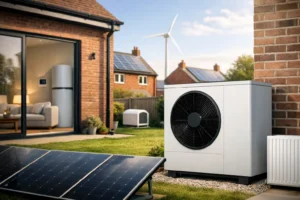
Air source heat pumps get plenty of attention, and with good reason. In the right property, they can provide efficient heating and help reduce dependence on traditional fossil fuel systems. If funding is available, they can shift from feeling out of reach to being a very practical option.
That said, a heat pump is not automatically the first thing every home needs. It tends to perform best in properties with good insulation and suitable heat emitters. If the home leaks heat badly, you may not get the smooth, efficient performance people hope for until the fabric of the home is improved.
This is where honest advice matters. Sometimes a funded heat pump is the right next step. Sometimes insulation and system upgrades should come first. When the order is right, the long-term savings and comfort can be very good.
5. Modern energy-efficient boilers
Not every funded pathway leads to a renewable-only answer. For some households, replacing an old, inefficient or unreliable boiler with a modern energy-efficient model is still one of the most practical improvements available.
If your current boiler is costing too much to run or struggling to keep the house warm, an upgrade can bring immediate day-to-day benefits. Heating can feel more dependable, hot water can improve and wasted energy can drop. For many families, that reliability matters just as much as the savings.
It is worth being realistic, though. A boiler upgrade usually works best as part of a wider plan, especially if insulation is poor. A new boiler in a leaky home is better than an old one, but it is still heating a house that loses warmth too quickly.
6. Heating controls and thermostats
Funded upgrades are not always the big-ticket items people expect. Better controls can make a real difference, especially in homes where heating is left running longer than needed or rooms are heated unevenly.
Simple, modern controls help you manage when and where heat is used. That can mean less waste and a more comfortable home without constantly adjusting the system. If support is available alongside a larger upgrade, it is usually worth taking seriously.
On their own, controls will not fix a cold property with poor insulation. But when paired with a better boiler or heat pump, they can help you get more from the system you already have.
7. Solar panels and battery storage
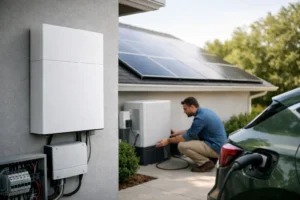
Solar panels are not always part of funded schemes in the same way as insulation or heating measures, but they can still be a smart route for some households looking to cut electricity bills. If partial support, local schemes or package pricing make them more affordable, they deserve a place in the conversation.
For homes with decent roof space and good daytime generation potential, solar can reduce reliance on grid electricity. Battery storage can add more value by keeping more of that power for later use. This tends to suit homeowners who want more control over running costs and are happy to think longer term.
The main trade-off is that solar is usually more effective at tackling electricity costs than fixing a cold home. If your biggest issue is heat loss, insulation and heating upgrades may need to come first.
How to choose the right funded improvement for your home
The best choice depends on what is driving your bills. If the house is hard to keep warm, insulation is often the first place to look. If the heating system is old and unreliable, a replacement may be the bigger priority. If your electricity costs are the main problem, solar may deserve attention.
Eligibility also plays a big part. Some households can access support through schemes such as ECO 4, while others may be better suited to private-pay options with clear, affordable pricing. What matters is having someone assess the property properly and explain the options in plain English.
That is where many homeowners get stuck. Not because the improvements are confusing in themselves, but because the process feels complicated. Good support should make it obvious what your home needs, what funding may be available and what kind of savings or comfort improvement you can realistically expect.
Best funded home energy improvements: the right order matters
One of the biggest mistakes is choosing upgrades in the wrong order. A heat pump in a poorly insulated home may not deliver what you hoped. A new boiler helps, but may not go far enough if heat is pouring out through the loft and walls. The best funded home energy improvements work best when they are matched to the home and installed in a sensible sequence.
That is why a whole-house view is often the most useful. Instead of asking which product is best in general, ask which improvement will make the biggest difference in your home, at your budget level, with the funding you may be able to get.
For many households across Scotland and England, the most valuable upgrade is the one that makes the home feel warmer, simpler to run and less expensive month after month. If the process is clear and the advice is honest, getting started feels much less like a gamble and much more like a sensible home improvement.