If your solar panels are meant to cut your bills for years, it makes sense to give them a little attention now and then. The good news is that this guide to solar panel maintenance is not about constant upkeep or expensive servicing. For most homeowners, it is simply a matter of knowing what to check, what to leave alone and when to call in help.
Solar panels are popular partly because they are low maintenance. Once installed properly, they do most of the hard work on their own. Still, low maintenance does not mean no maintenance. Dirt, shade, storm damage and worn components can all affect performance over time, and small issues are easier and cheaper to sort out early.
Why solar panel maintenance matters
A solar system works best when sunlight reaches the panels clearly and the rest of the equipment is operating as it should. If something gets in the way, your system may still produce electricity, just not as much as it should. That can mean lower savings without any obvious warning.
Maintenance is really about protecting your return on investment. A quick visual check now and again can help you spot cracked glass, heavy dirt build-up, nesting birds or loose wiring before they turn into bigger problems. It also gives you peace of mind that your system is still doing what you paid for it to do.
In the UK, the weather adds a bit of nuance. Rain does help wash panels, which means many homes need less cleaning than people expect. On the other hand, moss, leaf debris, bird mess and long damp periods can still create problems, especially on lower roof pitches or properties near trees.
Your guide to solar panel maintenance at home
The simplest approach is to break maintenance into light regular checks and occasional professional support. You do not need to be an expert, and you do not need to climb onto the roof.
Start by checking your system’s generation figures every so often. If you have an app or inverter display, have a look at whether output seems in line with the season. Winter generation will naturally be lower than summer, so the key thing is not chasing a perfect number. You are looking for unusual drops, fault messages or long periods where production seems lower than expected.
It also helps to carry out a ground-level visual check a few times a year. Stand back and look for anything obvious such as dirt patches, slipping mounts, overhanging branches or signs that birds are nesting underneath the panels. If your panels are hard to see, binoculars can be useful, but there is no need to take risks for a closer look.
A good time to do this is after bad weather. Strong winds, heavy snow and hail are not everyday events, but when they happen they can affect roof-mounted systems. Most panels are built to handle harsh conditions, though it is still sensible to check for visible damage afterwards.
How often do solar panels need cleaning?
This depends on where you live and what surrounds your home. Many UK systems need very little active cleaning because rainfall removes normal dust and grime. If your roof is open and free from nearby trees, you may only need an inspection rather than routine washing.
Panels may need more attention if your property is near busy roads, farmland, seafront areas or places with lots of birds. Pollen, traffic film, salty air and bird droppings can all leave residue that rain does not always shift properly. In those cases, an occasional clean can help maintain output.
The important part is not to overdo it. Cleaning too often, or using the wrong tools, can cause more harm than the dirt itself.
Safe cleaning tips
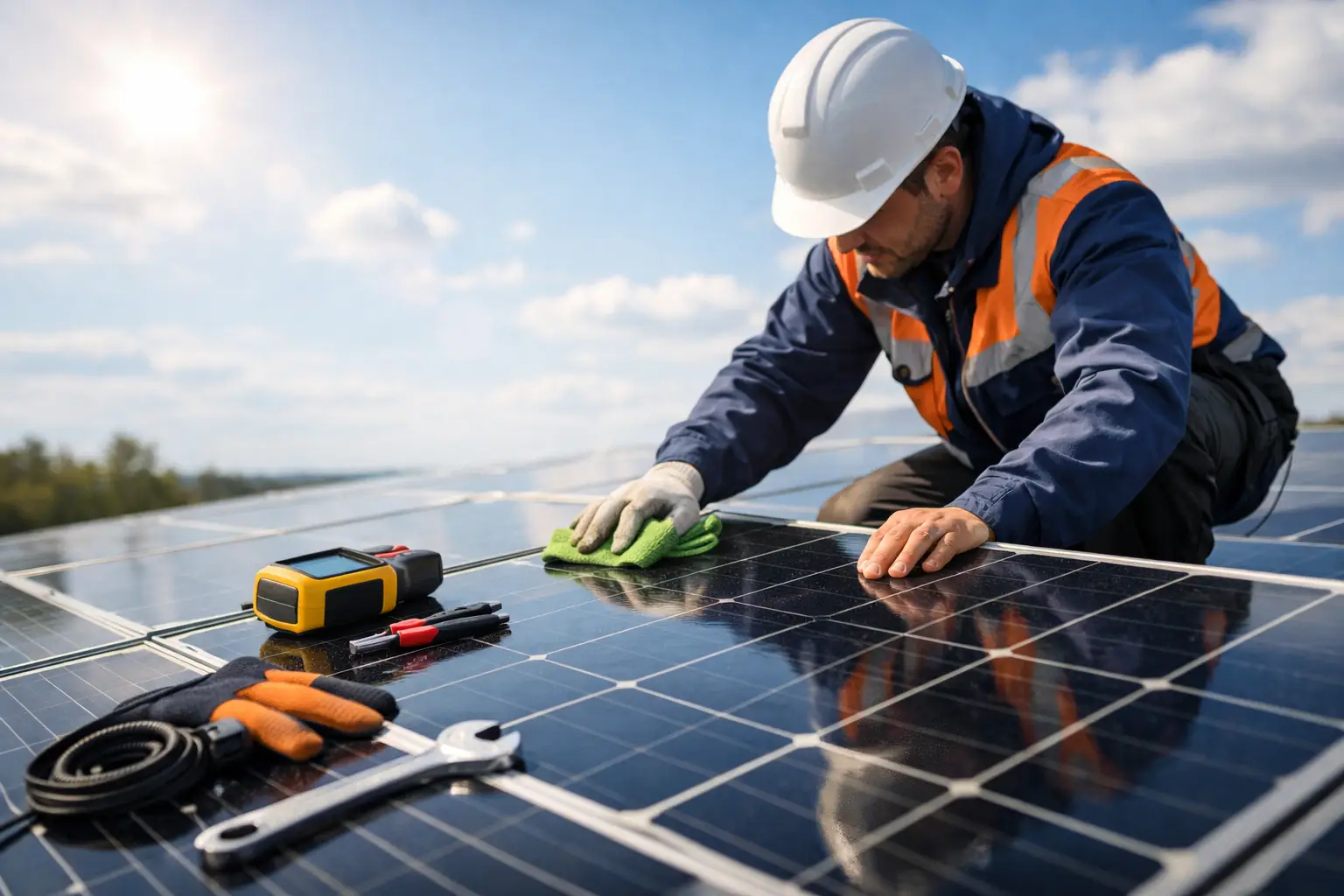
If your panels are reachable safely from the ground or from suitable access equipment handled by a professional, cleaning should be gentle. Use plain water and a soft non-abrasive cloth or sponge. Harsh chemicals, pressure washers and rough brushes are best avoided because they can damage the panel surface or seals.
Never climb onto a roof unless you are properly trained and equipped. For most homeowners, that is the line between sensible care and unnecessary risk. If the panels are dirty enough to affect performance and you cannot reach them safely, it is better to arrange a professional clean.
Also be careful about cleaning panels during very hot sunny periods. Sudden temperature changes can put stress on the glass, and of course working around a roof in bright conditions brings its own safety concerns.
What to watch for beyond the panels
Solar maintenance is not only about keeping the glass clean. Your system includes other parts that matter just as much.
The inverter is one of the main ones. This is the part that converts the electricity generated by the panels into usable power for your home. If the inverter shows warning lights, fault codes or repeated shutdowns, it needs attention. Inverters do not usually last as long as panels, so they are often the first component to need repair or replacement later in the system’s life.
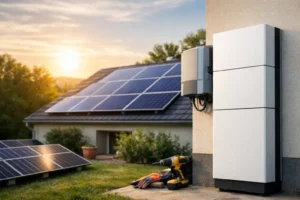
If you have battery storage, it is worth checking the app or monitoring platform to make sure charge and discharge patterns look normal. A battery system should behave consistently once you get used to how it runs. Sudden changes in stored energy, charging times or error messages are signs to get advice.
Cables, isolators and mounting hardware also deserve the occasional visual check from a safe distance. You are not inspecting them in technical detail. You are simply looking for anything that appears loose, damaged or out of place.
Signs your solar system may need expert attention
Some issues are easy to miss because the system does not stop completely. It may just underperform quietly. That is why a few warning signs are worth knowing.
If your generation drops sharply compared with the same season last year, that is worth investigating. The same applies if your inverter displays a persistent fault, your electricity savings seem noticeably lower, or part of the array looks shaded when it was not before.
Physical signs matter too. Cracked panels, water ingress, scorch marks, bird nesting under the array or any movement in the mounting system should be checked professionally. Even if the system still appears to be working, these are not things to ignore.
This is where a professional inspection can save money in the long run. A small fault caught early is usually far less disruptive than waiting until performance drops badly or a part fails completely.
Seasonal maintenance in the UK
UK weather means your maintenance routine will look slightly different across the year. In autumn, leaves and debris are the main concern, especially if trees are close to the house. In winter, shorter days and lower sun angles naturally reduce output, so lower generation is not automatically a problem.
Spring is a useful time to check whether winter grime has built up and whether your system is ready for stronger summer generation. Summer is often when people notice their solar performance most, simply because the system should be producing well. If it is not, that is often the point when hidden issues become more obvious.
Snow can raise questions too. In most cases, it is best left alone to melt naturally. Trying to remove it yourself can damage the panels and create a serious safety risk. A temporary drop in generation during snow is normal.
Should you book professional solar panel servicing?
For many households, yes – but not necessarily every few months. A professional service every so often can be worthwhile because it checks the parts you cannot easily assess yourself. That may include electrical testing, inverter checks, mounting inspection and a review of overall system performance.
How often this is needed depends on system age, installation quality and whether you have noticed any issues. A newer, well-performing system may need little more than light monitoring and occasional inspection. An older system, or one exposed to heavier dirt and weather, may benefit from more regular servicing.
If you are unsure, the safest route is simple: ask for advice based on your specific setup rather than assuming every home needs the same schedule. Companies such as Newtech Renewables Ltd usually take a practical view of this, which is far more helpful than pushing unnecessary work.
Keep it simple and consistent
The best guide to solar panel maintenance is not a complicated checklist. It is a habit of paying attention. Check your generation now and then, keep an eye out for visible changes, leave risky roof work to professionals and act early if something does not look right.
That way, your system stays stress free, your savings stay on track and your panels have the best chance of performing well for years to come. A little care goes a long way.