If your energy bills still make you wince every month, the idea of low cost renewables for homes probably sounds appealing – but also a bit uncertain. Most homeowners are not looking for a grand eco project. They want a warmer house, lower running costs and a clear answer on what is actually worth paying for.
That is the real starting point. Not every renewable system is right for every property, and the cheapest option upfront is not always the one that saves the most over time. The good news is that there are practical ways to improve your home without making the whole process feel complicated or expensive.
What low cost renewables for homes really means
For most households, low cost does not mean buying the absolute cheapest product on the market. It means choosing improvements that keep upfront spending sensible and give you a realistic return through lower bills, better efficiency or funded support.
In practice, that usually means looking at systems that are proven, widely available and suitable for ordinary homes. It can also mean combining renewable technology with other sensible upgrades, because a system works best when your home is ready for it.
A draughty house with poor insulation may not get the best results from a heating upgrade alone. A solar system without the right usage pattern may still help, but the savings could be slower than expected. The best results usually come from matching the system to the home, not forcing the home to fit the technology.
The best-value renewable options for most homes
Solar panels
Solar panels are often the first thing people think of, and for good reason. They can be one of the most cost-effective renewable upgrades for homeowners who use a fair amount of electricity during the day.
If your roof is suitable and gets decent sunlight, solar can reduce how much electricity you buy from the grid. That can make a real difference over time, especially when energy prices stay unpredictable. For many households, solar feels straightforward because the benefit is easy to understand: generate some of your own power and buy less.
The trade-off is the upfront cost. Solar is not the cheapest home improvement you can make on day one, but package-based pricing and finance options can make it more manageable. It is also worth being honest about lifestyle. If nobody is home in the daytime, you may not use as much of the electricity you generate unless you add battery storage.
Battery storage
Battery storage is not a renewable source on its own, but it can make renewable energy work harder. If you have solar panels, a battery lets you store electricity generated during the day and use it later in the evening when your household demand is often higher.
That can improve the value of your solar system because you waste less of what you generate. It can also help households who want more control over their electricity use. Still, batteries add to the initial cost, so they are not always the best first step for buyers on a tight budget. In some cases, starting with solar and adding a battery later is the more affordable route.
Air source heat pumps
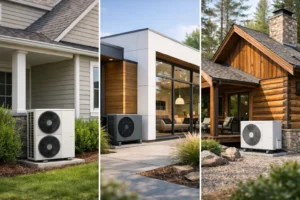
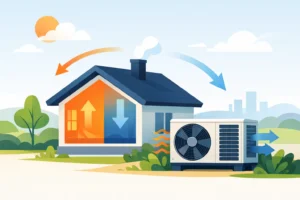
Air source heat pumps can be an excellent option for homes that need a heating upgrade, especially where the current system is old, inefficient or expensive to run. They use electricity to move heat rather than creating it in the same way as a traditional boiler, which is why they can be much more efficient.
The challenge is that heat pumps are not automatically the cheapest option for every property. They work best when the home has decent insulation and the system is designed properly. In the right house, they can improve comfort and reduce running costs. In the wrong setup, expectations and results may not match.
This is where proper assessment matters. A lower-cost solution is not always about choosing the smallest quote. It is about choosing the system that will actually suit your home and avoid expensive disappointment later.
Funded heating and efficiency upgrades
For some households, the most affordable route is not buying a system privately at all. Support schemes such as ECO 4 can help eligible households access heating and energy-efficiency improvements with much lower upfront cost.
That may include insulation, heating upgrades or other measures designed to make a home cheaper to run. If you qualify, this can be one of the strongest routes into low cost renewables for homes because the financial barrier is much lower from the start. It is always worth checking eligibility rather than assuming support will not apply to you.
How to choose the right system for your budget
A good rule is to start with your biggest bill problem. If electricity costs are the main issue, solar panels may offer the clearest benefit. If your home is hard to heat and your current system is struggling, then heating improvements or a heat pump may be the better place to begin.
It also helps to think in stages. You do not always need to do everything at once. Some homeowners begin with solar, then add a battery later. Others improve insulation first so a future heating system performs better. Breaking the work into sensible steps can make renewables feel much more affordable.
Be careful with simple promises about payback too. Savings depend on your property, energy use, tariff and installation quality. Two homes on the same street can get different results from the same technology. That does not mean renewables are not worthwhile. It just means honest advice matters more than big headline claims.
What makes a renewable upgrade genuinely affordable
Price matters, but affordability is broader than the initial quote. A system is genuinely affordable when it is clearly priced, suitable for your home and likely to reduce your bills without causing hassle.
That is why the buying experience matters. If the process is confusing, full of extras and hard to compare, homeowners often delay the decision or end up choosing based on price alone. Clear package pricing, plain-English advice and a full assessment make it easier to understand what you are paying for and why.
A trustworthy installer should also explain what may affect value. Roof condition, insulation levels, existing radiators, hot water setup and household energy habits all influence performance. You do not need a technical lecture, but you do need the facts in straightforward language.
Low cost renewables for homes are not one-size-fits-all
This is the part many people miss. The best low-cost option for a newer, well-insulated semi-detached home may be completely different from the right choice for an older detached property with higher heating demand.
For example, a family out at work and school all day may get less immediate benefit from solar alone than a household where someone is home using appliances during daylight hours. A home with poor loft insulation may feel a much bigger benefit from fabric improvements before any major heating upgrade. A property with an ageing boiler could see faster value from replacing inefficient heating than from focusing on electricity first.
That is not bad news. It simply means there is no need to chase whatever system is getting the most attention. The sensible option is the one that fits your home, your budget and the way you actually live.
Common mistakes that cost homeowners more
One common mistake is choosing on headline price alone. A very cheap installation can become expensive if it is undersized, badly fitted or not suitable for the property.
Another is skipping the basics. Renewables often perform better when the home is reasonably energy efficient to begin with. If heat is escaping quickly, even a good system has to work harder.
The third is assuming you need the biggest setup possible. Bigger is not always better. A right-sized system often offers better value than paying for capacity you may never use.
This is where a practical installer makes a difference. Companies such as Newtech Renewables focus on making the process simple, with clear advice and options that are designed around real homes rather than showroom promises.
A smarter way to start
If you are weighing up renewables, start with a few simple questions. What is costing you the most right now – heating or electricity? How long do you expect to stay in the property? Would you prefer the lowest possible upfront cost, or the strongest long-term savings? And is there any funded support available to you?
Those answers will narrow the field quickly. From there, the next step is not to guess. It is to get a proper assessment from someone who can explain the options in plain English, flag any limitations and show you what is likely to work in your home.
The right renewable upgrade should leave you feeling more in control, not more confused. If it cuts bills, improves comfort and feels manageable from the start, you are probably looking in the right place.