A bright Scottish morning can still produce useful solar power, and that surprises many homeowners. Solar installation in Scotland is not about waiting for wall-to-wall sunshine. It is about using daylight efficiently, generating more of your own electricity and buying less from the grid when energy prices are high.
For many households, solar is a practical home improvement rather than a complicated technology project. The right system can help reduce daytime electricity costs, give you more control over your bills and work particularly well alongside a battery, electric vehicle charger or heat pump. The key is getting clear advice based on your home and how you actually use energy.
Why solar installation in Scotland can make sense
Solar panels generate electricity from daylight, not just direct heat from the sun. Scotland has longer summer days than much of the UK, which helps balance the lower light levels seen in winter. Output naturally changes through the year, but a well-designed system can generate valuable power across all seasons.
The biggest savings normally come from using your solar electricity as it is produced. If someone is at home during the day, runs appliances on timers or charges a battery for the evening, more of the generation stays in the household. Any electricity you do not use can usually be exported to the grid through a Smart Export Guarantee tariff, although rates and terms vary between suppliers.
Solar will not remove every electricity bill. You may still need grid electricity at night and during darker periods, and standing charges remain. That honest picture matters. Even so, generating a share of your own power can make bills more predictable and reduce your reliance on bought electricity over the long term.
Start with your home, not a panel package
There is no single solar package that suits every property. A good starting point is your roof, your energy use and your budget – not simply the maximum number of panels that can fit.
Your roof and shading
South-facing roofs are often ideal, but east- and west-facing roofs can also be very worthwhile. An east-facing array produces more power earlier in the day, while a west-facing array can better match afternoon and evening use. A split east-west layout may be a sensible choice for families who are out during the middle of the day.
Shade needs proper attention. Chimneys, trees, neighbouring buildings and dormer windows can affect output, especially if shade falls across panels at key times. A survey should look beyond a quick glance at the roof and consider how shading changes through the day and across the year.
The roof also needs to be in sound condition. If it is likely to need major repairs or replacement soon, it often makes better financial sense to deal with that before panels are fitted. This can avoid the cost and disruption of removing and refitting them later.
How you use electricity
Your recent electricity bills give a useful picture of annual usage, but the timing of that use is just as important. A household that uses most electricity after work may benefit from adding battery storage. A home with an electric vehicle, home office, heat pump or electric cooking may have more opportunities to use solar power directly.
It is worth thinking ahead too. If you are planning an extension, changing your heating system or buying an electric car in the next few years, mention it at the survey stage. Allowing for future demand can be wiser than fitting a system that is too small from day one.
What affects solar installation costs?
The price of a solar system depends on more than the panel count. Roof access, scaffolding, cable routes, the type of inverter, the electrical work required and whether you add a battery all affect the final figure. A straightforward installation on an accessible roof is very different from work on a complex roof with long cable runs or limited access.
Battery storage increases the upfront investment, but it can make better use of the electricity your panels produce. Rather than exporting surplus power during the day, a battery stores some of it for use later. It may also charge from cheaper off-peak electricity tariffs where this suits your household. Whether it pays back quickly depends on your tariff, evening usage and the size of the battery.
Be cautious with savings promises that sound too neat. Real savings depend on system size, roof direction, shading, changing electricity prices, export payments and how much power you use at home. A clear quotation should explain the proposed system, what is included, estimated generation and any assumptions behind the figures. That makes it far easier to compare like for like and avoid unwelcome extras.
What a solar installation Scotland survey should cover
A proper survey turns a broad idea into a plan that works for your property. It should assess your roof space and condition, likely shading, consumer unit capacity, cable route and the best place for the inverter and, if chosen, the battery. The installer should also discuss whether you want to prioritise a lower starting cost, greater daytime generation or more stored power for the evening.
You should be able to ask simple questions and receive simple answers. Where will the equipment go? Will scaffolding be needed? How long will the work take? What paperwork is handled for you? A friendly installer will not make you feel rushed for asking.
Most homes do not need planning permission for solar panels, but there can be exceptions, including listed buildings, conservation areas and certain installation positions. Your installer should check what applies before work begins rather than leaving you to untangle it later.
From survey to switch-on: what usually happens
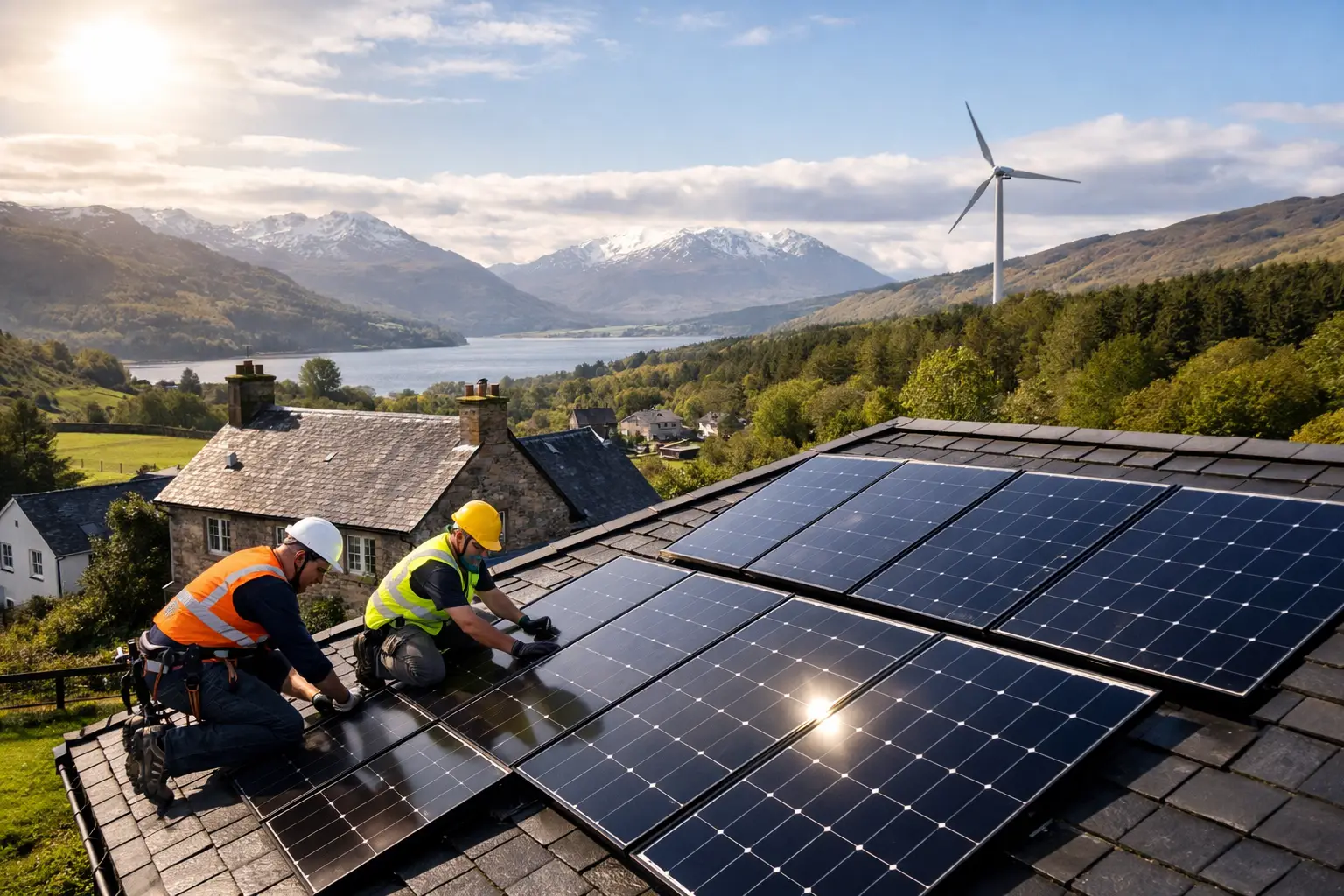
Once the system has been agreed, the installer arranges the practical details, including scaffolding where required and a suitable installation date. On the day, the team fits the mounting system and panels, installs the inverter and completes the electrical connections. For a typical home, the main work is often completed in a day or two, though more complex systems can take longer.
The system must be tested before it is handed over. You should receive clear information on how to monitor generation, what the equipment does and what to do if you notice an issue. Modern monitoring apps can be helpful, but you should not need to become an energy expert to understand whether your system is working normally.
There is also a grid connection process. Your local electricity network operator may need to be notified or approve certain systems, depending on their size and setup. This is an important part of doing the job properly. A full-service installer should manage the process and provide the documents you need to arrange an export tariff with an energy supplier.
At Newtech Renewables, the aim is to keep that journey straightforward: assess the property, explain the options clearly, agree a price and manage the installation without turning it into a second job for the homeowner.
Is battery storage worth adding?
A battery is not essential for solar to work, but it can be a strong addition for households that use more electricity in the evening. It stores electricity generated during the day so it can be used after the sun has gone down. This can raise the proportion of solar power you use yourself.
There is a trade-off. Batteries add cost, take up space and have a finite capacity, so bigger is not automatically better. An oversized battery may sit underused for much of the year, while one that is too small may not cover your evening demand. The right choice should be based on your usual consumption, tariff and plans for the home, not a sales target.
Funding, finance and long-term value
Some households may be eligible for funded energy-efficiency improvements through schemes linked to income, benefits or property conditions. Eligibility rules and available measures can change, and solar support is not automatic, so it is best to check your position rather than rely on a headline offer.
For private buyers, the value of solar comes from lower imported electricity, potential export payments and greater control over future energy costs. The system should also be considered alongside other improvements. Loft insulation, efficient heating controls and draught-proofing can reduce waste first, while solar helps cover a proportion of the electricity you still need.
A good solar system should feel like a sensible decision, not a leap into the unknown. Ask for a design that suits your roof, a price that is clearly explained and support that continues after installation. With the right advice, your home can start making better use of the daylight already falling on it.