A lot of people picture solar panels needing blazing sunshine to do anything useful. Then winter arrives, the sky turns grey by mid-afternoon, and the obvious question follows: do solar panels work in winter, or do they more or less stop until spring?
The reassuring answer is yes, they do work in winter. They still generate electricity on cold, bright days, and they can still help cut your bills during the darker months. Output is usually lower than in summer, but lower does not mean useless. For most households, winter solar is best understood as part of a year-round saving rather than something judged on December alone.
Do solar panels work in winter in the UK?
Yes, solar panels work in winter in the UK. They generate electricity from daylight, not heat, so they do not need hot weather to perform. If there is daylight outside, your panels can produce power.
That catches a lot of homeowners out. We naturally link solar with warm weather, but the panel itself is using light to generate electricity. A cold, sunny winter day can actually be a good operating condition for solar because panels tend to work more efficiently in cooler temperatures than in extreme summer heat.
What changes in winter is not whether the panels work, but how much they produce. Days are shorter, the sun sits lower in the sky, and there are often more dull or overcast periods. That means less generation overall compared with late spring and summer.
Why winter output is lower
The biggest factor is simply fewer daylight hours. In winter, the sun rises later and sets earlier, so your system has a much smaller window to generate electricity.
The angle of the sun matters as well. When the sun is lower in the sky, sunlight hits the panels less directly. That reduces the intensity of the energy they can capture, especially if the roof angle and orientation are not ideal.
Cloud cover also plays a part. Heavy grey skies can reduce output, although they do not stop it completely. Solar panels still generate on cloudy days, just at a lower level than on clear ones.
This is why winter performance varies from home to home. A well-positioned roof with minimal shading may still do a decent job through winter, while a shaded roof or awkward angle will feel the seasonal drop more noticeably.
Cold weather is not the problem
One of the most misunderstood parts of solar is the role of temperature. Panels do not need heat to work well. In fact, very high temperatures can slightly reduce electrical efficiency.
Cooler weather can help panels operate more effectively, provided there is enough daylight. So when homeowners ask whether frost or cold air makes solar stop working, the answer is no. Cold conditions on their own are not the issue.
The real issue is available light. A bright January day can produce more useful generation than a muggy summer day covered in thick cloud. That does not mean winter beats summer overall, because summer still has much longer days, but it does show why winter solar should not be written off.
What about cloudy days, rain and snow?
Cloudy weather reduces generation, but it does not switch the system off. Your panels will still produce some electricity in daylight, even when the sky is overcast. The amount can be much lower, but for households using power steadily through the day, every bit helps.
Rain is not usually a problem. If anything, it can help wash off some dirt and dust. A clean panel surface gives light the best chance of getting through.
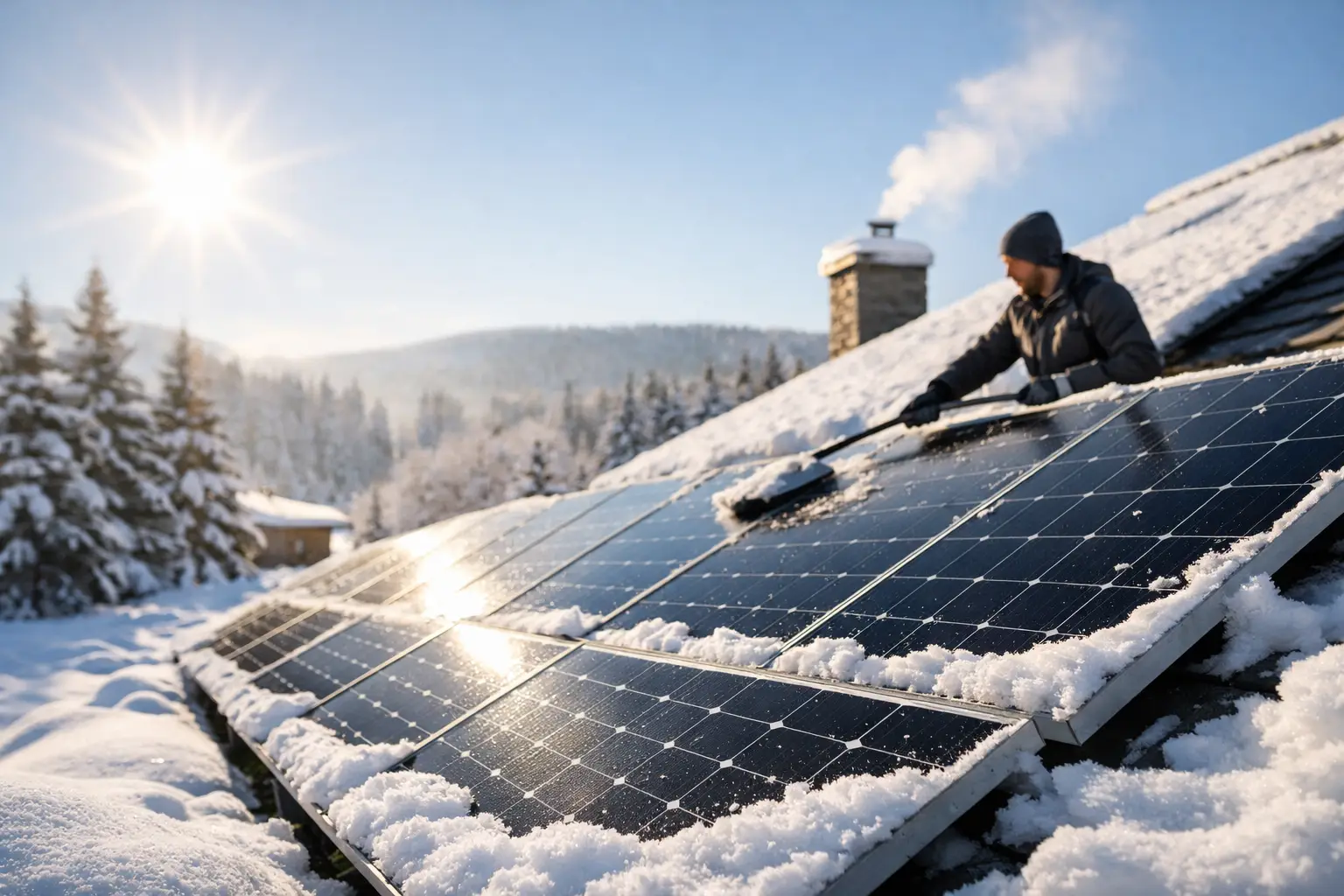
Snow is a little different. If snow settles thickly on the panels and blocks the light, output can drop sharply until it clears. The good news is that in most parts of the UK, heavy snow cover does not tend to sit on panels for long. Panels are usually installed at an angle, and once conditions improve, snow often slides away or melts off.
It is worth saying that homeowners should not climb on the roof or try risky DIY snow removal. Safety comes first. In most cases, it is better to let nature do the job.
How much electricity will solar panels produce in winter?
There is no single figure that fits every home because output depends on system size, roof direction, roof pitch, shading and local weather. A south-facing roof with little shade will usually perform better than an east- or west-facing roof, and both will usually outperform a heavily shaded roof.
What most homeowners notice is that winter generation is lower, but not absent. Your system may cover a smaller share of your daily electricity use than it does in summer, especially if you use more lighting, heating controls and appliances during darker months.
That is why it helps to look at solar over the full year. Systems are designed around annual performance, not just the weakest season. Summer and spring often generate more than enough to balance the quieter winter period.
Can solar still save money in winter?
Yes, solar can still save money in winter because any electricity you generate is electricity you do not need to buy from the grid at the full retail price. If you are at home during the day and can use some of that power as it is generated, the benefit is even clearer.
Winter savings may be smaller than summer savings, but they still count. Running appliances in daylight hours, charging devices, doing the washing earlier in the day or using battery-stored electricity in the evening can all make your system more valuable.
For many households, the bigger win is stability. Solar helps reduce your reliance on grid electricity across the year, and that can soften the impact of rising energy costs.
Battery storage makes winter solar more useful
If you are thinking about solar for bill savings, battery storage is worth considering. In winter, daylight hours are short, and household demand often peaks in the late afternoon and evening when panels are producing less or nothing at all.
A battery lets you keep hold of some of the electricity generated earlier in the day and use it later. That can be especially helpful in winter when every unit of self-generated electricity feels more valuable.
It is not the right choice for every property or budget, and it does add to the upfront cost. But for homeowners who want to make better use of their solar through darker months, it can be a sensible upgrade.
How to get the best winter performance from solar panels
You cannot change the weather, but you can make sure your system has the best chance of performing well. Good design matters from the start. Roof suitability, panel placement and avoiding shade where possible all make a difference.
Keeping panels reasonably clean helps too, although in the UK regular rainfall often does much of the work. If you suspect dirt, moss or nearby trees are affecting performance, it is better to get advice than guess.
It also helps to use electricity a bit more strategically. Households that shift some demand into daylight hours usually get more value from their system. That might mean running the dishwasher after lunch instead of after tea, or charging a battery or electric vehicle when solar output is available.
Is winter a bad time to install solar?
Not at all. In some ways, winter is when people think most seriously about their energy bills, because usage feels more visible and costs bite harder.
Installing in winter means your system can already be in place as daylight hours improve into spring. Rather than waiting for the perfect sunny season, many homeowners prefer to get sorted early and start benefiting as soon as generation ramps up.
The better question is not whether winter is the perfect time, but whether your home is suitable and whether the numbers make sense for your budget. A straightforward assessment gives you a far clearer answer than seasonal guesswork.
The bottom line on whether solar panels work in winter
Solar panels do work in winter, and for most UK homes they work better than people expect. They will not produce as much as they do in summer, because winter brings shorter days and weaker light, but cold weather itself is not the enemy. In fact, panels often prefer cooler conditions.
What matters most is having a system designed properly for your home, realistic expectations about seasonal output, and a clear view of how solar fits into your wider energy use. If your goal is lower bills over the full year rather than miracle results on the shortest day in December, solar still makes strong practical sense.
If you are weighing up whether it is right for your home, the simplest next step is to look at your roof, your daytime electricity use and whether adding battery storage would help you get more from the power you generate.