A heat pump should not become the bit of your home you only think about when something goes wrong. If your rooms are taking longer to warm up, your hot water feels less consistent, or your bills have crept up for no obvious reason, servicing is usually the first place to look. This heat pump servicing guide explains what routine maintenance actually involves, how often it should happen, and when it is time to call in a professional.
For most homeowners, the goal is simple. You want reliable heating, sensible running costs, and no nasty surprises in the middle of winter. A well-serviced heat pump is far more likely to give you all three.
Why a heat pump service matters
Heat pumps are known for being efficient and dependable, but they are not completely maintenance free. They work hard across the year, especially in colder months, and small issues can gradually affect performance. A blocked filter, low system pressure, poor airflow, or a control setting that has drifted out of line can all make the unit work harder than it needs to.
That has a knock-on effect. Your home may feel less comfortable, the system can become noisier, and your electricity use may rise. Left unchecked, a minor fault can turn into a more expensive repair. Regular servicing helps spot these issues early, when they are usually quicker and cheaper to sort out.
There is also the question of lifespan. A heat pump is a long-term investment, so keeping it in good condition protects that investment. If you have had a new system installed, annual servicing may also be needed to support warranty terms, so it is worth checking your paperwork.
Heat pump servicing guide: how often should it be done?
In most cases, a heat pump should be professionally serviced once a year. For a typical household, that is enough to keep the system running safely and efficiently. If the unit sees heavy use, serves a larger property, or has had previous issues, your installer may suggest more frequent checks.
Timing matters too. Many people book a service in late summer or early autumn, before the weather turns colder. That gives you the best chance of going into winter with everything working as it should. Spring can also be a sensible time, particularly if you want any wear and tear from the heating season picked up early.
Alongside the annual service, there are a few simple checks homeowners can do themselves throughout the year. These do not replace a proper service, but they can help prevent avoidable problems.
What happens during a heat pump service?
A good service is not just a quick glance at the outdoor unit. It should be a proper inspection of the system, with checks that focus on safety, performance, and efficiency.
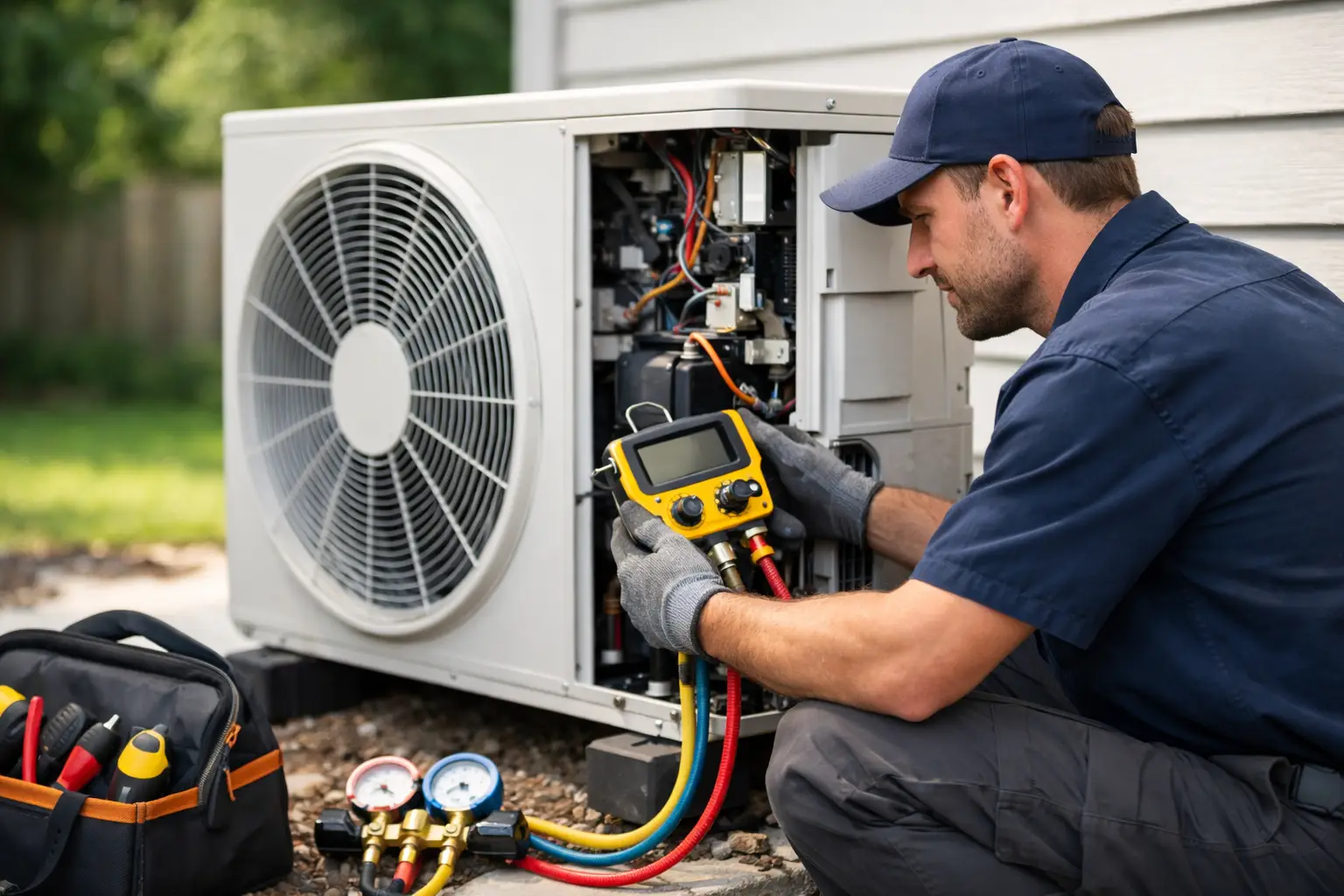
The engineer will usually start by looking over the indoor and outdoor components for signs of wear, damage, or poor operation. They may clean or inspect filters, check fans and coils, test electrical connections, review system pressure where relevant, and make sure the controls and thermostat are responding correctly. Refrigerant checks may also form part of the visit, depending on the system and the issue being investigated.
They should also look at airflow and circulation. If your heat pump cannot move air or water properly through the system, it will struggle to heat your home efficiently. In some homes, the service may include checking emitters such as radiators or underfloor heating settings, especially if comfort levels have changed.
The best service visits are practical and easy to understand. You should come away knowing whether the system is in good shape, if anything needs attention, and whether there are simple adjustments that could improve comfort or reduce running costs.
What you can do between services
You do not need to be an expert to keep your heat pump in decent day-to-day condition. A few small habits can make a real difference.
Keep the outdoor unit clear of leaves, dirt, weeds, and anything else that could restrict airflow. If it is tucked beside a fence or wall, make sure there is still enough space around it. Inside the home, clean or check filters if your system guidance says this is appropriate. It is also worth keeping an eye on your thermostat settings and avoiding constant large adjustments, which can make the system work less efficiently.
If you notice a change in noise, performance, or energy use, do not ignore it for months. Heat pumps often show early signs before a bigger problem develops. Acting sooner usually means a simpler fix.
Signs your heat pump may need attention sooner
Annual servicing is the standard, but sometimes a system needs a check before that date comes round. The most obvious sign is reduced heating or hot water performance. If the house no longer feels as warm as it used to, despite similar settings and weather, something may be off.
Unusual sounds are another clue. Some operating noise is normal, particularly from the outdoor unit, but rattling, buzzing, grinding, or sudden changes in sound are worth getting checked. The same goes for frequent on-and-off cycling, warning lights, or controls that do not respond as expected.
Higher electricity bills can also point to a problem, although this depends on usage and energy prices. If your costs have jumped and your routine has not changed much, the system may be losing efficiency. That does not always mean a major fault, but it does mean it is sensible to arrange a service.
Can you service a heat pump yourself?
Only partly. Homeowners can manage basic upkeep such as keeping the unit clear, checking visible dirt build-up, and following simple filter care guidance from the manufacturer. Beyond that, professional servicing is the safer and more reliable option.
Heat pumps are more specialised than many people realise. They involve electrical components, refrigerant circuits, controls, and system settings that affect both comfort and efficiency. Getting those wrong can lead to poor performance or even damage. If you are ever unsure, it is better to ask than guess.
Choosing the right company for servicing
Price matters, but it should not be the only thing you look at. A cheaper visit is not much use if it turns out to be little more than a basic visual check. You want a company that understands your system properly, explains things clearly, and tells you honestly if work is or is not needed.
That matters even more if you are newer to heat pumps and still getting used to how they run. A good engineer should be able to answer straightforward questions in plain English, without making the process feel technical or intimidating. That practical support is often just as valuable as the service itself.
For homeowners in Scotland and England, it also helps to choose a provider used to the way heat pumps perform in typical UK homes and weather conditions. Real-world advice is more useful than generic theory.
Heat pump servicing guide: common questions homeowners ask
One of the most common questions is whether servicing is really necessary if the heat pump seems to be working fine. In most cases, yes. The whole point of servicing is to catch issues before they become obvious and expensive.
Another question is whether a heat pump needs less servicing than a boiler. It often does, but less does not mean none. Heat pumps generally have fewer combustion-related concerns, but they still need routine checks to stay efficient and dependable.
People also ask whether poor servicing affects running costs. It can. Even a small drop in efficiency over time may mean you are paying more than needed to heat the same home. If lower bills are one of the main reasons you chose a heat pump, regular servicing helps protect that benefit.
The cost of skipping maintenance
It is understandable to put off a service when money is tight, especially if the heating is still on and the hot water is working. But delay can be a false economy. Small performance issues tend to worsen gradually, which means the system may use more electricity for months before anyone notices. By the time a fault becomes obvious, the repair may cost more than a routine service would have done.
There is also the comfort factor. Most people do not book a repair at a convenient time. It happens during a cold snap, before guests arrive, or just when household costs are already piling up. Preventative servicing is not glamorous, but it is one of the simplest ways to avoid that sort of disruption.
If you want your heat pump to stay efficient, reliable, and easy to live with, think of servicing as part of the running cost, not an optional extra. A little attention each year can save a lot of hassle later, and that is usually the kind of home improvement decision that pays for itself in peace of mind.