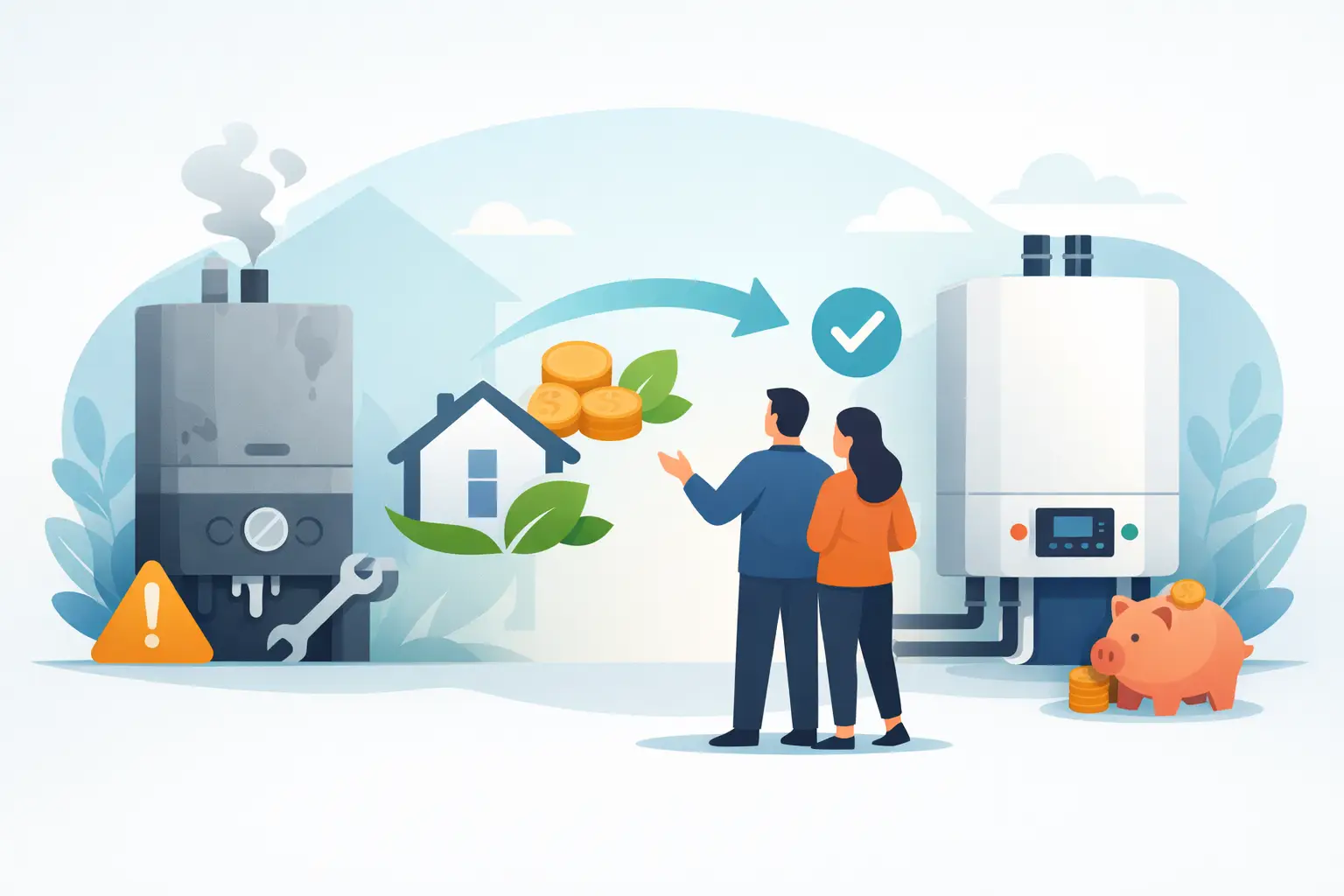
If your boiler is struggling through winter, breaking down more often, or costing a fortune to run, the phrase free boiler replacement scheme probably gets your attention straight away. It sounds simple, but the reality is a bit more mixed. Some households can get help towards a replacement boiler or a different heating upgrade, while others may not qualify at all.
That is where people often get stuck. There is plenty of noise online, lots of big promises, and not always much plain English. If you are trying to work out whether support is available, what schemes actually cover, and whether a boiler is even the right upgrade for your home, it helps to know how these offers really work.
What is a free boiler replacement scheme?
In most cases, a free boiler replacement scheme refers to government-backed or grant-funded support that helps eligible households replace an old, inefficient heating system. The best-known route in England and Scotland is usually through energy efficiency funding, including ECO 4.
The key point is that “free” does not always mean every household gets a boiler at no cost. In some cases, the full cost may be covered. In others, support may only be available if you meet certain criteria, or the recommended upgrade may be something other than a petrol boiler.
That can feel frustrating if you were hoping for a quick yes or no. But it is better to be clear from the start than to assume every home qualifies for the same level of support.
Why eligibility matters so much
These schemes are designed to help households that are most in need of warmer, more efficient homes. That usually means eligibility depends on a mix of factors such as your income, whether you receive certain benefits, the energy performance of your property, and the condition of your current heating system.
A home assessment is often part of the process. That is because funding is not just about swapping one boiler for another. The aim is usually to improve energy efficiency overall, reduce wasted heat, and lower running costs over time.
This is also why two homes on the same street can get different outcomes. One household might qualify for a funded boiler replacement. Another might be offered insulation work first. Another might be better suited to a heat pump or another low-carbon system.
Who may qualify for a free boiler replacement scheme?
Eligibility rules can change, and the details depend on the funding route, but support is often aimed at homeowners or private tenants who meet certain household or property conditions. In many cases, people receiving qualifying benefits are more likely to be eligible.
Your boiler itself may also need to meet certain conditions. If it is old, inefficient or beyond sensible repair, that can strengthen your case. A relatively modern boiler that still works well is less likely to be replaced under a funded scheme, even if your bills feel high.
Property type matters too. Older homes with poor insulation or low EPC ratings are often looked at closely because they may offer more room for improvement. That said, every property is assessed on its own merits.
If you are unsure, the best mindset is not “Will I definitely get a free boiler?” but “Is there funded support available for making my home cheaper to heat?” That is usually the more accurate question.
What the scheme may cover
A free boiler replacement scheme may cover more than just the boiler unit itself. Depending on the funding and the assessment, it could include related heating controls, system improvements, or other energy efficiency measures that make the heating work better.
Sometimes the recommended work includes insulation alongside heating upgrades. That may not sound as exciting as a new boiler, but it can make a big difference. There is little point fitting a better heating system if the home is still losing heat too quickly.
This is where honest advice matters. A good installer should tell you if a boiler replacement is the right move, or if another option would give better long-term savings and comfort.
When a boiler is not the best option
A lot of homeowners start by asking for a boiler because that feels familiar. It is a reasonable place to begin. But not every property is best served by replacing an old boiler with another boiler.
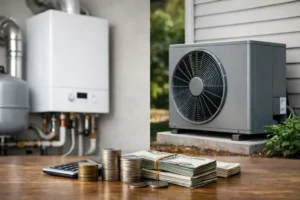
Some homes may be better suited to an air source heat pump, especially where funding supports low-carbon heating upgrades. In other homes, improving insulation first may give more noticeable results than changing the heat source straight away.
There is no one-size-fits-all answer here. If your current boiler is old and unreliable, replacement may be the right call. If your home is poorly insulated, draughty, or expensive to heat for reasons beyond the boiler, a wider upgrade plan may work better.
That is why the assessment stage should not feel like a hurdle. It is there to avoid wasting your time and to make sure any support goes towards something that genuinely helps.
Free boiler replacement scheme myths to ignore
One common myth is that everyone can get a brand-new boiler for free if they ask in the right place. That simply is not true. Funding is targeted, and there are rules.
Another myth is that if you qualify, you must accept whatever is offered without understanding it. You should still ask questions. Find out what system is being recommended, what work is included, whether there are any contributions to pay, and what the expected running costs will be.
There is also the belief that grant-funded work means lower quality. In reality, the quality comes down to the installer, the products used, and how well the job is managed. A proper assessment, clear explanation and tidy installation matter just as much as the funding itself.
How to approach an application without the stress
The easiest way to approach a free boiler replacement scheme is to keep expectations realistic and focus on getting clear answers. You do not need to become an expert in energy policy. You just need to know whether your household might qualify and what options make sense for your home.
Start with the basics. Be ready to share details about your current heating system, your property, and whether anyone in the household receives qualifying benefits. From there, the provider or installer should explain the next steps in plain English.
A good process feels straightforward. You should know what information is needed, whether a survey is required, how long things are likely to take, and whether the recommendation is a boiler, insulation, or a different heating upgrade.
If the conversation becomes vague, over-promising, or pushy, that is usually a warning sign. The right support should feel simple, transparent and fully explained.
Questions worth asking before you agree
Before going ahead, ask what exactly is covered and whether there are any costs not included in the quote or funding offer. Ask why that particular heating system has been recommended for your property. Ask about warranties, aftercare and how the installation will affect your day-to-day routine.
It is also sensible to ask what savings you can realistically expect. No honest company can promise the same bill reduction for every home. Savings depend on your existing system, how well insulated the property is, your tariff, and how you use your heating.
Clear answers now can save a lot of hassle later.
Why the right installer matters
Even the best funding route can turn into a headache if the service around it is poor. Homeowners want the same things whether they are paying privately or using a funded scheme – clear communication, no hidden costs, sensible advice and a job done properly.
That is especially important when heating is involved, because you are not buying a gadget. You are sorting out something your household relies on every day. A warmer home, lower bills and less worry are the real goal.
For households in England and Scotland, companies such as Newtech Renewables help take the confusion out of the process by checking suitability, explaining the options clearly and managing the work from start to finish. That matters just as much as the technology itself.
If you think you might qualify, it is worth asking the question rather than guessing. The right support can make a genuine difference, and even if a free boiler is not the final answer, there may still be a simpler, more affordable route to a warmer home.