A guide to home energy assessments should leave you with answers, not a folder full of jargon. If your energy bills feel too high, some rooms are always cold, or you are considering solar panels, a heat pump or better insulation, an assessment is the sensible place to start. It looks at how your home uses energy now and which improvements are likely to make a real difference for your budget.
For homeowners across Scotland, this matters because no two properties lose heat or use electricity in quite the same way. A system that works brilliantly in one house may be poor value in another. A proper visit helps avoid spending money on the wrong upgrade and gives you a clearer route towards a warmer, lower-cost home.
What is a home energy assessment?
A home energy assessment is a practical review of your property, its heating, insulation, ventilation and day-to-day energy use. The aim is to identify where heat is escaping, where you may be paying more than necessary, and what changes could improve comfort and reduce bills.
It is not always the same as an Energy Performance Certificate, or EPC. An EPC gives a standard rating and includes recommendations, which can be useful. A more detailed home assessment goes further by considering your household’s needs, the condition of your existing systems and whether proposed upgrades are suitable for the building.
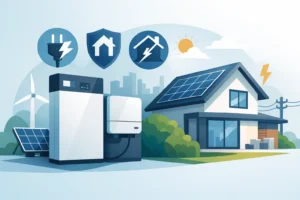
For example, an assessor may look at whether your roof has enough usable space for solar panels, how much electricity you use during the day, and whether battery storage could help you use more of the power you generate. If you are considering an air source heat pump, they will also consider insulation levels, radiator sizes, hot water demand and the space available outside.
The most useful assessments do not start with a product. They start with your home.
Why a home energy assessment can save money
It is tempting to choose an upgrade based on a neighbour’s recommendation or an advert promising big savings. Those ideas can be a helpful starting point, but your property may have different priorities. If a loft is poorly insulated or draughts are allowing cold air in, dealing with those issues may improve comfort straight away and help any new heating system perform better.
An assessment can help you decide what to do first. In some homes, low-cost measures such as loft insulation, draught proofing or heating controls offer the quickest return. In others, solar panels and a battery make sense because the household uses plenty of electricity, particularly in the daytime. For a home with an older boiler and high heating costs, a heat pump or modern efficient boiler may be worth exploring once the fabric of the house is ready.
There is a trade-off. A larger system can produce more energy or offer more capacity, but it also costs more upfront. The right choice is usually the one that matches how you live, rather than the biggest package available. Clear recommendations and realistic figures are far more valuable than promises that sound too good to be true.
What happens during the assessment?
Most home energy assessments are straightforward and stress free. The person carrying it out will usually ask about your bills, your heating habits and any problems you have noticed, such as condensation, cold bedrooms or an unreliable boiler. They will then inspect the main parts of the property.
Looking at the building itself
The assessment normally covers walls, windows, doors, loft space, floors and existing insulation where it can be checked. Older Scottish homes can vary greatly, from traditional stone properties to newer-build estates, so the right insulation approach depends on the construction and condition of the building.
Ventilation is part of the picture too. A home needs to retain heat, but it also needs healthy airflow. Blocking every vent or sealing up a moisture problem without understanding its cause can lead to condensation and damp. Good advice balances warmth, running costs and indoor air quality.
Reviewing heating and hot water
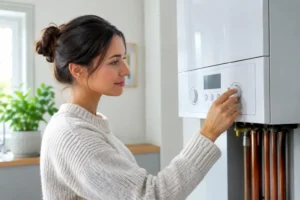
Your current boiler, radiators, thermostat, hot water cylinder and heating controls all affect how efficiently you use energy. An assessor may ask how warm your home feels, whether the heating is on for long periods and how many people live there.
For heat pump suitability, the review is particularly useful. Heat pumps work best when a property can hold onto the heat it produces and when the heating system is designed properly. That does not mean every home must be perfectly insulated before a heat pump is considered, but it does mean the property needs an honest suitability check rather than a one-size-fits-all answer.
Checking renewable energy options
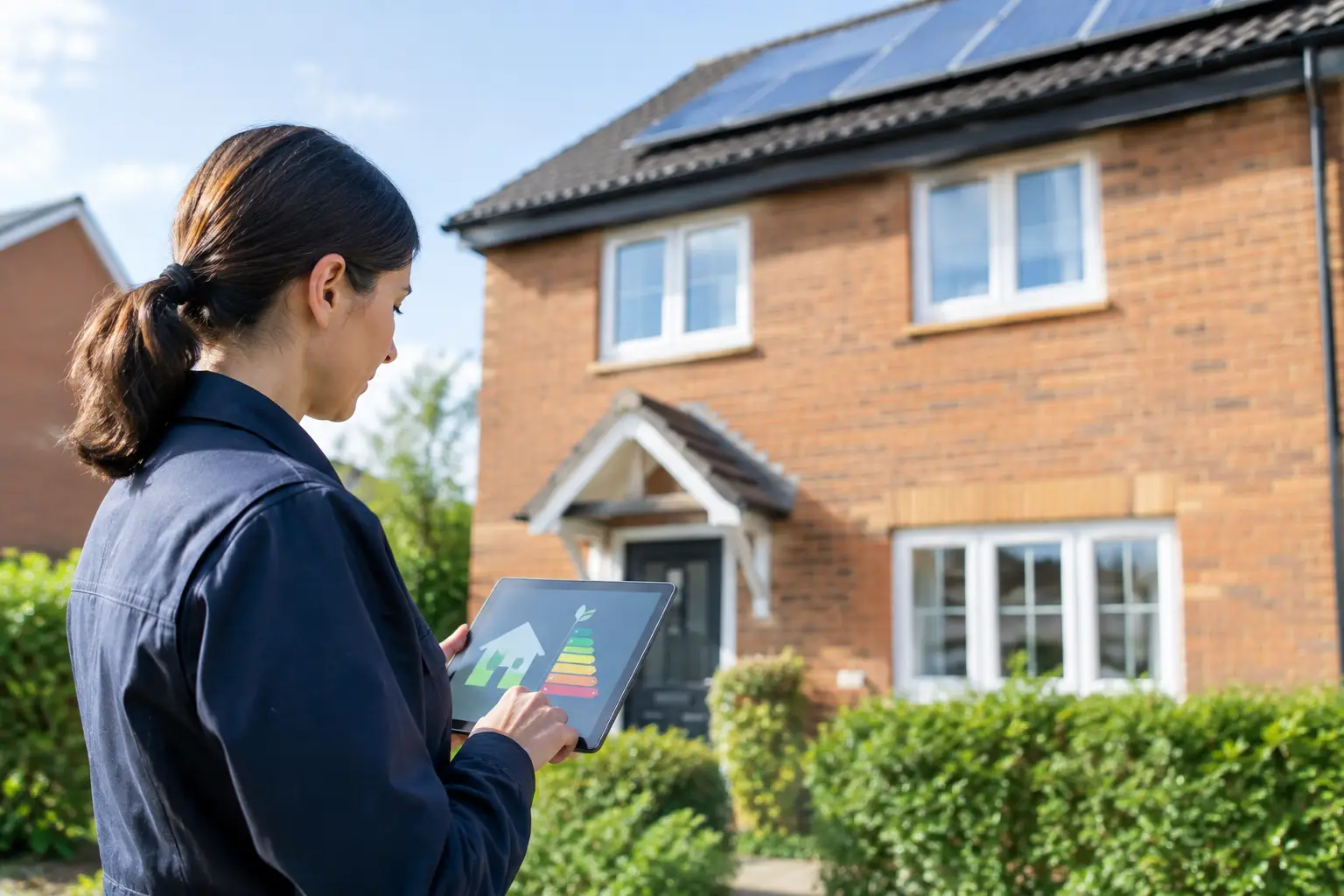
For solar, the assessor will consider roof orientation, shade from trees or nearby buildings, roof condition and usable roof area. South-facing roofs are often favourable, but east- and west-facing roofs can still be worthwhile because they generate power at different times of day.
They may also look at your consumer unit and electricity use. A battery can be especially helpful if you are out during the day and want to store solar electricity for the evening, though it is not automatically essential for every household. Your expected usage, tariff and budget all matter.
How to prepare for a home energy assessment
You do not need to know technical details before the visit. A few simple bits of information will make the discussion more useful. Having recent gas and electricity bills to hand is helpful, along with any EPC you already have and details of previous insulation or heating work.
Think about how you use your home as well. Do you work from home? Is someone in during the day? Are certain rooms rarely used? Does the house feel cold despite high bills? These details help turn a general recommendation into a plan that fits real life.
If you can safely access your loft hatch, it can be useful to mention what insulation is already there. You should not move stored items, climb into loft spaces or investigate electrical equipment just for the assessment. The visit is there to take the pressure off, not create extra work for you.
Questions worth asking before you commit
A good assessment should make the next step clearer. Ask which improvements are likely to have the biggest impact first, what the expected upfront cost is, and what assumptions sit behind any projected savings. Savings can change with energy prices, weather and household habits, so honest estimates should be explained rather than presented as a guarantee.
It is also worth asking whether the recommendation affects eligibility for any funding or support schemes. Availability and criteria can change, but some households may qualify for help with heating and efficiency upgrades. An experienced installer can explain the route in plain English and help you understand what evidence may be needed.
Finally, ask what is included. If you are considering solar, check whether scaffolding, electrical work, monitoring and registration are covered. For heating work, ask about controls, any radiator changes, commissioning and aftercare. Clear scope and no hidden costs make it much easier to compare like with like.
Turning your assessment into a sensible plan
You do not have to complete every upgrade at once. Many homeowners take a staged approach: improve insulation and controls first, replace an ageing heating system when the timing is right, then add solar or battery storage when the budget allows. Others may choose a combined installation because it suits their finances and avoids repeat disruption.
What matters is that each step works with the next. A well-planned home should be easier to heat, cheaper to run and more comfortable through a Scottish winter. It should also give you confidence that your money is going into improvements that suit the property, not just the latest trend.
At Newtech Renewables, the focus is on friendly expert advice and practical options that make sense for your home. A good assessment is not a sales pitch. It is the moment when rising bills and confusing choices become a clear, manageable plan for a warmer home.