A heat pump is not a like-for-like boiler swap. It is a heating system designed around steady, efficient warmth, so the best results come from getting the home and the design right before anyone starts work. For homeowners considering heat pump installation in England, that means looking beyond the headline price and asking a few practical questions: is the property losing too much heat, will the radiators suit lower-temperature heating, and what support may be available?
The good news is that a well-planned air source heat pump can make a home more comfortable while reducing reliance on gas. The less welcome truth is that a cheap, rushed installation can leave you disappointed. A proper assessment is worth far more than a quick quote based only on the number of bedrooms.
Is your home suitable for a heat pump?
Most homes in England can have an air source heat pump, including many older properties. You do not need a brand-new, perfectly insulated house. But heat pumps work best when the property holds onto the warmth they produce.
That is why an installer should consider insulation, draughts, windows, the age and construction of the building, and the size of each room. This is called a heat-loss calculation. It sounds technical, but its purpose is simple: it shows how much heat your home needs on a cold day, so the system can be sized correctly.
Before installation, sensible improvements may include loft insulation, filling suitable wall cavities, or dealing with obvious draughts. These steps can lower the size of heat pump required and help it run more efficiently. They are not always a condition of installation, but they can be a better use of budget than choosing a larger unit to compensate for heat escaping through the building.
A heat pump normally heats water for radiators, underfloor heating and your hot water cylinder. Unlike a gas combi boiler, it generally needs a cylinder to store hot water. If your home has no suitable cupboard or airing cupboard, your installer should discuss realistic options early on rather than treating it as a surprise later.
What happens during heat pump installation in England?
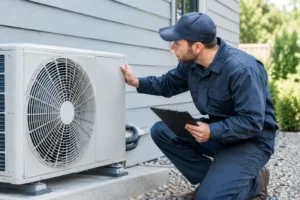
A stress-free project starts with a home survey, not a sales pitch. The surveyor should look at where the outdoor unit could sit, how pipework will run into the house, where the cylinder will go, and whether your existing radiators are large enough.
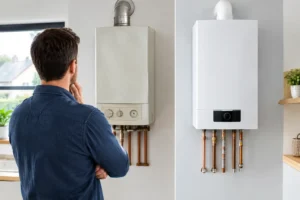
Heat pumps send water around the system at a lower temperature than many gas boilers. This is one reason they are efficient, but it can mean some radiators need to be upgraded. Larger radiators are not a sign that something has gone wrong. They give out the same level of warmth at a gentler water temperature, helping the heat pump work harder for your money rather than against it.
Once the design is agreed, a typical installation involves fitting the outdoor unit on a solid base or wall brackets, installing the hot water cylinder and controls, connecting the heating pipework, and making any radiator changes. The system is then filled, tested and commissioned. For a straightforward home, work often takes several days, though the exact timing depends on the property and how much needs changing.
Your installer should also show you how to use the controls. This matters more than many people expect. Heat pumps are usually happiest keeping the home at a steady temperature rather than being switched sharply on and off. A clear handover helps you get comfortable with the settings and understand what normal operation sounds and looks like.
How much does a heat pump cost?
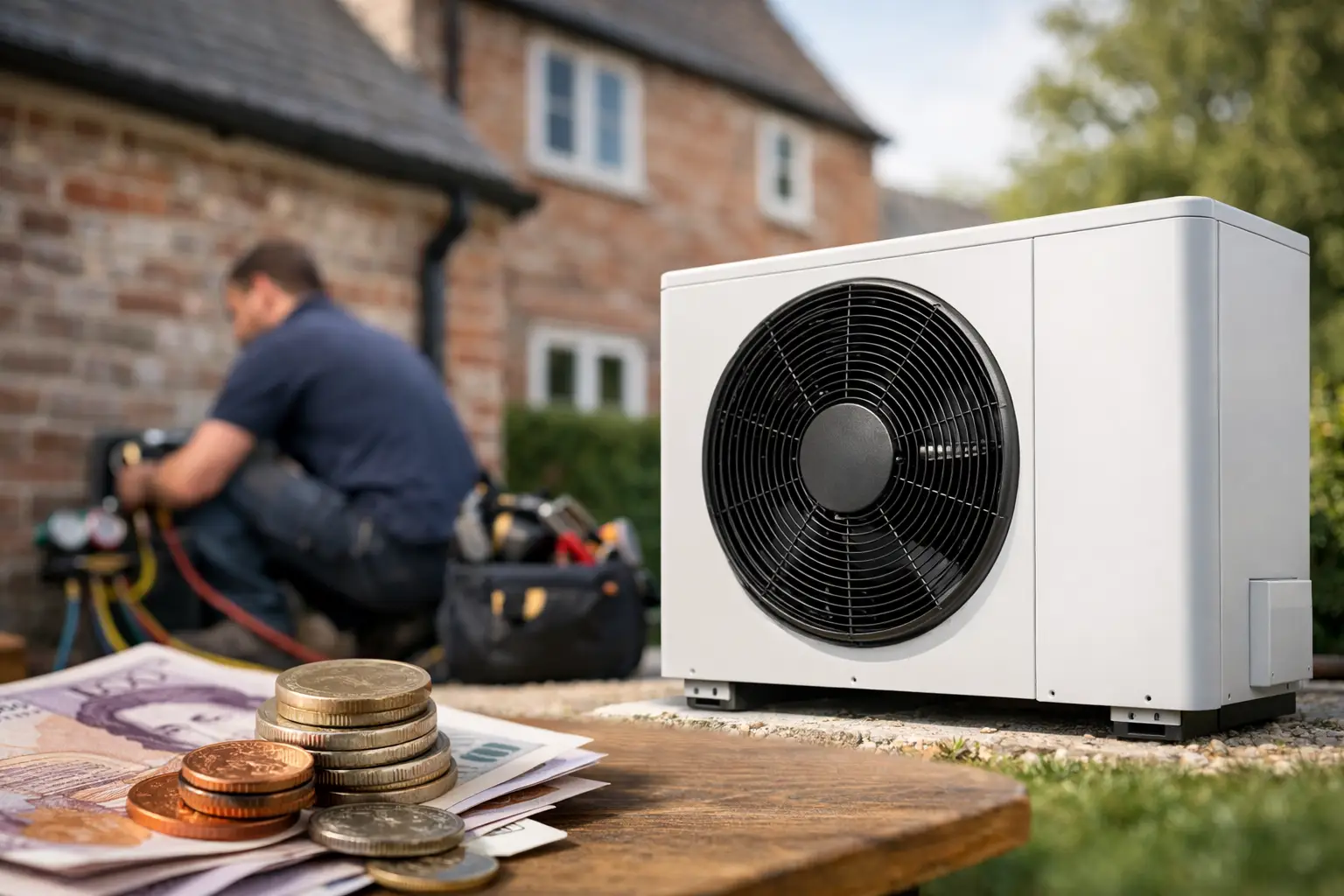
There is no single honest price for an air source heat pump. The overall cost depends on the heat pump size, hot water cylinder, radiator upgrades, pipework, electrical work and how straightforward access is around the property.
A smaller, modern home with a suitable heating system may need fewer changes than a large, older house with undersized radiators and no space for a cylinder. This is why package prices can be useful as a starting point, but the final figure should follow a proper survey.
When comparing quotes, check what is included. One quote may cover the heat pump only, while another includes the cylinder, controls, radiator alterations, electrical work, commissioning and certification. A lower number is not necessarily a lower total cost if key work has been left out.
It is also sensible to ask about aftercare. A heat pump is a long-term part of your home, so you want to know who to call if you have a question after installation, how servicing works and what warranties apply. Clear pricing and no hidden extras make it far easier to compare options with confidence.
Grants and support in England
Many homeowners in England may be able to use the Boiler Upgrade Scheme, which offers a grant towards eligible air source or ground source heat pump installations. The amount available and the qualifying rules can change, so it is worth checking the current position before making decisions based on a figure you have seen online.
For grant-supported work, the installer and system need to meet the relevant standards. Choosing an MCS-certified installer is particularly important, as this is commonly tied to scheme eligibility and gives you reassurance that the design and installation are being handled properly.
Funding is not the only factor. If you are replacing an ageing boiler, reducing fuel use, or making wider improvements to insulation and controls, a heat pump may still be worth considering even where a grant is not available. The right choice depends on your starting point, expected running costs and how long you plan to stay in the property.
If you live in Scotland, do not assume English support schemes apply. Funding routes and eligibility are different, so it is best to get advice based on where your property is located.
Will a heat pump lower your bills?
It can, but savings are not automatic. Your result depends on what fuel you currently use, how well insulated the property is, the electricity tariff you choose, and whether the system has been designed and used correctly.
Households moving from oil, LPG or older electric heating may see a stronger running-cost case than those replacing an efficient gas boiler. Electricity costs more per unit than gas, but a heat pump produces several units of heat for each unit of electricity it uses. That efficiency is what makes the numbers work.
Getting the controls right makes a real difference. A steady temperature, sensible heating schedule and a well-set flow temperature can help keep bills under control without leaving rooms chilly. Turning the thermostat up and down dramatically is rarely the best way to run a heat pump.
Pairing a heat pump with solar panels can also be worth exploring for some homes. Solar will not power the heating system all winter, when demand is highest, but it can contribute to household electricity use across the year and improve the value of generating your own power.
Questions to ask before you choose an installer
A trustworthy installer should be happy to explain the system in plain English. Ask whether they will complete a room-by-room heat-loss calculation, whether any radiators need changing, and where the hot water cylinder will be fitted. You should also ask for a clear breakdown of what is included, expected installation timescales, warranty details and any likely disruption.
Be wary of promises that a heat pump will suit every property without a survey, or that it will cut bills by a fixed amount. Good advice is specific to your home. It may include a recommendation to improve insulation first, and that is often a sign that the installer is putting performance before a quick sale.
A heat pump should feel like a practical home improvement, not a complicated leap into unfamiliar technology. Start with an honest assessment of your home, choose an accredited installer who explains the options clearly, and you will be in a much stronger position to decide whether the investment is right for you.