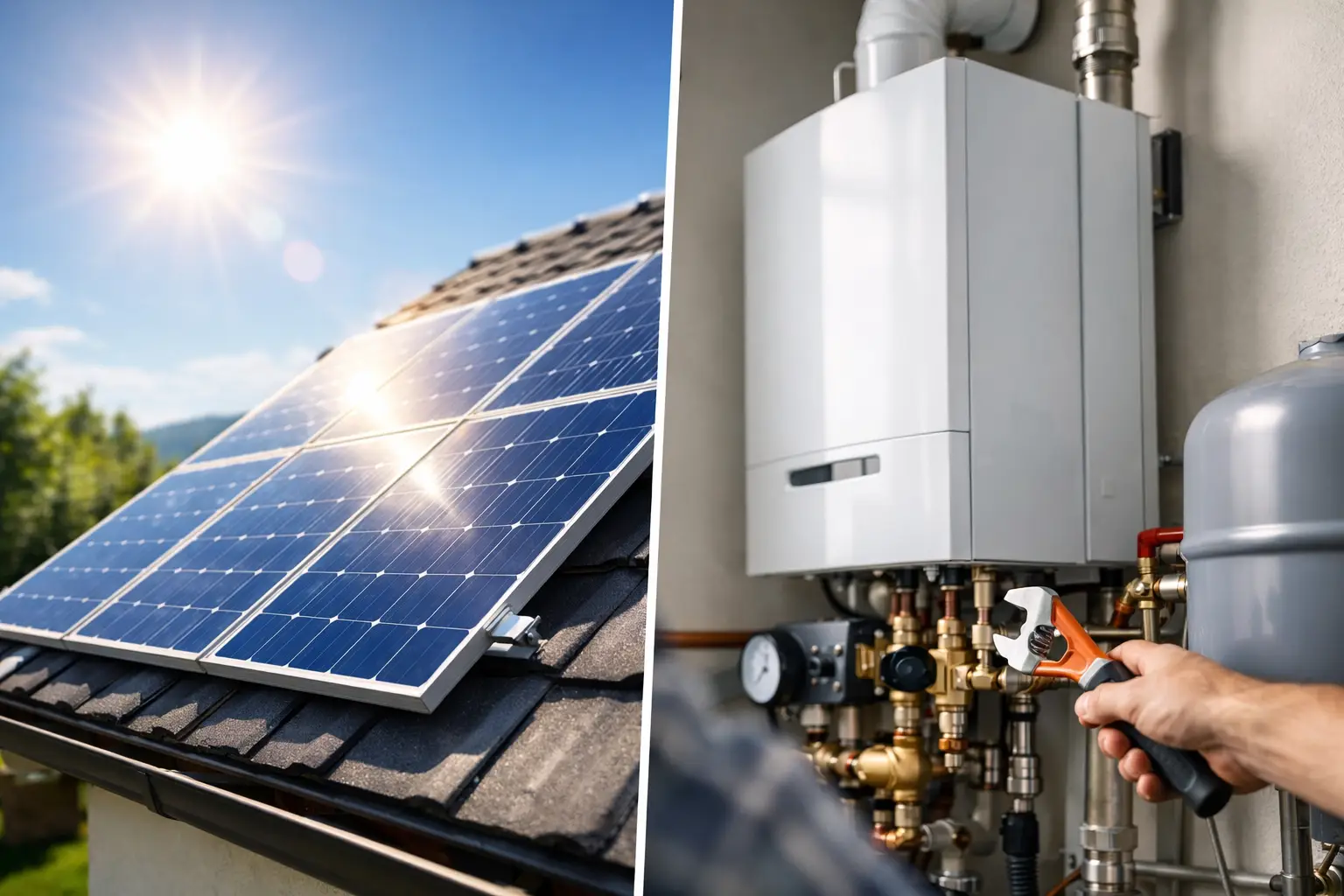
If your energy bills have crept up again and your heating system is starting to feel like a liability, the question of solar panels vs boiler replacement becomes very real, very quickly. Most households are not choosing between two exciting upgrades. They are trying to work out where their money will make the biggest difference now, without creating more hassle later.
That is why this decision needs a practical answer, not a technical one. For some homes, replacing an old boiler is the fastest route to lower costs and better comfort. For others, solar offers stronger long-term savings, especially if daytime electricity use is high. And in quite a few cases, the right answer is not one or the other – it is doing them in the right order.
Solar panels vs boiler replacement: what are you really comparing?
These upgrades solve different problems.
A boiler replacement improves how efficiently your home creates heat and hot water. If your current boiler is old, unreliable, or expensive to run, a new one can cut waste straight away. It can also make the home more comfortable, with steadier heating and fewer breakdown worries.
Solar panels work on the electricity side of your bills. They generate power during daylight hours, reducing the amount you need to buy from the grid. If your household uses a fair amount of electricity during the day, the savings can be noticeable. Add battery storage and you can keep more of that electricity for later, though that increases upfront cost.
So the core difference is simple. A new boiler tackles heating efficiency. Solar panels tackle electricity spend. The better option depends on which bill is hurting you most, and why.
When boiler replacement usually makes more sense
If your boiler is 10 to 15 years old, breaking down often, or costing a fortune to run, replacing it is often the more urgent move. This is especially true if your home already feels cold, your hot water is unreliable, or repairs are starting to stack up.
For many UK households, heating is still one of the biggest energy costs. An outdated boiler can burn more fuel than necessary, and you feel that every month. In that situation, installing solar first may not solve the biggest problem. You could be generating some cheaper electricity while still wasting money on inefficient heating.
Boiler replacement can also be the more sensible option if your roof is not suitable for solar, or if your budget only stretches to one improvement and your current heating system is on borrowed time. A boiler is not the most glamorous upgrade, but if it stops expensive breakdowns and improves day-to-day comfort, that matters.
There is also a timing point here. People often wait too long. They keep repairing an ageing boiler because it seems cheaper in the moment, then end up replacing it during a winter failure when choice is limited and stress is high. If that sounds familiar, a planned replacement usually beats an emergency one.
When solar panels usually come out ahead
Solar often makes more sense when your boiler is still working well enough, but your electricity bills are the bigger headache. If you work from home, run appliances through the day, or have a household with steady daytime usage, solar can give you better long-term value.
Unlike a boiler, solar panels do not burn fuel and they have fewer moving parts to worry about. Once installed, they quietly generate electricity for years. That simplicity appeals to a lot of homeowners who want lower bills without feeling tied to another heating system upgrade in the near future.
Solar can also be a strong choice if you are thinking beyond the next winter and looking at the next 10 to 20 years. A boiler replacement usually improves efficiency, but it still leaves you dependent on gas if your property uses it. Solar helps you produce some of your own power, which can protect you from future electricity price rises to a degree.
Homes that pair solar with battery storage can push savings further, but it is not always essential. Even without a battery, solar can still work well if you use enough power while the panels are generating.
Solar panels vs boiler replacement on cost and payback
This is where people understandably want a straight answer, but there is no universal winner.
A boiler replacement often has a lower upfront cost than a full solar and battery setup. It can also deliver immediate value if your current boiler is badly inefficient. The payback is less about generating income or visible returns and more about reducing waste, avoiding repairs, and keeping heating dependable.
Solar panels usually require more upfront investment, but they can deliver savings over a longer period. Their value improves when electricity prices are high and when the system is sized properly for your home. If you add battery storage, your total spend goes up, but so can your ability to use more of the power you generate.
For budget-conscious households, funded support can change the picture significantly. Some homeowners may be eligible for heating and efficiency upgrades through schemes such as ECO4, which can make boiler-related improvements far more accessible. That is why the cheapest-looking option on paper is not always the one that costs you least in practice.
Which upgrade gives the biggest impact on comfort?
If your home is cold, unevenly heated, or prone to boiler issues, replacing the boiler usually wins on comfort. You notice it straight away. Rooms heat up more reliably, hot water feels consistent, and the daily stress of wondering whether the system will keep going starts to disappear.
Solar panels improve running costs more than comfort. They do not directly make the house warmer. They may help power appliances, reduce grid reliance, and support other upgrades, but they will not fix weak heating performance.
That is why comfort-led households often start with heating. Savings matter, but warm showers and a house that heats properly tend to matter first.
When doing both is the smarter move
Sometimes the question is not solar panels vs boiler replacement. It is which one should come first.
If your boiler is failing, do not ignore that just to install solar. Sort the heating first, then look at generating your own electricity once the basics are right. On the other hand, if your boiler is relatively modern and your electricity bills are high, solar may be the better first step.
There are also households planning a wider energy upgrade over time. In that case, it helps to think in stages rather than trying to do everything at once. A sensible plan might be boiler now, solar later. Or solar now, with heating improvements when your current system reaches the end of its life. The best route is the one that fits your home and your cash flow without forcing a rushed decision.
A simple way to decide
Start with three honest questions.
First, what is causing the most pain right now – heating costs, electricity costs, or system reliability? Second, what is the condition of your current boiler? And third, is your roof and usage pattern a good fit for solar?
If the boiler is old, expensive to run, and becoming unreliable, replacement usually deserves priority. If the heating is fine but electricity costs are climbing and your property suits solar, panels may offer better long-term value.
If you are still unsure, that is normal. Most homeowners are not energy experts, and you should not need to be. The right advice should make the choice feel clearer, not more complicated. That is exactly why firms like Newtech Renewables focus on straightforward assessments and practical recommendations instead of pushing one upgrade for every property.
The best choice is the one that solves the right problem
There is no prize for picking the most modern-looking option if it does not fix the issue that is costing you money. Some homes need a dependable new boiler first. Others are ready to start cutting electricity bills with solar. The smart decision is the one that matches your home, your budget, and what will genuinely make daily life easier.
If you focus on that, the next step usually becomes much clearer.