A boiler can still heat your home while quietly costing more than it should. If you are asking, “why is my boiler inefficient?”, the answer is often a mix of boiler settings, overdue maintenance and heat escaping from the house before you get the benefit of it. The good news is that not every cause means you need an expensive replacement.
Why is my boiler inefficient?
An efficient boiler turns as much of its fuel as possible into useful heat for your radiators and hot water. A modern condensing boiler can do this very well, but only when it is correctly sized, set up and maintained.
If your gas bills have risen, rooms take longer to warm up, radiators are patchy or your boiler seems to switch on and off constantly, it may be working harder than necessary. Some issues can be solved with a simple adjustment. Others need a qualified engineer to prevent a small problem becoming a costly breakdown.
1. Your boiler is old or no longer suited to the job
Older non-condensing boilers waste more heat through the flue than modern condensing models. Even an older condensing boiler can lose efficiency over time as parts wear, controls become outdated and internal components collect dirt.
Age alone does not mean you must replace your boiler. A well-maintained model may still have useful life left. However, if it is more than 10 to 15 years old, needs frequent repairs or struggles to keep the house comfortable, comparing repair costs with a modern replacement is sensible.
A new boiler may lower fuel use, but the savings depend on your home’s insulation, heating controls and how you use the system. Replacing a boiler without tackling heat loss or poor controls can limit the improvement.
2. The flow temperature is set too high
This is one of the most commonly missed reasons for higher gas use. A condensing boiler is most efficient when it can recover heat from its exhaust gases. To do that properly, the water returning from your radiators needs to be cool enough.
Many systems are set to a high radiator flow temperature by default, often around 70°C or above. For a well-balanced system with reasonably sized radiators, reducing this to around 55°C can help a condensing boiler run more efficiently. It will not suit every property, especially a draughty home or one with smaller radiators, so make changes gradually and see whether rooms still reach a comfortable temperature.
Do not confuse the radiator temperature setting with your hot water temperature. Stored hot water must be kept hot enough for safety, so ask a heating engineer if you are unsure which control you are changing.
3. Your boiler is short cycling
Short cycling means the boiler fires up, switches off, then fires again soon after. It is a bit like repeatedly pulling away and braking in traffic: it uses more energy and puts extra strain on the system.
A boiler may short cycle because it is oversized for the property, the controls are not communicating properly, the flow temperature is too high, or water is not circulating around the radiators as it should. A blocked filter, a stuck valve or an incorrectly set bypass can also contribute.
You may notice clicking, frequent starts and stops, or a boiler that runs for only a few minutes at a time. An engineer can identify the cause and adjust the system safely. This is particularly worthwhile if the issue has developed recently, as it may point to a maintenance problem rather than a need for a new boiler.
4. Your heating controls are basic or poorly set
A boiler cannot run efficiently if it is simply being told to heat at full power whenever the timer comes on. Modern controls help the system respond to the temperature inside and outside your home, rather than heating blindly.
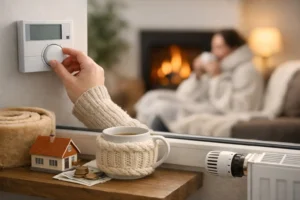
A programmable thermostat lets you heat your home when you need it. Thermostatic radiator valves allow cooler bedrooms and warmer living areas. Smart controls can make scheduling easier, but they are not essential for every household. The most useful controls are the ones you understand and will actually use.
Avoid turning the thermostat up very high in the hope that the house will heat faster. It will not make the boiler warm rooms more quickly. It simply tells the system to keep heating for longer, which can lead to overheating and higher bills. For many homes, a main thermostat around 18°C to 21°C is a practical starting point, adjusted for your comfort and household needs.
5. Radiators are not heating evenly
If a radiator is cold at the top, it may need bleeding. If it is cold at the bottom, sludge could be restricting the flow of water. Both problems mean your boiler has to work longer to get rooms warm.
Before bleeding a radiator, switch the heating off and allow it to cool. Keep an eye on boiler pressure afterwards, as it can drop slightly. Most sealed systems work within a marked pressure range, commonly around 1 to 1.5 bar when cold, but always check your boiler manual.
Radiators that stay cold, make banging noises or need regular bleeding should not be ignored. The system may need cleaning, balancing or a replacement part. A magnetic filter can also help protect a boiler from debris, although it needs servicing to do its job.
6. Your annual service is overdue
Boiler servicing is not just about avoiding a winter breakdown. During a service, a qualified Gas Safe registered engineer checks that the boiler is burning fuel safely and efficiently, examines key parts, and spots wear before it becomes a larger repair.
Over time, burners, heat exchangers and condensate components can become dirty or less effective. A small fault may not stop the heating immediately, but it can make the boiler use more gas to produce the same amount of warmth.
Book a service every year, ideally before the colder months arrive. Keep the paperwork too, as it can be useful for warranties, future repairs and when selling your home.
7. Heat is escaping from your home
Sometimes the boiler is not the main problem. It may be producing heat perfectly well, but your home is losing it through the loft, walls, windows, floors or draughts around doors and pipework.
Start with straightforward improvements. Loft insulation, draught-proofing and heating pipe insulation are often cost-effective ways to help a home hold onto warmth. Closing curtains at dusk and keeping furniture clear of radiators can also make a noticeable difference in rooms that feel chilly.
For homes with solid walls, older windows or persistent cold spots, the right solution depends on the property. Larger insulation upgrades can bring better comfort and lower bills, but they need to be planned properly to avoid moisture problems. A home assessment helps you prioritise what will make the biggest difference for your budget.
8. The boiler is the wrong size for the property
A boiler that is too small may struggle to meet demand, particularly when several people want hot water at once. One that is much too large can cycle unnecessarily and waste energy.
The right size is not just about the number of bedrooms. It depends on the size and insulation of the home, the number of bathrooms, radiator output, and how much hot water your household uses. A combi boiler can be a good fit for many smaller homes with one bathroom, while a system boiler and cylinder may work better where there is higher hot water demand.
This is why a proper assessment matters. The cheapest boiler on paper is not always the lowest-cost choice over the years ahead.
When should you call an engineer?
A few checks are safe for homeowners, such as reviewing your timer, adjusting the room thermostat and checking whether radiators need bleeding. But do not remove the boiler casing or try to repair gas components yourself.
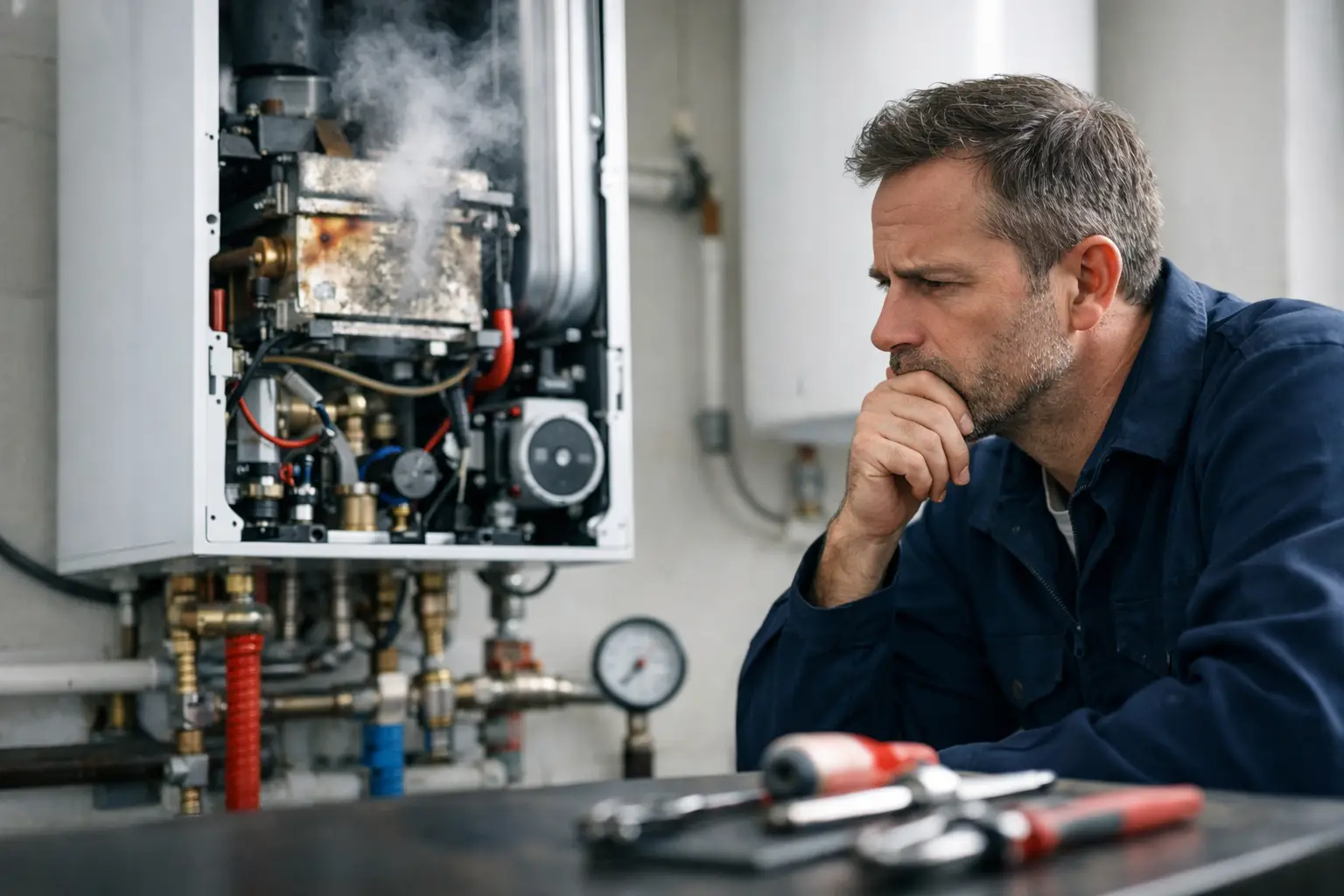
Arrange professional help promptly if you smell gas, see a yellow or lazy flame, notice black marks around the boiler, repeatedly lose pressure, have a visible leak, or see an error code that keeps returning. If you suspect a gas leak, turn off the gas supply if it is safe to do so, open windows, leave the property and contact the emergency gas service.
For less urgent issues, a heating engineer can assess boiler performance, system water quality, controls and radiator balance in one visit. Newtech Renewables can also help homeowners consider whether a modern efficient boiler, improved controls or a wider heating upgrade is the most sensible next step.
The best next move is usually not to guess or replace parts at random. Start with the simple settings, keep your boiler serviced and get clear advice if the system is still costing too much to run. A warmer home and more manageable bills often begin with finding the real cause.