The quickest way to waste money at home is to pay for heat and electricity you do not really get the benefit of. If you are looking for the best home upgrades for lower bills, the smartest place to start is not with the flashiest option. It is with the improvements that suit your home, your budget and the way your household actually uses energy.
That matters because not every upgrade gives the same result in every property. A draughty older house may benefit more from insulation first. A family with high daytime electricity use may see stronger savings from solar panels than someone out all day. The good news is that you do not need to do everything at once to feel the difference.
How to choose the best home upgrades for lower bills
A lower energy bill usually comes from one of three things. You use less energy, you waste less of it, or you generate more of your own. The best results often come from combining all three.
Before spending money, it helps to ask a few simple questions. Is your home losing heat? Is your heating system old and expensive to run? Do you have enough roof space to produce some of your own power? Once you know where the waste is, the right upgrade becomes much easier to choose.
1. Insulation often gives the fastest everyday benefit
If your home struggles to stay warm, insulation is usually one of the most sensible first upgrades. Loft insulation, cavity wall insulation and underfloor insulation can all help keep heat where you are paying for it.
This is not the most exciting improvement, but it is often one of the most effective. A better insulated home needs less heating to stay comfortable, which can mean lower bills and fewer cold spots around the house. You may also notice the home feels warmer for longer after the heating switches off.
The trade-off is that the right type of insulation depends on the property. Not every home has cavity walls, and some older buildings need a more careful approach. Still, if heat is escaping easily, fixing that first can make every other upgrade work harder.
2. Draught-proofing is small cost, real difference
You do not always need a major installation to cut energy waste. Gaps around doors, windows, loft hatches and pipework can let warm air out and cold air in all day long.
Draught-proofing is one of the lower-cost ways to improve comfort quickly. It can be especially worthwhile if you feel cold air near the floor, around window frames or by external doors. On its own, it may not transform your bills, but paired with insulation and efficient heating, it helps stop wasted energy from creeping back in.
It is worth being sensible here. Homes still need proper ventilation, especially in kitchens and bathrooms. Blocking every gap without thinking about airflow can create damp and condensation problems, so the aim is controlled warmth, not a sealed box.
3. Upgrading your boiler can cut running costs
If you have an older boiler, it could be costing more to run than necessary. Modern energy-efficient boilers use fuel more effectively and can heat your home more reliably, especially when paired with updated controls.
For many households, a boiler upgrade feels familiar and straightforward. It is a practical option if your current system is unreliable, expensive to maintain or simply nearing the end of its life. The savings will depend on what you are replacing, but moving from an old inefficient model to a modern one can make a noticeable difference.
That said, a boiler is not always the best long-term answer for every home. If you are thinking ahead and want to reduce reliance on fossil fuels, it may be worth comparing this with a heat pump instead of replacing like for like.
4. Air source heat pumps can lower bills in the right home
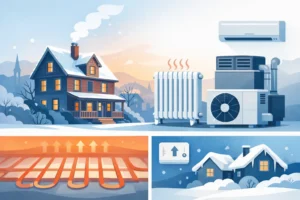
Air source heat pumps have become a much bigger part of the conversation for a reason. They can heat your home efficiently by extracting warmth from the outside air, even when it feels cold outdoors.
For the right property, they can be one of the best home upgrades for lower bills over time, especially when paired with good insulation. They can also help create a more stable, even heat rather than the sharp on-off pattern some homeowners are used to with older systems.
The key phrase is for the right property. Heat pumps tend to perform best in homes that are reasonably well insulated and properly assessed before installation. They are not a magic fix for every house. If a home loses heat quickly, sorting insulation first usually makes far more sense than expecting the heat pump to compensate.
5. Heating controls stop you paying for heat you do not need
A better heating system is only part of the picture. If you are heating empty rooms or running the house warmer than necessary, bills can stay higher than they need to be.
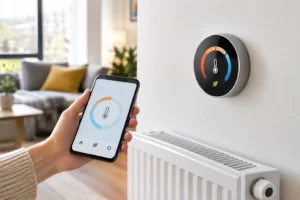
Smart thermostats, programmable controls and zoned heating help you use energy more carefully. That might mean heating bedrooms less during the day, warming living spaces only when you are home, or keeping temperatures steadier instead of constantly turning everything up and down.
This upgrade is often overlooked because it seems less dramatic than solar or a new heating system. In practice, it can be one of the easiest ways to cut waste without changing your daily routine too much.
6. Solar panels can reduce electricity bought from the grid
If your roof is suitable, solar panels can be a very strong choice for lowering electricity costs. They allow your home to generate its own power during daylight hours, which means you buy less from the grid.
This tends to work especially well for households that use electricity during the day. If someone is often at home, if you work remotely, or if appliances like the washing machine and dishwasher run in daylight hours, the savings can stack up more quickly.
Solar is not identical for every home. Roof direction, shading and available space all matter. Upfront cost matters too, although clear package pricing and a simple installation process can make it feel far more manageable than many homeowners expect. In parts of Scotland and England where energy bills are putting real pressure on family budgets, that predictability matters just as much as the technology itself.
7. Battery storage helps you keep more of what you generate
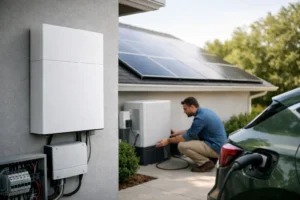
A battery does not create energy on its own, but it can make solar work harder for you. Instead of exporting unused electricity during the day and buying power back later in the evening, battery storage lets you keep more of that generated energy for when your household needs it.
This can be particularly useful for families who are out during daylight hours and use more electricity after work or school. Without a battery, a lot of solar generation may happen when nobody is around to use it. With one, more of that value stays in the home.
The main question is cost versus usage. Not every household needs battery storage from day one, and in some cases it makes sense as a later upgrade rather than part of the first installation. It depends on your routine, your electricity use and how much independence from the grid you want.
8. Double glazing can help, but timing matters
Replacing old windows can improve comfort, reduce draughts and support lower heating costs. If your current windows are poor, damaged or very inefficient, double glazing can certainly help.
But this is one area where timing matters. Window replacement can be a bigger spend than draught-proofing or loft insulation, so it is worth checking whether simpler fixes should come first. If the main issue is uninsulated loft space or an ageing heating system, those upgrades may give better value sooner.
That does not make double glazing a bad choice. It just means the best order of upgrades is not always the most obvious one.
Which upgrade gives the best value?
There is no single answer, because the best-value upgrade depends on what is driving your bills. If your house loses heat fast, insulation and draught-proofing can be the strongest first step. If your boiler is old and unreliable, replacing it may bring immediate savings and less hassle. If your electricity use is high and your roof is suitable, solar panels could offer some of the biggest long-term reductions.
For many homes, the sweet spot is a joined-up approach. Improve the fabric of the home first, make heating more efficient, then look at generating and storing your own energy. That way, each upgrade supports the next rather than trying to fix the same problem twice.
If upfront cost is the concern, it is also worth checking whether support schemes could help with eligible improvements. Some households can access funded or part-funded upgrades, which can make a big difference to what is realistic now rather than later.
The best home upgrade is the one that gives you a warmer, cheaper-to-run home without adding stress to the process. Start with what your property needs most, keep the plan simple, and focus on improvements that make day-to-day living easier as well as cheaper.